One formula, five metabolic levers
- Only about 1 in 8 adults is metabolically healthy. Meta's anthocyanins are studied right where the name points -- the metabolic chemistry of how the body processes the energy of a meal, rather than one antioxidant target.
Metabolic chemistry
how you handle a meal
- The liver does most of the metabolic heavy lifting. In people with fatty liver, purified anthocyanins lowered liver-injury markers and calmed the inflammatory machinery inside the liver in randomized, placebo-controlled trials -- the strongest human evidence here.
Liver support
the metabolic engine room
- Your gut bacteria are a metabolic organ. Anthocyanins shift the microbiome toward beneficial species, raise short-chain-fatty-acid production, and help tighten the gut barrier -- human and controlled evidence.
Gut & microbiome
feed the right microbes
- Most metabolic damage happens after eating. Anthocyanins from black rice and blackcurrant blunted the post-meal glucose and insulin rise and improved impaired glucose tolerance in randomized human trials.
Blood sugar
the post-meal spike
- 215 mg of anthocyanins from black rice, black currant and bilberry, built around cyanidin and delphinidin -- metabolic-signalling compounds that also switch on the NRF2 antioxidant-and-detox pathway in living human cells.
The 3 purple pigments
cyanidin & delphinidin
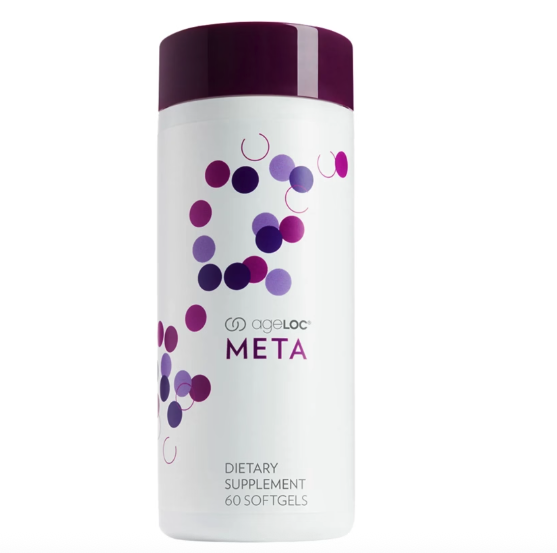
$115 a month$144, 20% off applied by the link
20% off, applied by the link
Nothing to paste -- the discount rides the link for you.
First-time buyers: checkout uses 2-step verification for fraud protection, so have your phone handy.
Only about one in eight American adults is metabolically healthy.1 The other seven are somewhere on the spectrum of metabolic dysfunction -- and most are handed a different prescription for each symptom instead of the one thing underneath.
Four drugs for one problem.
High blood sugar, blood pressure, cholesterol and belly fat share one driver.
A statin for the cholesterol, a pill for the pressure, metformin or a GLP-1 shot for the sugar, a shrug about the belly fat. Four diagnoses, four prescriptions. But those numbers cluster together because they share one upstream driver -- insulin resistance and the metabolic dysfunction around it4,7 -- and the same driver even turns up in shift workers and in the gums of teenagers.5,6 The model treats the downstream numbers and rarely the cause, which is why the prescription list grows, not shrinks. The good news: the markers move with muscle, fasting and food.2,3
Your chemistry literally runs on nutrition.
Metabolic chemistry is a running biochemical process, and it runs on what you eat. Two healthy dietary patterns measurably improved insulin sensitivity and the gut community behind it, the type of fat changes insulin secretion itself, and an inflammatory diet tracks with more metabolic syndrome while a Mediterranean pattern tracks with less fatty liver.8,9,10,11,12 The lever is on your plate before it is in a pharmacy.
The liver: your metabolic engine room.
A slightly high ALT on a lab is your liver -- the organ doing most of the metabolic work, and the first to strain when the system overloads. This is where the pigments earn their reputation: in people with fatty liver, purified anthocyanins lowered liver-injury markers and calmed the inflammatory machinery inside the liver in randomized, placebo-controlled trials,13,14,15,16 with mechanistic work on how liver cells clear and recycle their damaged parts.17,18 Measured support for the organ that runs the show.
Your gut and your microbes are metabolic organs too.
Your gut bacteria are not passengers; they are a metabolic organ that responds to what you feed them. Anthocyanins act like fuel for the right microbes -- shifting the microbiome toward beneficial species, raising short-chain-fatty-acid production, and helping tighten the gut barrier,19,20,21,22 with their metabolic action running partly through the gut's own glucose transporters.23,24 Feed the microbes well, and they pay you back in metabolic signals.
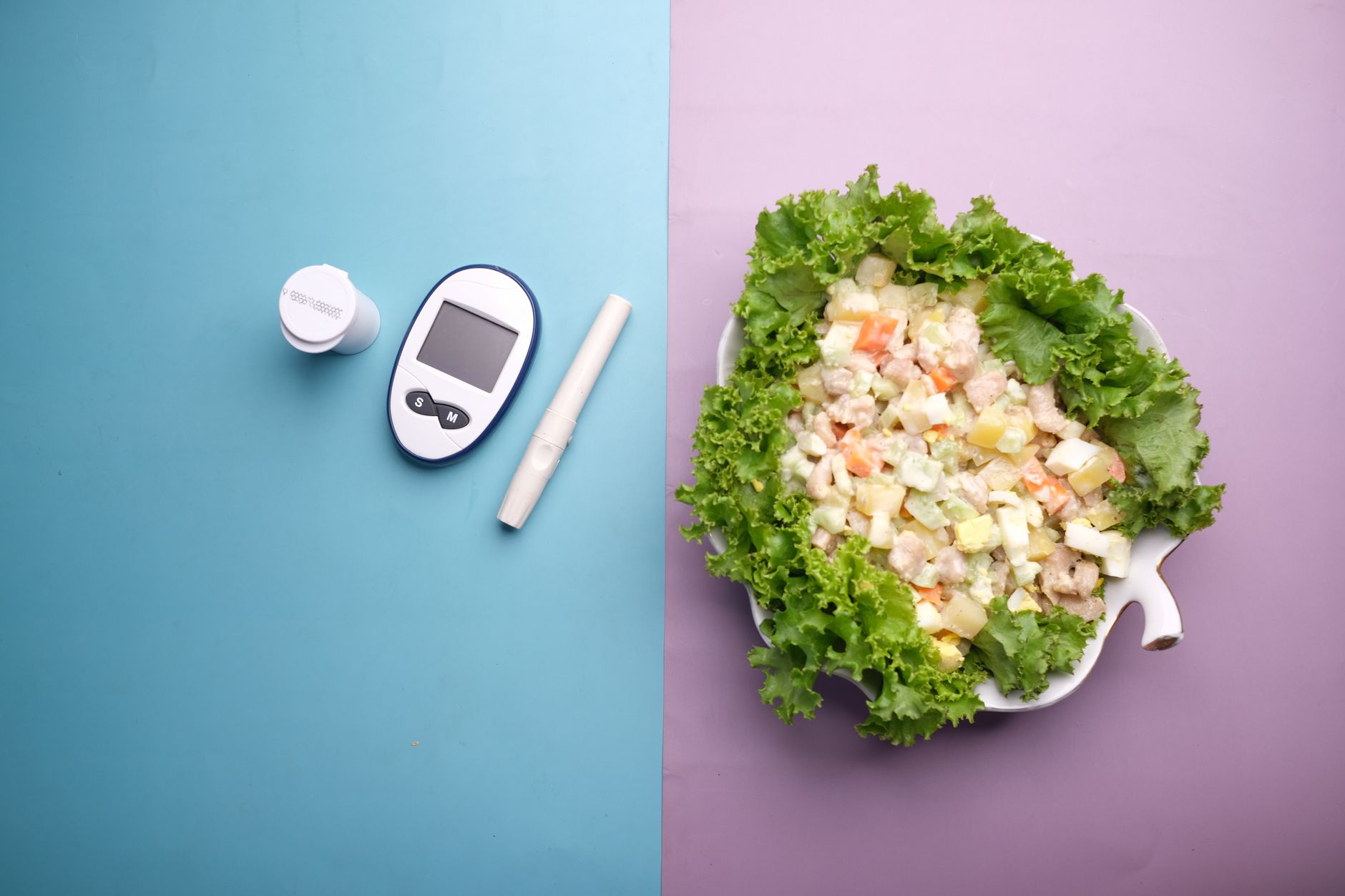
Blood sugar: it comes down to how you handle a meal.
Most metabolic damage happens after eating -- the glucose and insulin spikes a fasting lab never sees. This is the anthocyanins' best-studied ground: in randomized human trials they improved impaired glucose tolerance, and black rice and blackcurrant pigments blunted the post-meal glucose and insulin rise,26,27,28,29 with effects on the pancreas's own insulin cells and on the oxidative stress a rich meal creates.30,31,25 The goal is a body that handles a meal more gracefully on its own -- not a lower number forced by a drug.
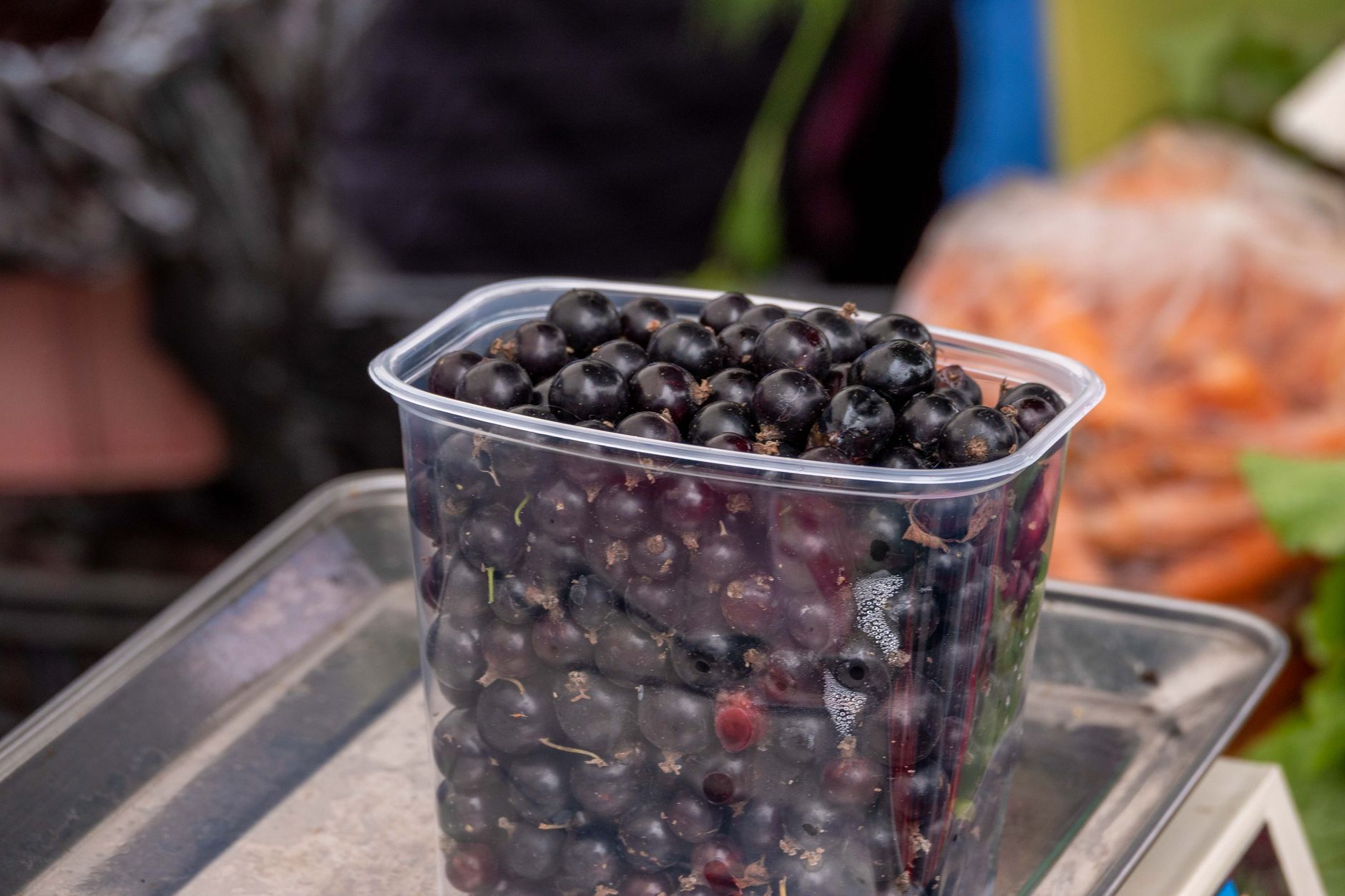
The three purple extracts: cyanidin and delphinidin.
The deepest purple-red plants -- black rice, black currant and bilberry -- concentrate two anthocyanins the research keeps pointing to: cyanidin and delphinidin. They are metabolic-signalling compounds, not just antioxidants: together they modulate inflammation and redox signalling to improve insulin handling, dietary cyanidin prevents diet-induced obesity and metabolic syndrome in controlled models,36,37,38 and the pigments switch on NRF2, the master antioxidant-and-detox pathway, changing gene transcription in living human cells.32,33,34,35 Their antioxidant strength is well characterized, and across trials they lower inflammatory markers around a meal.39,40,41,42,43+1 more
215 mg of the purple, standardized.
You could chase these pigments across a perfect diet every day. Or take them concentrated and standardized: ageLOC Meta is a 215 mg anthocyanin blend from black rice, black currant and bilberry, built around cyanidin and delphinidin -- the two pigments chosen through gene-expression screening for metabolic action, not antioxidant chemistry alone. Four softgels a day, aimed at the chemistry of how your body handles a meal.
The honest ceiling: this supports the metabolic chemistry of how you handle a meal -- it is not weight loss, and not a treatment for blood sugar or any disease. The human evidence is strongest at the liver and the microbiome; the pancreas and muscle links are still emerging. And nothing here is a reason to change a prescription -- that is a conversation for you and your clinician.
20% off, applied by the link
Nothing to paste -- the discount rides the link for you.
First-time buyers: checkout uses 2-step verification for fraud protection, so have your phone handy.
Chosen by gene-expression, not marketing.
Pharmanex was built by working scientists. Its founding-era head of R&D, Michael N. Chang, PhD (organic chemistry at Brandeis, postdoc at MIT, 35+ patents), set the standard for how its formulas are designed, and the anthocyanins here were selected through LifeGen's gene-expression screening for their metabolic-gene modulation -- a defined, reproducible blend rather than a generic berry extract.
Take it further
FAQ
Is it true only 1 in 8 adults is metabolically healthy?
Yes -- a national US analysis (NHANES) found only 12.2% of adults met all the criteria for optimal metabolic health with no medications. That leaves roughly seven in eight with some degree of metabolic dysfunction, most of whom don't know it.
Why do I take separate drugs for blood sugar, blood pressure and cholesterol?
Because the system treats each number as its own disease. But those numbers cluster together for a reason -- they share an upstream driver (insulin resistance and metabolic dysfunction), so treating each downstream marker rarely fixes the cause, which is why prescriptions tend to grow over time.
Can metabolic health actually be reversed?
In large part, yes. The markers move with diet, muscle and eating patterns -- studies show insulin sensitivity, liver markers and the gut microbiome all shifting with food. It's a spectrum you can move back along, not a permanent diagnosis.
What are cyanidin and delphinidin?
They're the two deep purple-red anthocyanin pigments concentrated in black rice, black currant and bilberry. They act as metabolic-signalling compounds, not just antioxidants -- human trials link them to lower liver-injury markers, a healthier microbiome, blunted post-meal glucose spikes, and activation of the NRF2 pathway.
How do purple pigments help blood sugar?
Most metabolic damage happens after meals, in the glucose and insulin spikes a fasting lab misses. In randomized trials, anthocyanins from black rice and blackcurrant blunted the post-meal glucose and insulin rise and improved impaired glucose tolerance -- supporting how gracefully your body handles a meal on its own.
The research
All 44, grouped and numbered. Every marker above jumps to its entry here, linked to the source -- the same set carried by the deep-dive article. Animal and in-vitro studies are noted where cited.
Metabolic health is now the exception3 studies · 1–3
- 1Prevalence of Optimal Metabolic Health in American Adults: National Health and Nutrition Examination Survey 2009 -- 2016
- 2Effect of Alternate-Day Fasting on Weight Loss, Weight Maintenance, and Cardioprotection Among Metabolically Healthy Obese Adults: A Randomized Clinical Trial
- 3Protective Role of Skeletal Muscle Mass against Progression from Metabolically Healthy to Unhealthy Phenotype
One upstream problem, not four diseases4 studies · 4–7
- 4Insulin Resistance as a Shared Pathophysiological Driver in Neurological Disorders: a Narrative Review
- 5Shift work and insulin resistance (HOMA-IR) among professional drivers
- 6Precursors of insulin resistance underlying periodontitis in adolescents aged 17-18 years
- 7Metabolic Syndrome and Insulin Resistance: Underlying Causes and Modification by Exercise Training
Metabolic chemistry runs on nutrition5 studies · 8–12
- 8Two Healthy Diets Modulate Gut Microbial Community Improving Insulin Sensitivity in a Human Obese Population
- 9Insulin resistance determines a differential response to changes in dietary fat modification on metabolic syndrome risk factors: the LIPGENE study
- 10Effects of dietary fat on insulin secretion in subjects with the metabolic syndrome
- 11The Association Between Dietary Inflammatory Index with Metabolic Syndrome and Subclinical Atherosclerosis in Children and Adolescents: A Systematic Review
- 12Adherence to Mediterranean Diet and NAFLD in Patients with Metabolic Syndrome: The FLIPAN Study
The liver -- your metabolic engine room6 studies · 13–18
- 13Anti-inflammatory and antioxidant effects of anthocyanins in Nonalcoholic fatty liver disease (NAFLD): a systematic review of in vivo studies
- 14Anthocyanins as Adjuvant Treatment for Non-alcoholic Fatty Liver Disease: A Systematic Review and Meta-Analysis
- 15A CONSORT-compliant, randomized, double-blind, placebo-controlled pilot trial of purified anthocyanin in patients with nonalcoholic fatty liver disease
- 16Upregulated NLRP3 inflammasome activation is attenuated by anthocyanins in patients with nonalcoholic fatty liver disease: A case-control and an intervention study
- 17Modulation of Glucose Metabolism Along the Intestine-Pancreas-Liver In Vitro Axis by Mulberry, Bilberry, and Black Currant Extracts: A Mechanistic Approach
- 18Anthocyanins from purple corn activate free fatty acid-receptor 1 and glucokinase enhancing in vitro insulin secretion and hepatic glucose uptake
The gut, the microbiome and short-chain fats6 studies · 19–24
- 19Effects of Blackcurrant Extract and Partially Hydrolyzed Guar Gum Intake on Gut Dysbiosis in Male University Rugby Players
- 20Anthocyanins-gut microbiota-health axis: A review
- 21Effect of anthocyanins on gut health markers, Firmicutes-Bacteroidetes ratio and short-chain fatty acids: a systematic review via meta-analysis
- 22Blackcurrants shape gut microbiota profile and reduce risk of postmenopausal osteoporosis via the gut-bone axis: Evidence from a pilot randomized controlled trial
- 23Anthocyanin Bioactivity in Obesity and Diabetes: The Essential Role of Glucose Transporters in the Gut and Periphery
- 24Hormetic response to B-type procyanidin ingestion involves stress-related neuromodulation via the gut-brain axis: Preclinical and clinical observations
Blood sugar and how you handle a meal7 studies · 25–31
- 25Grape Seed Proanthocyanidins Prevent Plasma Postprandial Oxidative Stress in Humans
- 26Remission of impaired glucose tolerance by anthocyanin supplementation: a randomized, double-blind, and placebo-controlled trial
- 27Postprandial glycemic and lipidemic effects of black rice anthocyanin extract fortification in foods of varying macronutrient compositions and matrices
- 28Blackcurrant (Ribes nigrum) lowers sugar-induced postprandial glycaemia independently and in a product with fermented quinoa: a randomised crossover trial
- 29Apple and blackcurrant polyphenol-rich drinks decrease postprandial glucose, insulin and incretin response to a high-carbohydrate meal in healthy men and women
- 30Antidiabetic Effects of Anthocyanins on Pancreatic beta-Cell Function: A Systematic Review of In Vitro Studies
- 31Effects of germinated brown rice and germinated black rice on people with type 2 diabetes mellitus combined with dyslipidaemia
NRF2 and antioxidant defense4 studies · 32–35
- 32Consumption of anthocyanin-rich beverages affects Nrf2 and Nrf2-dependent gene transcription in peripheral lymphocytes and DNA integrity of healthy volunteers
- 33Modulation of Nrf2-dependent gene transcription by bilberry anthocyanins in vivo
- 34Anthocyanins Found in Pinot Noir Waste Induce Target Genes Related to the Nrf2 Signalling in Endothelial Cells
- 35In vitro gastrointestinal absorption of red wine anthocyanins - Impact of structural complexity and phase II metabolization
The pigments: cyanidin and delphinidin5 studies · 36–40
- 36Cyanidin and delphinidin modulate inflammation and altered redox signaling improving insulin resistance in high fat-fed mice
- 37Cyanidin 3-glucoside improves diet-induced metabolic syndrome in rats
- 38Dietary cyanidin 3-O-beta-D-glucoside-rich purple corn color prevents obesity and ameliorates hyperglycemia in mice
- 39Antioxidant Activity of Anthocyanins and Anthocyanidins: A Critical Review
- 40Combination of the anthocyanidins malvidin and peonidin attenuates lipopolysaccharide-mediated inflammatory gene expression in primary human adipocytes
Inflammation and the whole-body picture4 studies · 41–44
- 41A randomized placebo-controlled cross-over study on the effects of anthocyanins on inflammatory and metabolic responses to a high-fat meal in healthy subjects
- 42Inflammatory and Metabolic Biomarker Assessment in a Randomized Presurgical Trial of Curcumin and Anthocyanin Supplements in Patients with Colorectal Adenomas
- 43Impact of anthocyanin-rich black rice consumption on cognitive function, inflammation and microvascular function in older adults: a crossover intervention trial
- 44Antiobesity effects of anthocyanins on mitochondrial biogenesis, inflammation, and oxidative stress: A systematic review
Education only. These statements have not been evaluated by the Food and Drug Administration. Nothing here is medical advice, and nothing here diagnoses, treats, cures or prevents any disease.