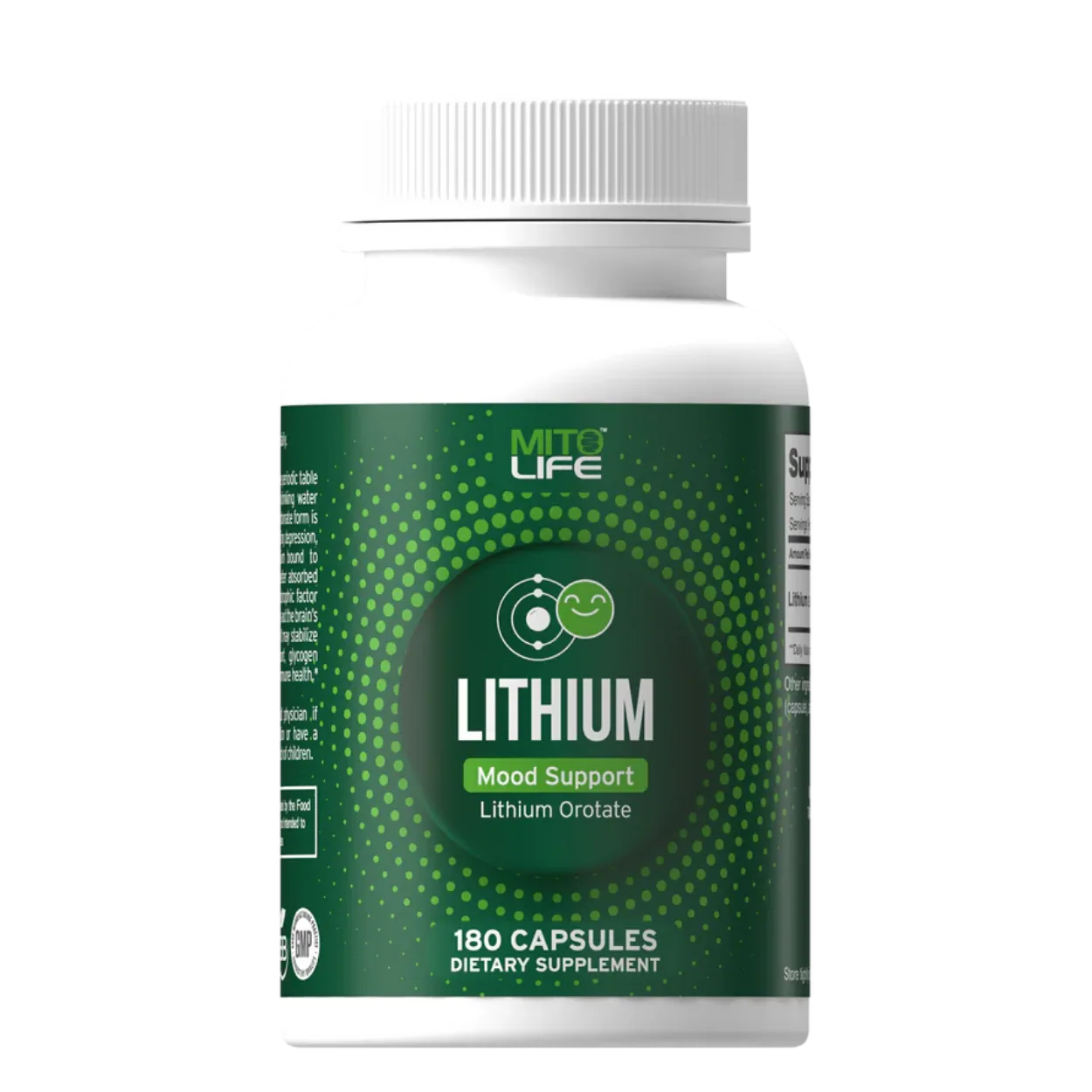
17 CENTS a day6 months for $30 · 180 capsules
HOLISTICLOVEpaste at checkoutThen it was taken out, and nobody asked what we removed.
Before it was a soda it was a spa. People travelled to lithia springs to drink the water on purpose, and in 1929 a lithiated soda was the mainstream product, not a fringe one. In 1948 it came out of every soda in America.
The element did not stop existing. It leaches from rock into groundwater, so how much is in your tap water depends on the geology under your town. Two places an hour apart can differ enormously. Nobody assigned that, geology did, and that accident is what researchers have been studying since 1990.
One element, six systems
What the research actually found.
Not a wellness list. Every line below is a finding with a study behind it, and the animal work says so on the line.
Mood
The most replicated finding in the whole literature.
At prescription doses lithium remains the only mood stabiliser with a replicated reduction in suicide, and the effect survives meta-analysis. Anxiety is not a separate file from mood here -- the guideline bodies that set mood-stabiliser practice cover mood and anxiety together, and irritability sits in the same literature. The trace-amount question is its own thread and is what the drinking-water work asks: across five countries and 35 years, regions with more of it in the water have repeatedly shown lower suicide rates. Those are ecological studies -- they compare regions, not people.53,54,55,56,57+59 more
The ageing brain
Twenty-five years of work, and it is still converging.
A 2026 narrative review traces the evolution of lithium as a disease-modifying agent in dementia across that whole span. A nationwide US analysis published the same year found lower dementia associated with low-dose lithium in drinking water; a Danish national cohort found the same, and a 2024 systematic review pooled the water studies. The mechanism work moved with it -- lithium boosts oxidative phosphorylation in Alzheimer's neurons, suppresses ferroptosis in ApoE4/E4 stem cells, and a 2025 paper reports that brain lithium falls in Alzheimer's disease. A 2026 review names the brain-bone axis explicitly, tying this card to the bone one.117,118,119,120,121+26 more
Bone
Wnt signalling, which is the bone-building switch.
Low-dose lithium activates Wnt/beta-catenin and shifts the OPG/RANKL ratio toward bone formation; a separate line showed increased bone formation and bone mass independent of Lrp5. Both are mouse work, said plainly. It is the clearest example of one element acting on two systems people never connect -- the same pathway that keeps showing up in the brain work.148,149,150,151,152+9 more
Immune and inflammation
It suppresses LPS-triggered microglial activation.
Lithium suppresses inflammatory activation in microglia, the brain's resident immune cells, and shifts T-cell populations in people actually taking it. In a high-fat ApoE-deficient model, lithium chloride reduced atherosclerotic change by lowering VCAM expression. Autophagy -- the cell's disposal and recycling system -- is the mechanism that keeps recurring across these papers.162,163,164,165,166+8 more
Heart and vessels
Calcium handling in cardiac muscle.
Low-dose lithium feeding raised the SERCA2a-to-phospholamban ratio in murine left ventricles, which is the pump that returns calcium between beats. A separate study found low-dose lithium stabilised the human endothelial barrier and improved cholinergic vasorelaxation directly. Animal and isolated-tissue work, and it is early -- but it is measured, not asserted.162,163,164,165,166+8 more
Blood sugar and GSK-3
The enzyme that ties the whole list together.
GSK-3 sits upstream of glycogen handling, and inhibiting it is the single mechanism most often proposed for lithium's range. Microdose lithium protected pancreatic islets in a streptozotocin diabetes model, and separate work described its effect on glucose transport in skeletal muscle. This is why one trace element keeps appearing in papers about mood, bone, immunity and metabolism at the same time.175,176,177,178,179+31 more
35 years of asking the same question
Texas. Japan. Austria. England. Denmark.
Five countries, independent teams, same question. These are ecological studies: they compare regions, not people. They can show a pattern across a population and cannot tell you what happens to one person.1,2,3,4,5+47 more
The question then moved to the ageing brain.
A Danish national cohort, then a 2024 systematic review. In 2025 a lab group reported the brain holds this element and the amount falls in Alzheimer's disease. That one is an animal study, labelled as such because the difference matters.117,118,119,120,121+26 more
Is it even a nutrient? Genuinely unsettled.
There is no recommended intake. A serious argument says there should be. It is unsettled, and we are saying so rather than picking the flattering side.175,176,177,178,179+31 more
HOLISTICLOVEpaste at checkoutRead this part twice
This is not the lithium from a psychiatric hospital.
That is a prescription drug, commonly 600 to 1200 mg a day, monitored with blood tests because the margin is narrow, with real kidney and thyroid considerations. What occurs in groundwater is a trace amount, orders of magnitude below it.
Treating those two as the same substance is the most common mistake made about this subject, which is why it leads here rather than sitting in a footnote.
If you take a prescribed medication, are pregnant or nursing, or have any kidney or thyroid condition, this is a conversation for your own clinician and not for a web page. This element is cleared by the kidneys, so kidney function is the one number worth knowing first.
Want to know your own numbers? The Lab Atlas reads your own labs against the research, kidney and thyroid panels included, and builds a diet from your numbers.
What it costs
Lithium Orotate
$30
for the bottle
At the labelled one a day, a 180 capsule bottle runs about six months. That is the entire commercial argument, and it does not ask you to believe anything about the research above.180
capsules
At the labelled one a day, a 180 capsule bottle runs about six months. That is the entire commercial argument, and it does not ask you to believe anything about the research above.~17¢
a day
At the labelled one a day, a 180 capsule bottle runs about six months. That is the entire commercial argument, and it does not ask you to believe anything about the research above.About six months a bottle. That is the whole commercial argument and it asks you to believe nothing about the research above. Read the studies, decide for yourself.
HOLISTICLOVEpaste at checkoutOne thing worth knowing before you search this yourself: a widely shared paper claiming this element extends human lifespan in UK Biobank data has been retracted. It still circulates. We left it out on purpose, and you should check any source that still quotes it.
Lithium was in 7UP until 1948, and it still occurs naturally in drinking water at amounts that vary widely by geology. Researchers in Texas, Japan, Austria, England and Denmark have compared regions with differing concentrations for about 35 years. That research is ecological, meaning it describes patterns across populations rather than individuals. Trace lithium is not the same as prescription lithium, which is given at 600 to 1200 mg daily under blood monitoring.
Lithium: the common questions
Is lithium safe?
It depends entirely which lithium is meant. Prescription lithium is a pharmacologic dose, commonly 600 to 1200 mg daily, monitored with blood tests because the margin between a working level and a harmful one is narrow, with established kidney and thyroid considerations. What occurs naturally in groundwater is a trace amount, orders of magnitude lower. Absence of a study at the low amount is not a safety finding in either direction. Anyone on a prescribed medication, pregnant or nursing, or with a kidney or thyroid condition should speak with their own clinician.
Is lithium orotate the same as prescription lithium?
It is the same element at a very different amount. Orotate is the carrier it is bound to, the way magnesium can be bound to glycinate or citrate. What matters is how much elemental lithium is present, and in a nutritional product that sits far below a prescribed dose.
Is lithium orotate better absorbed than lithium carbonate?
There is no human head-to-head pharmacokinetic trial comparing the two at equal elemental doses. Claims of dramatically superior absorption are running ahead of the published evidence.
Was there really lithium in 7UP?
Yes. The drink launched in 1929 as Bib-Label Lithiated Lemon-Lime Soda and lithium remained in the formula until 1948, when it was removed from American sodas. Lithia spring water was a popular destination before that.
Why was lithium removed from 7UP?
It came out of American soft drinks in 1948. No published finding demonstrated harm at the amounts involved. The association most people now have with the word comes from psychiatric medicine, which uses a vastly higher dose.
Is lithium in drinking water?
Yes. It leaches naturally from rock into groundwater, so the amount varies widely with local geology. Neighbouring areas can differ by a factor of a hundred, and modern treatment removes a portion of what is present.
What does the drinking water research actually show?
Studies from Texas, Japan, Austria, England, Denmark and others have compared regions with differing concentrations since 1990, and a 2022 analysis reported a dose-response relationship. These are ecological studies: they compare populations rather than individuals, so they can describe a pattern but cannot establish cause for any one person. Not every study agrees, and the null results are included in the citation list.
Does lithium help with mood?
The large majority of the mood literature studies prescription lithium at 600 to 1200 mg daily with serum monitoring, and at that dose the evidence is deep: it remains the only mood stabiliser with a replicated reduction in suicide. Whether any of that transfers down to a trace amount is a separate question nobody has answered. The gap is roughly a thousandfold, so treating a finding from one as a finding about the other is the single largest extrapolation made on this subject.
Can lithium help with Alzheimer's or dementia?
This is an active research question, not an established use. A Danish national cohort examined long-term exposure through drinking water, a 2024 systematic review assessed the trace lithium and dementia literature, and smaller studies have looked at microdose lithium in cognitive decline. In 2025 a laboratory group reported that brain lithium is lower where Alzheimer's is present and that amyloid appears to sequester it, which is animal work.
Does lithium affect bone density?
There is an observational signal and a plausible mechanism. Case-control data and a meta-analysis of observational studies both reported lower fracture risk among people taking prescribed lithium, and laboratory work points to Wnt signalling, the pathway bone-building cells use. Those are different populations and different doses from a trace amount.
What is the connection between lithium, bone and the brain?
Lithium inhibits GSK-3, which activates Wnt signalling. Wnt is the pathway osteoblasts use to build bone and is also implicated in the tau phosphorylation behind neurofibrillary tangles. One mechanism therefore predicts effects in two systems that look unrelated from the outside, which is why findings in both keep appearing together.
Does lithium affect the immune system?
There is a mechanistic literature covering autophagy, microglial activation, interferon-gamma signalling and T-cell subpopulations. Most of it is laboratory and animal work, which explains how something could happen rather than establishing that it does happen in people.
Is lithium a mineral or a drug?
It is an element. Whether it is also a nutrient is unsettled: there is no established recommended intake, and published reviews have argued the case for treating it as an essential trace element without the question being concluded.
Is lithium an essential nutrient?
Not formally. No recommended intake exists. Reviews have traced dietary intakes across populations and argued for essentiality, and that argument remains open rather than settled.
How much lithium is in food and water?
Intake varies enormously with water supply and food source, and the ranges have been mapped in the dietary literature. Because the amount depends on local geology, there is no single figure that applies everywhere.
Does lithium deplete B12 or folate?
We addressed that separately, with the evidence, in a dedicated post linked in the related reading below.
Is it safe to take lithium during pregnancy?
Pregnancy is listed as a caution, not a suggestion, and nothing on this page should be read as a recommendation to supplement during pregnancy. That is a conversation for an obstetric clinician who knows the individual case.
Does lithium extend lifespan?
A widely shared paper claiming exactly that, based on UK Biobank data, has been retracted. It still circulates. Any source still citing it has not been maintained.
Go deeper
The deep dive
Lithium: the missing mineral everyone overlooks
Everything there is to know about lithium orotate, in one place. The 7UP years, what 35 years of drinking-water research across five countries actually found, the mood and dementia literature, bone, immunity, metabolism, the forms and how they differ, and the safety numbers. All 242 studies linked to the source, and the retracted one named so you can spot it elsewhere.
Read it hereRelated across the site
Every study on this page
Read them yourself.
All 242, grouped and numbered. Every marker in the text above jumps to its entry here. Linked to the source, not to a summary. Animal studies say so on the line.
Drinking water and population outcomes52 studies · 1–52
- 1Lithium in drinking water and the incidences of crimes, suicides, and arrests related to drug addictions (1990)Source
- 2Lithium levels in drinking water and risk of suicide (2009)PubMed
- 3Lithium in tap water and suicide mortality in Japan (2013)PubMed
- 4Lithium in drinking water and suicide mortality (2011)PubMed
- 5Lithium in drinking water and suicide rates across the East of England (2011)DOI
- 6Lithium in drinking water and suicide: A sex difference and dose-response relationship (2022)PubMed
- 7Association of Lithium in Drinking Water With the Incidence of Dementia (2017)Source
- 8Geospatial examination of lithium in drinking water and suicide mortality (2012)PubMed
- 9Trace lithium levels in drinking water and risk of dementia: a systematic review (2024)PubMed
- 10Association Between Estimated Geocoded Residential Maternal Exposure to Lithium in Drinking Water and Risk for Autism Spectrum Disorder in Offspring in Denmark (2023)PubMed
- 11Lithium in drinking water and suicide prevention: a review of the evidence (2015)PubMed
- 12Trace Lithium for Suicide Prevention and Dementia Prevention: A Qualitative Review (2024)PubMed
- 13Lithium in Drinking Water and Incidence of Suicide: A Nationwide Individual-Level Cohort Study with 22 Years of Follow-Up (2017)PubMed
- 14Low-level lithium in drinking water and subsequent risk of dementia: Cohort study (2023)PubMed
- 15Relationships between silicon content and glutathione peroxidase activity in tissues of rats receiving lithium in drinking water (2008)PubMed
- 16Mood and lithium in drinking water (1976)PubMed
- 17Lithium in drinking water and the incidence of bipolar disorder: A nation-wide population-based study (2017)PubMed
- 18Lithium in Drinking Water and its Potential Impact on Mental Health: A Review (2025)PubMed
- 19Association between naturally occurring lithium in drinking water and suicide rates: systematic review and meta-analysis of ecological studies (2020)PubMed
- 20High-level exposure to lithium, boron, cesium, and arsenic via drinking water in the Andes of northern Argentina (2010)PubMed
- 21Lithium: occurrence, dietary intakes, nutritional essentiality (2002)PubMed
- 22Low-dose lithium feeding increases the SERCA2a-to-phospholamban ratio, improving SERCA function in murine left ventricles (2020)PubMed
- 23Lithium Removal From Drinking Water (2025)PubMed
- 24Relationship of metal metabolism to vascular disease mortality rates in Texas (1978)PubMed
- 25Commentary: Lithium in Drinking Water and Suicide Mortality (2021)DOI
- 26Effects of low-dose lithium supplementation on thermal inactivation of SERCA in cardiac muscle of male mice (2026)PubMed
- 27Trace lithium and mental health (2018)PubMed
- 28Lithium: current state of the art and future directions (2024)PubMed
- 29Relationship between suicide mortality and lithium in drinking water: A systematic review and meta-analysis (2020)PubMed
- 30Associations between low-dose drinking water lithium exposure and Dementia: A nationwide U.S. ecological study (2026)PubMed
- 31Standard and trace-dose lithium: a systematic review of dementia prevention and other behavioral benefits (2014)PubMed
- 32An investigation into the association between suicide mortality rate and lithium levels in potable water: a review study (2023)PubMed
- 33Lithium in drinking water and suicide prevention: The largest nationwide epidemiological study from Japan (2021)PubMed
- 34Trace lithium concentrations in mental disorders and suicidal behavior: A cross-sectional study (2025)PubMed
- 35Too early to add lithium to drinking water? No association between lithium and suicides in a pre-registered Swiss study (2024)PubMed
- 36Examining the Relationship between Trace Lithium in Drinking Water and the Rising Rates of Age-Adjusted Alzheimer's Disease Mortality in Texas (2018)PubMed
- 37Relationships of local lithium concentrations in drinking water to regional suicide rates in Italy (2015)PubMed
- 38Trace lithium in Texas tap water is negatively associated with all-cause mortality and premature death (2018)PubMed
- 39Naturally absorbed lithium may prevent suicide attempts and deliberate self-harm while eicosapentaenoic acid may prevent deliberate self-harm and arachidonic acid may be a risk factor for deliberate self-harm: The updated different findings in new analyses (2022)PubMed
- 40Trace lithium is inversely associated with male suicide after adjustment of climatic factors (2016)PubMed
- 41Position sensitive measurement of trace lithium in the brain with NIK (neutron-induced coincidence method) in suicide (2021)PubMed
- 42Environmental exposure to lithium during pregnancy and fetal size: a longitudinal study in the Argentinean Andes (2015)PubMed
- 43Lithium and its effects: does dose matter? (2024)PubMed
- 44Lithium Augmentation in Treatment-Resistant Depression: A Qualitative Review of the Literature (2025)PubMed
- 45The link between endocrine parameters, serum lithium concentrations, and cognitive functions among individuals with affective disorders at risk of suicidal behavior. A study protocol (2024)PubMed
- 46Lithium in drinking water and crime rates in Japan: cross-sectional study (2020)PubMed
- 47Is lithium potentially a trace element? (2015)PubMed
- 48The New News about Lithium: An Underutilized Treatment in the United States (2018)PubMed
- 49Global Suicide Mortality Rates (2000-2019): Clustering, Themes, and Causes Analyzed through Machine Learning and Bibliographic Data (2024)PubMed
- 50Drinking and bottled water as a natural source of the lithium trace element (2026)DOI
- 51Lithium in drinking water and suicide mortality: Interplay with lithium prescriptions (2015)DOI
- 52Animal models to improve our understanding and treatment of suicidal behavior (2017)PubMed
Mood, and the prescription-dose literature64 studies · 53–116
- 53Human brain 7Li-MRI following low-dose lithium dietary supplementation in healthy participants (2024)PubMed
- 54A survey exploring people's experiences with lithium bought as a supplement (2025)PubMed
- 55Different pharmacokinetics of lithium orotate inform why it is more potent effective and less toxic than lithium carbonate in a mouse model of mania (2023)PubMed
- 56Effects of nutritional lithium supplementation on mood: A placebo-controlled study with former drug users (1994)PubMed
- 57Identifying the neuropsychiatric health effects of low-dose lithium interventions: A systematic review (2023)PubMed
- 58Lithium and bipolar mood disorder: the inositol-depletion hypothesis revisited (2005)DOI
- 59Novel insights into lithium's mechanism of action: neurotrophic and neuroprotective effects (2010)PubMed
- 60An oldie but goodie: lithium in the treatment of bipolar disorder through neuroprotective and neurotrophic mechanisms (2017)PubMed
- 61Lithium, inflammation and neuroinflammation with emphasis on bipolar disorder: a narrative review (2024)PMC
- 62Tryptophan depletion in lithium-stabilized patients with affective disorder (2001)PubMed
- 63Trace lithium in mood disorders (1999)PubMed
- 64Neural progenitor cells derived from lithium responsive and non-responsive bipolar disorder patients exhibit distinct sensitivity to cell death following methamphetamine (2023)PubMed
- 65White matter alterations in bipolar disorder: potential for drug discovery and development (2014)PubMed
- 66Effect of lithium administration on brain activity under an emotion regulation paradigm in healthy participants: a functional magnetic resonance imaging study (2023)PubMed
- 67The effects of lithium and anticonvulsants on brain structure in bipolar disorder (2010)PubMed
- 68Natural killer cells protect white matter integrity in bipolar disorder (2019)PubMed
- 69Voxelwise meta-analysis of gray matter abnormalities in bipolar disorder (2010)PubMed
- 70[Emotional hyper-reactivity and sleep disturbances in remitted patients with bipolar disorders] (2012)PubMed
- 71Structural Brain Network Alterations in Relation to Treatment and Illness Severity in Bipolar Disorder (2026)PubMed
- 72Tract-specific white matter structural disruption in patients with bipolar disorder (2011)PubMed
- 73Greater cortical gray matter density in lithium-treated patients with bipolar disorder (2007)PubMed
- 74Changes in white matter microstructure predict lithium response in adolescents with bipolar disorder (2017)PubMed
- 75Successful antidepressant chronotherapeutics enhance fronto-limbic neural responses and connectivity in bipolar depression (2015)PubMed
- 76Behavioral, biochemical and histological studies in a model of pilocarpine-induced spontaneous recurrent seizures (2005)PubMed
- 77Lithium potentiated, pyridoxine abolished and fluoxetine attenuated the anxiolytic effect of diazepam in mice (2019)PubMed
- 78Low-Dose Lithium Stabilizes Human Endothelial Barrier by Decreasing MLC Phosphorylation and Universally Augments Cholinergic Vasorelaxation Capacity in a Direct Manner (2016)PubMed
- 79A Low-Therapeutic Dose of Lithium Inhibits GSK3 and Enhances Myoblast Fusion in C2C12 Cells (2019)PubMed
- 80Chronic treatment with mood stabilizers lithium and valproate prevents excitotoxicity by inhibiting oxidative stress in rat cerebral cortical cells (2005)PubMed
- 81Vitamin B12 and folate levels and lithium administration in patients with affective disorders (1999)PubMed
- 82Folate concentration in Chinese psychiatric outpatients on long-term lithium treatment (1992)PubMed
- 83Serum and red cell folate and affective morbidity in lithium prophylaxis (1991)PubMed
- 84Lithium-induced enhancement of mitochondrial oxidative phosphorylation in human brain tissue (2009)PubMed
- 85Glymphatic Dysfunction in bipolar disorder: A scoping review and integrative pathophysiological framework (2026)PubMed
- 86Genetic Polymorphisms Associated with Lithium Response in Bipolar Disorder: An Integrative Review and In Silico Protein-Protein Interaction Analysis (2026)PubMed
- 87A qualitative exploration of perspectives on taking lithium supplements (2026)PubMed
- 88At 75 Years, Is Lithium the Gold Standard in Bipolar Disorder? (2025)PubMed
- 89Different pharmacokinetics of lithium orotate inform why it is more potent, effective, and less toxic than lithium carbonate in a mouse model of mania (2022)Source
- 90Exploring the impact of antenatal micronutrients used as a treatment for maternal depression on infant temperament in the first year of life (2024)PubMed
- 91Efficacy and safety of a mineral and vitamin treatment on symptoms of antenatal depression: 12-week fully blinded randomised placebo-controlled trial (NUTRIMUM) (2024)PubMed
- 92Pathogenesis and treatment of depression: Role of diet in prevention and therapy (2023)PubMed
- 93Can broad-spectrum multinutrients treat symptoms of antenatal depression and anxiety and improve infant development? Study protocol of a double blind, randomized, controlled trial (the 'NUTRIMUM' trial) (2020)PubMed
- 94Rationale and design of an international randomized placebo-controlled trial of a 36-ingredient micronutrient supplement for children with ADHD and irritable mood: The Micronutrients for ADHD in Youth (MADDY) study (2019)PubMed
- 95Medication-free Alternatives for Long-term Maintenance of Bipolar Disorder: A Case Series (2015)PubMed
- 96Study Protocol for a Randomized Double Blind, Placebo Controlled Trial Exploring the Effectiveness of a Micronutrient Formula in Improving Symptoms of Anxiety and Depression (2018)PubMed
- 97Nutritional therapies for mental disorders (2008)PubMed
- 98Vitamin D and depression: where is all the sunshine? (2010)PubMed
- 99The polygenic nature of telomere length and the anti-ageing properties of lithium (2019)PubMed
- 100Modeling bipolar disorder in mice by increasing acetylcholine or dopamine: chronic lithium treats most, but not all features (2015)PubMed
- 101Mood Stabilizers in Hemodialysis: Lithium, Valproate, and Lamotrigine Dosing (2026)DOI
- 102Mood Stabilizers and Anticoagulation: Valproate, Carbamazepine, Lithium, and Lamotrigine (2026)DOI
- 103Inhibition by lithium of glycogen synthase kinase-3 (GSK-3): Possible mechanism of therapeutic action of lithium (2014)DOI
- 104Mood Stabilizers in Older Adults: Lithium, Valproic Acid, and Alternative Agents (2025)DOI
- 105Lithium inhibits tryptophan catabolism via the inflammation-induced kynurenine pathway in human microglia (2022)PubMed
- 106Independent and medication related effects of bipolar disorder on thyroid and reproductive hormones in women (2025)PubMed
- 107Treatment of Irritability in ASD: Mood Stabilizers and Other Strategies (2023)DOI
- 108Cerebrolysin potentiates the antidepressant effect of lithium in a rat model of depression (2024)PubMed
- 109Anesthetic implications of psychotropic medications: a narrative review (2025)PubMed
- 110Mood Stabilizers for BPD: Lamotrigine and Lithium (2021)DOI
- 111Why inositol supplementation may help to recover side effects induced by mood stabilizers and anticonvulsant drugs (2022)DOI
- 112Lithium Dispensing Patterns in Dutch Youth: Prevalence, Incidence Dosages, and Duration of Use From 2011 to 2022 (2026)PubMed
- 113Psychopharmacological Treatment in Patients with Heart Failure: A Narrative Review of Mood Stabilizers and Antipsychotics (2026)PubMed
- 114Canadian Network for Mood and Anxiety Treatments ( CANMAT ) and International Society for Bipolar Disorders ( ISBD ) 2018 guidelines for the management of patients with bipolar disorderPubMed
- 115Behavioral and emotional adverse events of drugs frequently used in the treatment of bipolar disorders: clinical and theoretical implications (2016)PubMed
- 116Findings on Impact of Circadian Genes and Bipolar Disorder: A Bibliometric Analysis From 1996 to 2024 (2026)PubMed
The ageing brain31 studies · 117–147
- 117Beyond its Psychiatric Use: The Benefits of Low-dose Lithium Supplementation (2022)PubMed
- 118Lithium deficiency and the onset of Alzheimer's disease (2025)PubMed
- 119Lithium treatment and risk of dementia (2008)PubMed
- 120Microdose lithium treatment stabilized cognitive impairment in patients with Alzheimer's disease (2013)PubMed
- 121Improving Cognition in Bipolar Disorder: A Systematic Review of Current Pharmacological and Nutraceutical Approaches (2026)PubMed
- 122Effect of Lithium on Neurocognitive Functioning (2016)PubMed
- 123Neuroprotective effects of lithium: implications for the treatment of Alzheimer's disease and related neurodegenerative disorders (2014)PubMed
- 124Lithium and the Brain-Bone Axis: A Bridge between Osteoporosis and Alzheimer's Disease (2026)DOI
- 125The 25-Year Evolution of Lithium as a Disease-Modifying Agent in Dementia: A Narrative Review (2026)PubMed
- 126The Present State of Lithium for the Prevention of Dementia Related to Alzheimer's Dementia in Clinical and Epidemiological Studies: A Critical Review (2021)PubMed
- 127Poor Diet, Stress, and Inactivity Converge to Form a 'Perfect Storm' That Drives Alzheimer's Disease Pathogenesis (2019)PubMed
- 128The interplay of homeostasis, inflammation, and oxidative stress in neurodegenerative disorders: the role of biological markers, antioxidants, lithium, and TMS - a proposed framework for preventing neurodegenerative disorders through biomarkers and multimodal therapies (2025)PubMed
- 129Lithium and neuroprotection: a review of molecular targets and biological effects at subtherapeutic concentrations in preclinical models of Alzheimer's disease (2025)PubMed
- 130Utility of the Medical Knowledge AI Copilot, OpenEvidence: A Patient With 100 Cerebral Microhemorrhages (2026)PubMed
- 131Molecular mechanisms and therapeutic potential of lithium in Alzheimer's disease: repurposing an old class of drugs (2024)PubMed
- 132Lithium chloride suppresses ferroptosis of induced pluripotent stem cells with ApoE4/E4 from a sporadic Alzheimer's disease patient (2026)PubMed
- 133Intranasal Delivery of Lithium Salt Suppresses Inflammatory Pyroptosis in the Brain and Ameliorates Memory Loss and Depression-like Behavior in 5XFAD Mice (2025)PubMed
- 134Elevated Levels of Plasma Phosphorylated Tau 181 (pTau181) Associated With Opioid Use to Guide Medication Titration Over a Clinically Relevant Short Timescale (2025)PubMed
- 135'Brain doping' substances: prohibited or not in sports? (2025)PubMed
- 136Bipolar Disorder and Manic-Like Symptoms in Alzheimer's, Vascular and Frontotemporal Dementia: A Systematic Review (2023)PubMed
- 137Drug-Induced Cognitive Impairment (2025)PubMed
- 138Multinutrients for the Treatment of Psychiatric Symptoms in Clinical Samples: A Systematic Review and Meta-Analysis of Randomized Controlled Trials (2020)PubMed
- 139Preventive and Therapeutic Strategies in Alzheimer's Disease: Focus on Oxidative Stress, Redox Metals, and Ferroptosis (2021)PubMed
- 140Lithium Orotate: Breakthrough Treatment for Alzheimer’s Disease? (2025)DOI
- 141Comparison of the effects of lithium orotate and lithium carbonate on locomotion and memory in a <i>Drosophila melanogaster</i> model of Alzheimer’s disease (2025)DOI
- 142Structural changes in the hippocampus as a biomarker for cognitive improvements in neuropsychiatric disorders: A systematic review (2019)PubMed
- 143Umbilical cord serum elementomics of 52 trace elements and early childhood neurodevelopment: Evidence from a prospective birth cohort in rural Bangladesh (2022)PubMed
- 144Targeting Mitochondrial Dysfunction in Alzheimer’s Disease Neurons: Lithium Boosts Oxidative Phosphorylation (2026)DOI
- 145Pharmacological Management, Safety, and Outcomes in Bipolar Disorder: An Integrated Narrative Review of Clinical and Translational Evidence (2026)PubMed
- 146Targeting Mitochondrial Dysfunction in Alzheimer's Disease Neurons: Lithium Boosts Oxidative Phosphorylation (2026)PubMed
- 147What is the Role of Lithium in Epilepsy? (2022)PubMed
Bone, and the Wnt pathway14 studies · 148–161
- 148Dietary Lithium, Silicon, and Boron: An Updated Critical Review of Their Roles in Metabolic Regulation, Neurobiology, Bone Health, and the Gut Microbiome (2026)PMC
- 149Lithium regulates adult hippocampal progenitor development through canonical Wnt pathway activation (2008)PubMed
- 150Effects of lithium on cytokine neuro-inflammatory mediators, Wnt/beta-catenin signaling and microglial activation in the hippocampus of chronic mild stress-exposed rats (2020)Source
- 151Parkinson's disease: potential actions of lithium by targeting the WNT/beta-catenin pathway, oxidative stress, inflammation and glutamatergic pathway (2021)PMC
- 152Lithium chloride promotes neural functional recovery after local cerebral ischaemia injury in rats through Wnt signalling pathway activation (2023)PubMed
- 153Low dose lithium supplementation activates Wnt/β-catenin signalling and increases bone OPG/RANKL ratio in mice (2019)PubMed
- 154Lrp5-independent activation of Wnt signaling by lithium chloride increases bone formation and bone mass in mice (2005)PubMed
- 155Folate rescues lithium-, homocysteine- and Wnt3A-induced vertebrate cardiac anomalies (2009)PubMed
- 156Reduced relative risk of fractures among users of lithium (2005)PubMed
- 157Lithium use and risk of fracture: a systematic review and meta-analysis of observational studies (2019)PubMed
- 158Impact of water on the fracture behavior of an advanced lithium disilicate (2026)PubMed
- 159Surface Assessment of a Novel Acid-Etching Solution on CAD/CAM Dental Ceramics (2025)PubMed
- 160Osteoblast/bone-tissue responses to porous surface of polyetheretherketone-nanoporous lithium-doped magnesium silicate blends' integration with polyetheretherketone (2019)PubMed
- 161On the Mechanism of Lithium-Induced Diabetes Insipidus in Man and the Rat (1974)PubMed
Immune signalling and autophagy13 studies · 162–174
- 162Lithium induces autophagy by inhibiting inositol monophosphatase (2005)PubMed
- 163Lithium controls central nervous system autoimmunity through modulation of IFN-gamma signaling (2012)PubMed
- 164Lithium ameliorates lipopolysaccharide-induced microglial activation via inhibition of toll-like receptor 4 expression by activating the PI3K/Akt/FoxO1 pathway (2014)PubMed
- 165Impact of lithium on the immune system: an investigation of T-cell subpopulations and cytokine responses in rats (2024)PubMed
- 166Atherosclerosis induced by a high-fat diet is alleviated by lithium chloride via reduction of VCAM expression in ApoE-deficient mice (2010)PubMed
- 167Mechanism of lithium-induced augmentation of T-cell proliferation (1988)PubMed
- 168Lithium counteracts histamine suppression of human T cell mitogenesis (1990)PubMed
- 169Dendritic cells from the elderly display an intrinsic defect in the production of IL-10 in response to lithium chloride (2013)PubMed
- 170Differential regulation of STAT family members by glycogen synthase kinase-3 (2008)PubMed
- 171Innate and adaptive immune responses regulated by glycogen synthase kinase-3 (GSK3) (2010)PubMed
- 172Lithium as a disease-modifying therapy for Parkinson's disease: mechanisms, preclinical evidence, and clinical prospects (2026)PubMed
- 173Multinutrient Supplementation in Children With ADHD Reduced Pro- and Anti-Inflammatory Immune Factors in the MADDY Randomized Controlled Trial (2026)PubMed
- 174A Multiomics Study Exploring Biomarkers of Toxicity Induced by Silica Nanoparticles on BEAS-2B Cells (2026)PubMed
Is it a nutrient at all36 studies · 175–210
- 175Is Lithium a Micronutrient? From Biological Activity and Epidemiological Observation to Food Fortification (2019)PMC
- 176Waterfilterguru.com, independent Tap Score-certified lab testing of ConcenTrace, Aussie Trace Minerals (2025)Source
- 177Lithium toxicity from an Internet dietary supplement (2007)PubMed
- 178Confusion caused by dietary supplement lithium orotate (2017)PubMed
- 179Lithium orotate substance record and Dietary Supplement Label Database linkage (2025)Source
- 180Possible dangers of a nutritional supplement lithium orotate (2013)PubMed
- 181A molecular mechanism for the effect of lithium on development (1996)PubMed
- 182Inhibition of glycogen synthase kinase 3 by lithium, a mechanism in search of specificity (2022)PubMed
- 183Low-dose lithium uptake promotes longevity in humans and metazoans (2011)PubMed
- 184Lithium toxicity profile: a systematic review and meta-analysis (2012)PubMed
- 185Lithium fails to protect dopaminergic neurons in the 6-OHDA model of Parkinson's disease (2011)PubMed
- 186Functional role of inorganic trace elements in dentin apatite-Part II: Copper, manganese, silicon, and lithium (2022)PubMed
- 187Effect of Lithium on the Mechanism of Glucose Transport in Skeletal Muscles (2017)PubMed
- 188Lithium in scalp hair of adults, students, and violent criminals. Effects of supplementation and evidence for interactions of lithium with vitamin B12 and with other trace elements (1992)PubMed
- 189[Diabetes and trace elements] (2022)PubMed
- 190Lithium and coronaviral infections. A scoping review (2020)PubMed
- 191Frequently overlooked realistic moral bioenhancement interventions (2020)PubMed
- 192Renal sodium handling in patients with untreated hypertension and white coat hypertension (1994)PubMed
- 193Duration effects of micronutrients in children with ADHD: Randomised controlled trial vs. Open-Label extension (2026)PubMed
- 194Lithium Ions as Modulators of Complex Biological Processes: The Conundrum of Multiple Targets, Responsiveness and Non-Responsiveness, and the Potential to Prevent or Correct Dysregulation of Systems during Aging and in Disease (2024)PubMed
- 195Lithium-Induced Sinoatrial Node Dysfunction (2021)PubMed
- 196Vitamin/mineral/micronutrient supplement for autism spectrum disorders: a research survey (2022)PubMed
- 197Unlocking the potential of battery technologies through Time-of-Flight Secondary Ion Mass Spectrometry (2025)PubMed
- 198False lithium toxicity secondary to lithium heparin test tube: A case report and review (2020)PubMed
- 199A Biomedical Approach Via Telemedicine in the Treatment of a Child With Sensory Processing Disorder Using Diet and High-dose Biotin Intervention: A Case Report (2018)PubMed
- 200Therapeutic targeting of GSK3β enhances the Nrf2 antioxidant response and confers hepatic cytoprotection in hepatitis C (2015)PubMed
- 201Plasma and Brain Pharmacokinetics of Previously Unexplored Lithium Salts (2014)PubMed
- 202Neuromuscular electrical stimulation and dietary interventions to reduce oxidative stress in a secondary progressive multiple sclerosis patient leads to marked gains in function: a case report (2009)PubMed
- 203Lyme borreliosis (2016)PubMed
- 204Hysteresis of Origin in Aqueous Lithium Orotate: Evidence for a Long-Lived Ionic Cluster (2026)DOI
- 205Orotate complexes. Synthesis and crystal structure of lithium orotate(—I) monohydrate and magnesium bis[ orotate(—I)] octahydrate (1990)DOI
- 206ChemInform Abstract: Orotate Complexes. Synthesis and Crystal Structure of Lithium Orotate(‐ I) Monohydrate and Magnesium Bis(orotate(‐I)) Octahydrate (1991)DOI
- 207Changes in serum metal concentrations following high-intensity interval training: A 16-week pilot study (2025)PubMed
- 208Exposure to heavy metals and trace elements and risk of dyslipidemia: a nested case-control analysis in rural adults (2026)PubMed
- 209Homeostasis of chosen bioelements in organs of rats receiving lithium and/or selenium (2016)PubMed
- 210Effect of triclosan exposure on ovarian hormones, trace elements and growth in female rats (2022)PubMed
Forms, absorption and pharmacology21 studies · 211–231
- 211The clinical applications of lithium orotate: A two years study (1973)PubMed
- 212Lithium orotate in the treatment of alcoholism and related conditions (1986)PubMed
- 213Lithium orotate: A superior option for lithium therapy? (2021)PubMed
- 214Lithium orotate: distinct compound or simply Li+ after administration? (2026)PubMed
- 215Is there a role for lithium orotate in psychiatry? (2018)DOI
- 216Long-chain acyl-CoA synthetase in rat liver stimulation by high salt concentrations (1970)PubMed
- 217Effects of monovalent cations and ATP on brain thiamine diphosphatase of normal rats (1971)PubMed
- 218Comparative inhibition profiles of human brain and mouse liver L-hexonate dehydrogenase (1983)PubMed
- 219Enzymic synthesis of O-alkyl bonds in glycerolipids (1970)PubMed
- 220On the cation sensibility of the vitamin B12-dependent methionine synthetase (5-methyltetrahydrofolate-homocysteine-methyltransferase from Escherichia coli) (1973)PubMed
- 221The effect of lithium on hematopoietic, mesenchymal and neural stem cells (2016)PubMed
- 222Translational evidence for lithium-induced brain plasticity and neuroprotection in the treatment of neuropsychiatric disorders (2021)PubMed
- 223Short-term lithium treatment protects the brain against ischemia-reperfusion injury by enhancing the neuroplasticity of cortical neurons (2022)PubMed
- 224Lithium treatment reverses irradiation-induced changes in rodent neural progenitors and rescues cognition (2021)PubMed
- 225Lithium beyond psychiatric indications: the reincarnation of a new old drug (2021)PubMed
- 226Neuroprotective effects of chlorogenic acid against oxidative stress in rats subjected to lithium-pilocarpine-induced status epilepticus (2024)PubMed
- 227The neuroprotective effect of lithium against high dose methylphenidate: Possible role of BDNF (2016)PubMed
- 228Effects of lithium on oxidative stress parameters in healthy subjects (2012)PubMed
- 229Mini review: Recent advances on epigenetic effects of lithium (2021)PubMed
- 230Biomarker responses in Danio rerio following an acute exposure (96 h) to e-waste leachate (2024)PubMed
- 231The response of human carcinoma cell lines to gamma-linolenic acid with special reference to the effects of agents which influence prostaglandin and thromboxane synthesis (1985)PubMed
Safety: kidney, thyroid, monitoring11 studies · 232–242
- 232A toxicological evaluation of lithium orotate (2021)PubMed
- 233Lithium orotate carbonate and chloride: pharmacokinetics and polyuria in rats (1976)PubMed
- 234Rat brain and serum lithium concentrations after acute injections of lithium carbonate and orotate (1978)PubMed
- 235Kidney function and lithium concentrations of rats given an injection of lithium orotate or lithium carbonate (1979)PubMed
- 236Lithium and lithium carbonate prescribing information (2018)Source
- 237Minutes of the 74th meeting of the Medicines Classification Committee: lithium reclassification (2025)Source
- 238Microdose Lithium Protects against Pancreatic Islet Destruction and Renal Impairment in Streptozotocin-Elicited Diabetes (2021)PubMed
- 239Diagnosis and Management of Acute and Chronic Lithium-Associated Nephrotoxicity (2026)PubMed
- 240Organophosphorus flame retardants (OPFRs) in lithium-ion batteries: Classification, physicochemical properties, environmental behavior, human exposure and toxicity (2026)PubMed
- 241Lithium nephrotoxicity: a review (1981)PubMed
- 242Neurotoxicity Associated with Traumatic Brain Injury, Blast, Chemical, Heavy Metal and Quinoline Drug Exposure (2019)PubMed
Education only. Nothing here is medical advice, nothing here diagnoses, treats, cures or prevents any disease, and nothing here replaces a prescribed medication.