Feed it, power it, support it
- Glutathione is the molecule the cell spends when it clears what it meets, formaldehyde included. Sulforaphane, from broccoli sprouts, is the best-studied dietary signal for the NRF2 switch that builds more of the machinery. In Qidong, China, trials of a sprout beverage raised excretion of a benzene detox marker by roughly 60%. One ozone-challenge trial found no change in antioxidant gene expression.
Step 1: Feed the pathway
NRF2 and glutathione
- Clearing runs on energy, and mitochondria make it. VO2max, the ceiling on how much oxygen your cells can use, is among the best-replicated predictors of long-term survival. Cordyceps has human trials on the same machinery, with the benefit mostly in older and less-trained people and a null in trained young athletes.
Step 2: Power it
mitochondria and VO2max
- Shilajit is a variable mineral-organic resin. Small human trials, several funded by the manufacturer of the extract they tested, point to muscle gene expression, oxidative-stress markers and fatigue-related strength at about 500 mg a day. Quality testing matters because sources differ and the raw material can carry metals.
Step 3: Support it
minerals and mitochondrial support
$180.75 for all three$81 + $36 + $63.75, discounts applied
Formaldehyde is the example on this page, not the whole point. The pathway your cells use to clear it is the same pathway they use for nearly everything they meet: pesticides, solvents, plastic additives, the breakdown products of your own metabolism, and heavy metals such as arsenic, cadmium and mercury, which bind to glutathione and are carried out through the same transporters.3,4,5 Feed that pathway, power it, and supply it, and you have supported how the whole body clears, not one chemical. That is what this page is: a solid, evidence-backed way to support your detox pathways, your mitochondria, and the cell functions they run on.
Formaldehyde is the example because its record is the deepest. It is classified by the International Agency for Research on Cancer as carcinogenic to humans, and your own cells also make it, as a by-product of ordinary metabolism.1,2 Nothing on this page says a supplement lowers formaldehyde or any other toxin in any person. It says where the pathway is, what feeds it, what powers it, and how good the evidence is at each step.
Which door it comes in by.
Formaldehyde has been studied by every route into the body except one. Its hazard sheet reads toxic if swallowed, toxic in contact with skin, toxic if inhaled, may cause cancer.7,8,6 There is no statement for injected, because no hazard system contemplates it (GHS classification, NIOSH 0293). In our index of more than 300,000 studies, formaldehyde carries 158 rows on toxicity and exposure by title, and one on injection: a 2013 model that estimated an infant blood level and measured no child.12
The route changes the dose. Breathed in, formaldehyde is consumed at the lining of the nose and reaches nowhere else.9 Swallowed, it meets the liver's ADH5, the glutathione enzyme built for exactly this molecule.10,11 A needle into a muscle skips both gatekeepers. The FDA's page answers that “the amount of formaldehyde in their body is 50-70 times higher than the upper amount that they could receive from a single dose,” and that “there is no evidence linking cancer to infrequent exposure to tiny amounts of formaldehyde via injection” (FDA). The first sentence rests on the model. The second says nobody looked. We read an absent study as a gap, not as safety.
The same 0.5 mL syringe, by body weight
Both labels cap residual formaldehyde at 100 µg a dose. The body underneath is the only thing that changes.
Newborn
6–8 lb, FDA’s own figure
≤37 µg/kg
Pediarix, from 6 weeks, same 100 µg ceiling
Two-month-old
about 5 kg
≤20 µg/kg
Pediarix, same 100 µg ceiling
Adult
70 kg
≤1.4 µg/kg
Boostrix, same 100 µg ceiling
Amounts quoted from section 11 of each label (Pediarix, Boostrix; aluminum 0.7 mg and 0.3 mg a dose). The two-month-old receives about fourteen times the adult exposure per kilogram from one syringe, the newborn about twenty-six. Every medicine an infant is given is dosed by the kilogram; a vaccine is the same volume whatever the body.
Pediatrics tells parents to “introduce one ‘single-ingredient’ new food from any food group every 3 to 5 days” and to “look out for any reactions” (AAP). One banana, wait, one carrot, wait, so a new body meets one new thing at a time. Our view: several syringes at one visit, each carrying compounds with their own hazard sheets, into a five-kilogram body, by a route none of them was studied for, is not that science. And formaldehyde is one entry on the list; the full record, ingredient by ingredient, is on the blog.
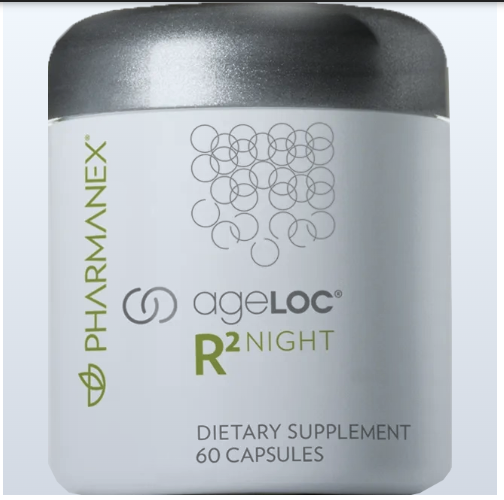
Read the full recordStep 1 -- ageLOC R2 Night: feed the pathway.
The NRF2 switch and the glutathione it builds.
Sulforaphane, the compound broccoli sprouts make, is the best-studied dietary signal for NRF2, the switch that turns on the cell's own phase-2 and glutathione genes.18 The strongest independent human data come from Qidong, China, where the air carries benzene. In a 2014 trial of 291 people, a broccoli-sprout beverage raised urinary excretion of a benzene detox marker by 61%, and a 2019 trial of 170 people found the rise was dose-dependent, about 63%.13,14,15 Sulforaphane is also well absorbed from sprout preparations.16,17 Those trials tested a sprout beverage, not this formula, and a marker in the urine is not a health outcome. The night formula is a 450 mg blend of grape seed, red orange and broccoli seed; the broccoli-seed share is not disclosed, so no dose can be set beside the trials.
The honest null. A 2016 ozone-challenge trial gave oral sulforaphane from a broccoli-sprout homogenate and did not measurably raise antioxidant gene expression.19 So the signal is strong for excretion of one class of airborne chemical, and not established for every pathway or every person. That is the shape of the evidence, and we would rather you see it.
The method behind the formula -- company data, not an independent trial
The formula’s makers measured its effect on gene expression with the method that first mapped the gene-expression signature of aging in mice and rhesus monkeys and showed caloric restriction reversing most of it.20,21,22 The same group later showed a resveratrol-containing mixture and, in 2020, a micronutrient blend shifting expression toward the caloric-restriction pattern in animals.23,24 That is what the heat maps show: a shift in gene expression in animals, not a proven outcome in people.
20% off, applied by the link
Nothing to paste -- the discount rides the link for you.
First-time buyers: checkout uses 2-step verification for fraud protection, so have your phone handy.
 $81, 20% off applied by the link
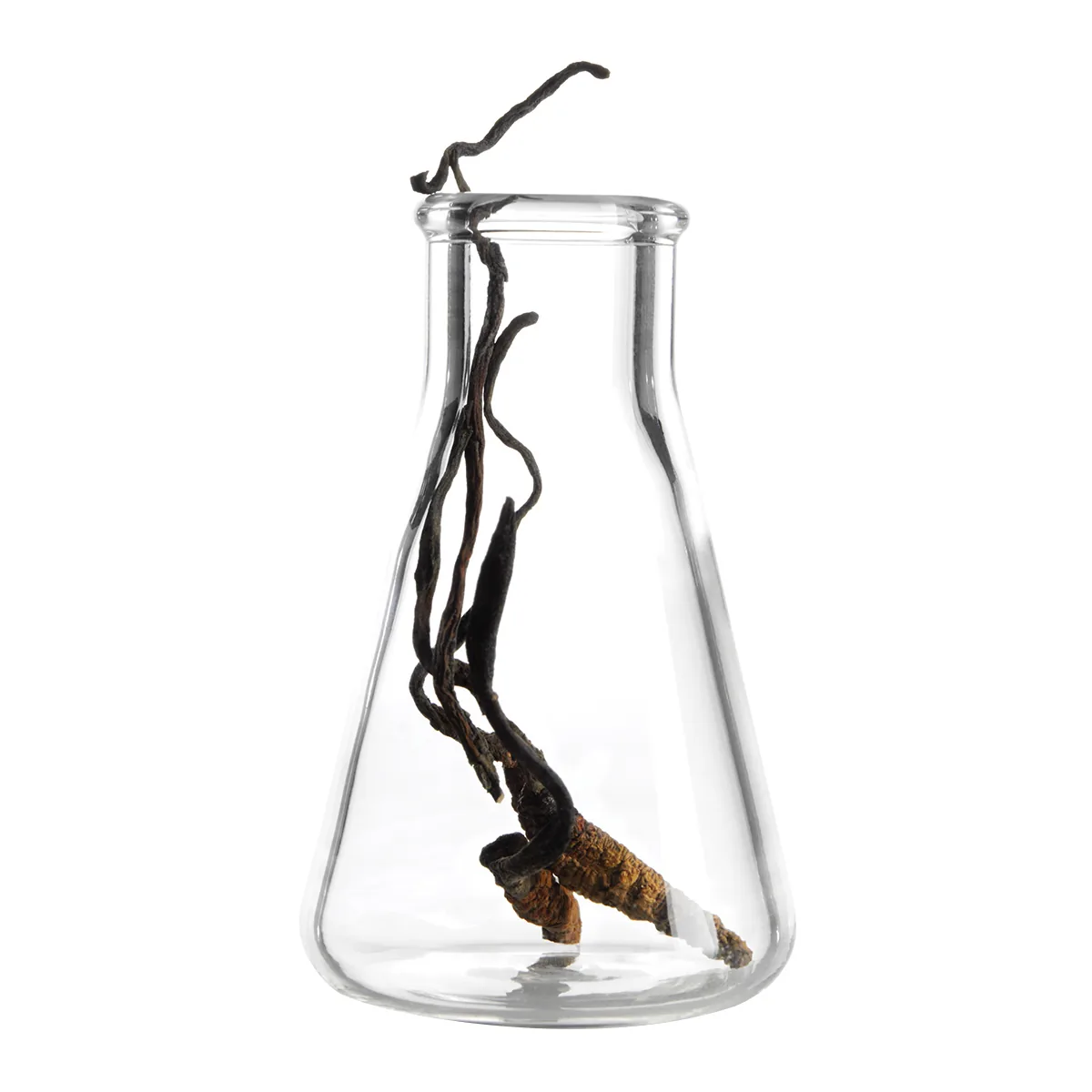
Step 2 -- CordyMax Cs-4: power it.
Clearing runs on energy, and mitochondria make it.
VO2max, your maximum capacity to use oxygen, is one of the most replicated predictors of how long people live, tracking with survival across more than 120,000 people and 46 years of follow-up.25,26,27,28,29 Training is the gold standard for raising it. Cordyceps, a mushroom that grows at altitude, is a second lever on the same machinery: in human trials the fermented Cs-4 strain raised aerobic and metabolic threshold, especially in older and less-conditioned adults,31,32,33 and a 2017 trial of 28 people using Cordyceps militaris reported a VO2max gain of 4.8 mL/kg/min over three weeks, with no effect after one.35 In the lab, cordyceps compounds protect mitochondria from oxidative damage and improved bioenergy status in animal work.39,40,41
The honest part: who it helps.
In trained young cyclists, one well-run trial found the fermented strain did not improve endurance performance,37 and a 2026 review of cordyceps in athletes found inconsistent effects.38 The consistent signal is in older and less-trained people. If your engine is already elite, do not expect a supplement to move it much.
Our view -- where we stop citing and start stating
Better mitochondrial function supports detox as part of normal respiration and metabolism. That is our reading of the physiology, not a result from any trial on this page: clearing chemistry is work, work needs energy, and mitochondria supply it.
20% off, applied by the link
Nothing to paste -- the discount rides the link for you.
First-time buyers: checkout uses 2-step verification for fraud protection, so have your phone handy.
 $36, 20% off applied by the link
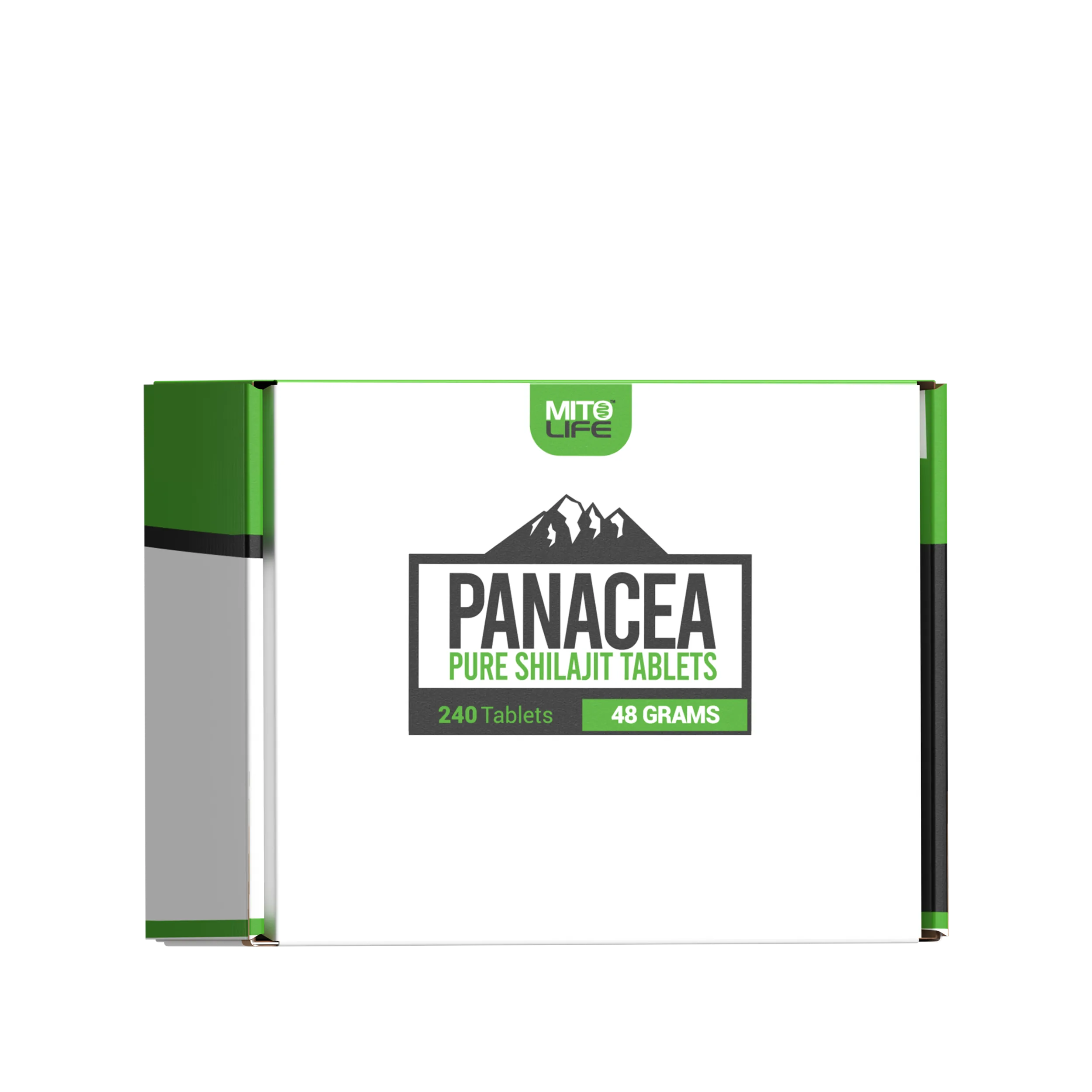
Step 3 -- Panacea Shilajit: support it.
Minerals and mitochondrial support, with the limits said out loud.
Shilajit is a mineral-organic resin from high mountain rock, used in Ayurvedic practice for centuries. The human research is early. A small study of 16 adults with no placebo group saw skeletal-muscle gene expression change,42 a 63-man trial at about 500 mg a day found less fatigue-related strength loss in the stronger half of participants,43 and a 48-week randomized trial in 60 postmenopausal women with osteopenia found less bone loss and better oxidative-stress markers at 250 to 500 mg a day.44 The link from there to mitochondria is indirect, built on mechanism and on those markers.45
The limits, and why sources matter.
Most of those trials tested one purified, standardized extract, several were funded by its manufacturer, and they are small and short. No trial has tested the finished Panacea product, so the results are evidence about shilajit, not about this jar. Its posted serving is 400 mg a day, close to the roughly 500 mg the trials used, and closeness of dose does not prove sameness of chemistry.
On metals, the record has two halves and we hold both. The chemistry is real and documented: humic and fulvic acids are carbon acids whose carboxyl and phenolic groups bind metal ions, which is why they are studied as natural chelators and mineral carriers, and why the 2024 shilajit review credits its humic fraction with binding a dozen of the metals found in it.49,47 In rats, fulvic acid changed how copper and zinc were absorbed and kept; in mice, humic binding did not change cadmium uptake at 24 hours.50,51 What the record does not yet hold is a human trial in which shilajit, humic or fulvic acid lowered a person’s burden of lead, mercury, arsenic or aluminium. The mechanism is on file; the human clearance trial is the gap, and it is on our search list. Until it lands we say what is shown: a documented binding chemistry, and no measured human clearance.
Shilajit also varies by where it comes from, and the raw material can carry metals, including thallium.46,48 What matters is current, lot-specific testing for lead, arsenic, cadmium, mercury and thallium. Ask any maker for it, and ask us for ours.
Measurement, not diagnosis.
Three steps is a reasoning order, not a prescription. The way to know whether the underlying systems are running well is to measure them, and the Lab Library shows which markers to look at. Nothing here diagnoses, treats, cures or prevents any disease.
Take it further
FAQ
How does the body clear formaldehyde?
Mainly through glutathione-dependent enzymes. The ADH5 enzyme uses glutathione to convert formaldehyde into formate, which the cell then recycles through folate-dependent one-carbon metabolism. That is why glutathione status and folate sit at the center of the argument, and why this page begins with the glutathione step.
Does sulforaphane raise glutathione or help clear toxins in people?
Independent human evidence is real but narrow. In Qidong, China, broccoli-sprout beverage trials raised urinary excretion of a benzene detox marker by about 61% (n=291) and about 63% in a dose-dependent trial (n=170). A 2016 ozone-challenge trial found oral sulforaphane did not measurably raise antioxidant gene expression. Excretion of a marker is not a clinical outcome, and the trials tested a sprout beverage, not a finished supplement.
What is the gene-expression heat map?
It is the maker's own measurement of how its formula shifts gene expression, built on a gene-expression method with a long independent publication record. It is company data, not an independent trial, and we label it that way. A shift in gene expression is not a proven health outcome in people.
Does cordyceps raise VO2max?
The evidence is mixed and depends on who is studied. Human trials of the fermented Cs-4 strain raised aerobic and metabolic threshold mostly in older and less-trained adults. One trial in trained young cyclists found no endurance benefit, and a 2026 review of athlete studies found inconsistent effects. A 2017 trial of Cordyceps militaris in 28 people reported a VO2max gain.
Is shilajit proven to detox heavy metals or repair mitochondria?
No. Human detoxification benefit is not established, and shilajit itself can contain toxic elements such as thallium, which is why current batch testing matters. The human trials are small, several were funded by the manufacturer of the standardized extract they tested, and none tested the finished Panacea product. We make no heavy-metal or mitochondrial-repair claim.
Why do shilajit sources and quality matter?
Shilajit is a geographically variable mineral-organic exudate, so one source can differ from another in humic content, minerals and contaminants. Trial results on a purified, standardized extract cannot be assumed to transfer to another resin or powder. Ask any maker for current lot-specific testing for lead, arsenic, cadmium, mercury and thallium.
Why are these three in this order?
It is our view of the physiology, not a trial result: feed the pathway that does the clearing, power it with healthy mitochondria, then support it with minerals and mitochondrial support. The order matches the strength of the evidence, with the glutathione step first because it has the most independent human data.
Is this a detox or a treatment?
No. Nothing here diagnoses, treats, cures or prevents any disease, and no supplement is shown here to lower formaldehyde in a person. This is education about supporting normal clearance and energy metabolism. Measurement, not diagnosis: the Lab Library explains which markers show how the underlying systems are running.
The research
All 51, grouped and numbered. Every marker in the text above jumps to its entry here, linked to the source. Animal and in-vitro studies are noted in the text where they are cited, and the one null result for step 1 has its own group.
The pathway: formaldehyde and glutathione5 studies · 1–5
- 1IARC meeting report (2005): formaldehyde classified as carcinogenic to humans
- 2Endogenous formaldehyde and cellular glutathione depletion
- 3How foreign compounds switch on the glutathione-transferase genes: the cell's general clearance program (2011)
- 4Stress signalling, glutathione metabolism and the transporters that carry conjugated toxins out (2007)
- 5Arsenic and glutathione synthesis: a systematic review in cells and animals (2020)
Which door: the routes that were studied, and the one that was not7 studies · 6–12
- 6The formaldehyde dispute, Part A (2026): acute and chronic inhalation toxicity, the record
- 7Toxicity of formaldehyde and its role in harmful compounds formed during food processing (2025)
- 8Contact allergy to formaldehyde and formaldehyde releasers, UK and Ireland multicentre (2026)
- 9Exogenous formaldehyde DNA-protein crosslinks found in nasal tissue only (rat isotope data, 2023)
- 10Formaldehyde dehydrogenase from human liver: the glutathione-dependent mechanism (1979)
- 11Two aldehyde clearance systems are essential to prevent lethal formaldehyde accumulation (2020)
- 12Residual formaldehyde in infant vaccines: a pharmacokinetic model, not a measurement (2013)
Step 1: sulforaphane and detox-marker excretion in people (independent trials)3 studies · 13–15
Step 1: sulforaphane bioavailability and mechanism3 studies · 16–18
Step 1: the honest null1 study · 19–19
Step 1: the gene-expression method (independent lineage; the heat map itself is company data)5 studies · 20–24
- 20Gene expression profile of aging and its retardation by caloric restriction (Science, 1999)
- 21Aging and caloric restriction in rhesus monkey skeletal muscle: the transcriptional profile (2001)
- 22Gene expression profiling of aging reveals a p53-mediated program; caloric restriction reversed most of it (2007)
- 23A resveratrol-containing nutraceutical mixture mimics the gene expression of long-term caloric restriction, mouse heart (2008)
- 24A micronutrient blend mimics calorie-restriction transcriptomics in multiple mouse tissues (2020)
Step 2: VO2max and how long you live6 studies · 25–30
- 25Association of Cardiorespiratory Fitness With Long-term Mortality Among Adults Undergoing Exercise Treadmill Testing
- 26Midlife Cardiorespiratory Fitness and the Long-Term Risk of Mortality: 46 Years of Follow-Up
- 27Cardiorespiratory fitness as a quantitative predictor of all-cause mortality and cardiovascular events in healthy men and women: a meta-analysis
- 28Impact of Cardiorespiratory Fitness on All-Cause and Disease-Specific Mortality: Advances Since 2009
- 29Cardiorespiratory fitness, body mass index and mortality: a systematic review and meta-analysis
- 30Cardiorespiratory Fitness, BMI, Mortality, and Cardiovascular Disease in Adults with Overweight/Obesity and Type 2 Diabetes
Step 2: cordyceps, oxygen and exercise capacity8 studies · 31–38
- 31Cordyceps Cs-4 and exercise metabolic threshold, RCT
- 32Effect of Cs-4 (Cordyceps sinensis) on exercise performance in healthy older subjects: a double-blind, placebo-controlled trial
- 33Randomized double-blind placebo-controlled clinical trial and assessment of fermentation product of Cordyceps sinensis (Cs-4) in enhancing aerobic capacity and respiratory function of the healthy elderly volunteers
- 34Cordyceps militaris improves tolerance to high intensity exercise after acute and chronic supplementation
- 35Cordyceps militaris Improves Tolerance to High-Intensity Exercise After Acute and Chronic Supplementation
- 36Cordyceps sinensis Increases Hypoxia Tolerance by Inducing Heme Oxygenase-1 and Metallothionein via Nrf2 Activation in Human Lung Epithelial Cells
- 37Cordyceps Sinensis (CordyMax Cs-4) supplementation does not improve endurance exercise performance
- 38Cordyceps and exercise performance in athletes: a 2026 review finding inconsistent effects
Step 2: cordyceps, mitochondria and ATP3 studies · 39–41
Step 3: shilajit, human trials3 studies · 42–44
- 42The human skeletal muscle transcriptome in response to oral shilajit supplementation (J Med Food, 2016; 16 adults, no placebo)
- 43The effects of shilajit supplementation on fatigue-induced decreases in muscular strength and serum hydroxyproline levels (J Int Soc Sports Nutr, 2019; 63 men)
- 44Shilajit extract reduces oxidative stress, inflammation, and bone loss in postmenopausal osteopenia (Phytomedicine, 2022; 48-week randomized trial)
Step 3: shilajit, composition, quality and safety7 studies · 45–51
- 45Safety and efficacy of shilajit (mumie, moomiyo) (Phytother Res, 2014)
- 46A comprehensive review on shilajit: what we know about its chemical composition (2025)
- 47Hazardous or advantageous: heavy metals and humic substances in shilajit (Biol Trace Elem Res, 2024)
- 48Quantifying thallium in shilajit and its supplements (BMC Chem, 2025)
- 49Biomedical applications of humic substances: natural chelators that bind and carry metal ions (review, 2025)
- 50Fulvic and humic acids changed copper and zinc absorption and tissue retention in rats (2018)
- 51Humic substances did not change cadmium absorption in mice at 24 hours (1999)
Education only. These statements have not been evaluated by the Food and Drug Administration. Nothing here is medical advice, and nothing here diagnoses, treats, cures or prevents any disease.