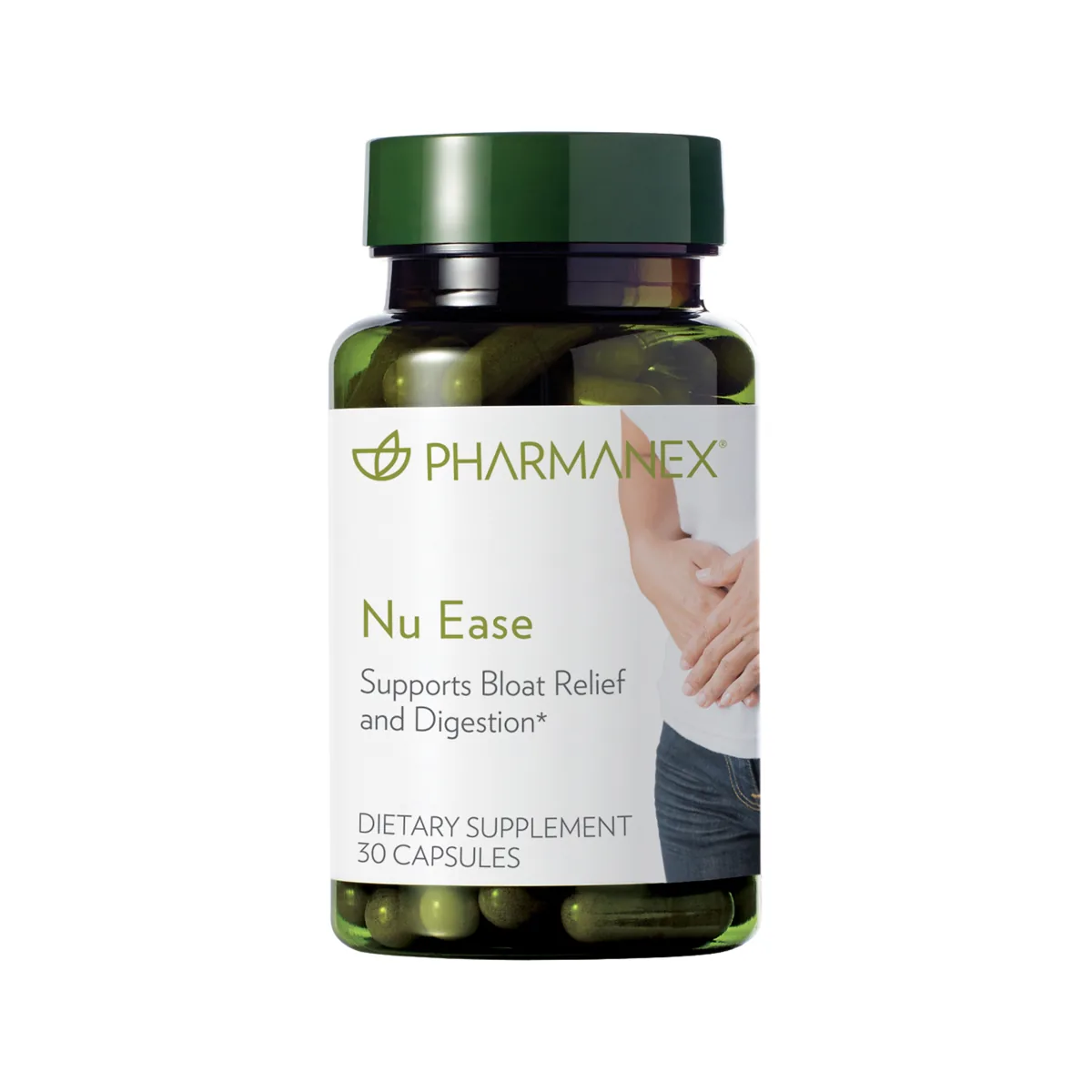




$33.00
$44.00 save $11.00 -- applied automatically through this link
When you buy through our links, we earn a small commission -- and that is what funds all the free education here. It never costs you more. Products are not intended to diagnose, treat, cure, or prevent any disease.
What it is
A non-laxative digestive aid built on natural plant extracts -- artichoke leaf and ginger -- for the everyday post-meal heaviness, bloating, and discomfort that a modern eating pattern brings on. Artichoke leaf supports bile flow, which is how the body handles a fatty meal; ginger supports gastric emptying and settles the stomach. Together they ease the meal gently, without the harsh push of a laxative.
Why the evidence supports it
These botanicals sit on real functional-dyspepsia research, not folklore alone. Artichoke leaf and ginger each carry human trials for post-meal fullness, bloating, and sluggish digestion, and the broader evidence for standardized botanical digestive blends (the STW-5 family) is some of the better data in this whole space, with meta-analyses in functional dyspepsia. The mechanism is sensible and gentle: artichoke's cynarin nudges bile flow so a fatty meal is handled more smoothly, while ginger's gingerols support gastric emptying and calm nausea. That supports the cell's Exchange function at the gut lining -- everyday digestive comfort, not a treatment for reflux, IBS, or any GI condition. And it pairs naturally with a microbiome product like Nu Biome: Nu Ease eases the meal in the moment, while Nu Biome tends the gut community underneath -- comfort now, foundation over time.
What it supports
- Supports relief of post-meal heaviness and bloating
- Supports healthy, comfortable digestion
- Provides artichoke and ginger, botanicals studied for digestive comfort
- A gentle, non-laxative option suitable for regular use
Which function it supports
Ties to the cell's Exchange function at the gut -- artichoke supporting bile flow and ginger supporting gastric emptying, for gentle everyday post-meal comfort.
Learn the why behind this pillarHow it relates to your cells and mind
Every product here ties back to a specific job your body does. This one touches the functions below -- follow either link to see the mechanism in full, then dig into the studies.
What it is made of -- and the mechanisms behind it
Each ingredient acts on several of the body's functions. Taken together, this product touches these cell and mind functions -- follow any to see the mechanism in full.
The ingredients
Mechanisms drawn from our ingredient knowledge base (2 profiled ingredients). Structure and function only -- not a treatment claim.
The science on the ingredients
These studies are research on the ingredients and mechanisms in this product, not on the finished product itself, and they are shown for education. Nothing here is medical advice, and nothing here may be used to diagnose, treat, cure, or prevent any disease. Talk to your own provider about what is right for you.
- Efficacy of artichoke leaf extract in the treatment of patients with functional dyspepsia: a six-week placebo-controlled, double-blind, multicentre trial
Alimentary pharmacology & therapeutics · 2003
Six-week double-blind placebo-controlled multicentre trial (n=247) of artichoke leaf extract in functional dyspepsia showing greater improvement in symptom scores and quality of life than placebo; supports artichoke leaf for everyday post-meal digestive comfort.
- Artichoke leaf extract reduces symptoms of irritable bowel syndrome and improves quality of life in otherwise healthy volunteers suffering from concomitant dyspepsia: a subset analysis
Journal of alternative and complementary medicine (New York, N.Y.) · 2004
Subset analysis of 208 adults with dyspepsia and concomitant irritable bowel symptoms in which artichoke leaf extract shifted self-reported bowel pattern toward normal and improved quality-of-life scores; open-label and post hoc, so supportive rather than confirmatory.
- Artichoke leaf extract reduces mild dyspepsia in an open study
Phytomedicine : international journal of phytotherapy and phytopharmacology · 2002
Open dose-ranging study in 454 adults with self-reported dyspepsia in which two months of artichoke leaf extract cut the global dyspepsia score by about 40%; supportive of digestive comfort but open-label with no placebo group.
- Artichoke leaf extract reduces steatosis and decreases liver size in prebariatric patients: A randomized placebo-controlled pilot trial-The "SteatoChoke-Study".
Journal of Clinical Lipidology · 2025
In prebariatric patients artichoke leaf extract reduced steatosis and liver size, alongside a significant transaminase increase suggesting a distinct hepatic response in individuals with obesity.
- The effects of co‐administration of artichoke leaf extract supplementation with metformin and vitamin E in patients with nonalcoholic fatty liver disease: A randomized clinical trial
Phytotherapy Research · 2021
Co-administration of artichoke leaf extract showed effects on complications in patients with non-alcoholic fatty liver disease, with larger clinical trials called for.
- Prevention of Liver Damage in Rats by Artichoke Leaf Extract, Colchicine and Pioglitazone
Springernature · 2025
In 35 rats with bile-duct-induced liver fibrosis, artichoke leaf extract, colchicine, and pioglitazone each reduced liver enzyme levels and fibrosis after 7 days of treatment, with artichoke leaf extract showing the greatest improvement.
Efficacy and Safety of STW 5-II for Functional Dyspepsia Treatment: A Patient Data-Based Meta-AnalysisEstablishedMeta-analysis2024
Using individual patient data from 2 of 4 identified randomized trials, STW 5-II modestly improved fullness, early satiety and epigastric pain scores over 4 to 8 weeks in functional dyspepsia, with no more side effects than placebo.
Andresen V; Shah A; Fink C; Rabini S; Wargenau M; Holtmann G -- Digestion
Pharmacological properties of ginger (Zingiber officinale): what do meta-analyses say? a systematic reviewEmergingSystematic review2025
Umbrella systematic review of meta-analyses of ginger, finding consistent reductions in CRP and TNF-alpha and benefit for pregnancy-associated nausea; an honest top-level read on which ginger claims are actually well supported.
Paudel KR; Orent J; Penela OG -- Frontiers in pharmacology
Kiwifruit and Kiwifruit Extracts for Treatment of Constipation: A Systematic Review and Meta-AnalysisEstablishedMeta-analysis2022
A meta-analysis of 7 randomized trials found kiwifruit modestly increased weekly bowel movements and reduced abdominal pain compared to placebo, though the certainty of evidence was low to moderate and larger trials are needed.
Eltorki M; Leong R; Ratcliffe EM -- Canadian journal of gastroenterology & hepatology
Habitual Green Kiwifruit Consumption Is Associated with a Reduction in Upper Gastrointestinal Symptoms: A Systematic Scoping ReviewEmergingSystematic review2022
A scoping review by a single, non-peer-reviewed reviewer found green kiwifruit trials showed good evidence for reduced abdominal pain and some evidence for less indigestion, but data on reflux relief was limited.
Bayer SB; Frampton CM; Gearry RB; Barbara G -- Advances in nutrition (Bethesda, Md.)
Ginger in gastrointestinal disorders: A systematic review of clinical trialsEstablishedSystematic review2019
Systematic review of clinical trials of ginger in gastrointestinal disorders concluding divided daily doses around 1500 mg benefit nausea relief, while noting the trial base for other digestive complaints is still small; nausea is the best-supported part of ginger's digestive profile.
Nikkhah Bodagh M; Maleki I; Hekmatdoost A -- Food science & nutrition
Meta-analysis: phytotherapy of functional dyspepsia with the herbal drug preparation STW 5 (Iberogast)EstablishedMeta-analysis2004
Meta-analysis pooling placebo-controlled trials of the multi-herb preparation STW 5 in functional dyspepsia, more effective than placebo on the most bothersome gastrointestinal symptom; category evidence that standardized botanical combinations support digestive comfort -- STW 5 is a different formula from Nu Ease.
Melzer J; Rösch W; Reichling J; Brignoli R; Saller R -- Alimentary pharmacology & therapeutics
Consumption of 2 Green Kiwifruits Daily Improves Constipation and Abdominal Comfort-Results of an International Multicenter Randomized Controlled TrialEstablishedRandomized controlled trial2023
In a 184-person international crossover trial, two green kiwifruit daily for 4 weeks increased weekly bowel movements and improved gastrointestinal comfort in people with constipation or IBS-C, measured against their own baseline.
Gearry R; Fukudo S; Barbara G; Kuhn-Sherlock B; Ansell J; Blatchford P; Eady S; Wallace A; Butts C; Cremon C; Barbaro MR; Pagano I; Okawa Y; Muratubaki T; Okamoto T; Fuda M; Endo Y; Kano M; Kanazawa M; Nakaya N; Nakaya K; Drummond L -- The American journal of gastroenterology
Exploratory Comparative Effectiveness Trial of Green Kiwifruit, Psyllium, or Prunes in US Patients With Chronic ConstipationEmergingRandomized controlled trial2021
US comparative-effectiveness trial randomizing adults with chronic constipation to green kiwifruit, prunes or psyllium for 4 weeks; positions kiwifruit alongside two established fibre approaches for supporting regularity.
Chey SW; Chey WD; Jackson K; Eswaran S -- The American journal of gastroenterology
STW 5, a phytopharmacon for patients with functional dyspepsia: results of a multicenter, placebo-controlled double-blind studyEstablishedRandomized controlled trial2007
Multicenter placebo-controlled double-blind study in 315 patients with functional dyspepsia showing STW 5 improved a validated gastrointestinal symptom score over 8 weeks; the largest placebo-controlled trial in this botanical category, on a different formula from Nu Ease.
von Arnim U; Peitz U; Vinson B; Gundermann KJ; Malfertheiner P -- The American journal of gastroenterology
Mechanisms underlying effects of kiwifruit on intestinal function shown by MRI in healthy volunteersEmergingRandomized controlled trial2019
Crossover trial in healthy volunteers using MRI to show how kiwifruit changes fluid distribution in the intestine; a direct human mechanism -- kiwifruit's water-holding effect in the bowel -- rather than an inferred one.
Wilkinson-Smith V; Dellschaft N; Ansell J; Hoad C; Marciani L; Gowland P; Spiller R -- Alimentary pharmacology & therapeutics
Treatment of functional dyspepsia with a herbal preparation. A double-blind, randomized, placebo-controlled, multicenter trialEstablishedRandomized controlled trial2004
Double-blind randomized placebo-controlled multicenter trial (n=120) of the six-herb preparation STW 5-II in functional dyspepsia; category evidence for botanical digestive blends, not a study of Nu Ease itself.
Madisch A; Holtmann G; Mayr G; Vinson B; Hotz J -- Digestion
Efficacy of actinidin-containing kiwifruit extract Zyactinase on constipation: a randomised double-blinded placebo-controlled clinical trialEmergingRandomized controlled trial2018
Randomized double-blind placebo-controlled trial of Zyactinase, an actinidin-containing green kiwifruit extract, on bowel movement, stool form and IBS-associated symptoms; branded-extract evidence for kiwifruit beyond whole fruit.
Weir I; Shu Q; Wei N; Wei C; Zhu Y -- Asia Pacific journal of clinical nutrition
Efficacy of artichoke leaf extract in the treatment of patients with functional dyspepsia: a six-week placebo-controlled, double-blind, multicentre trialEstablishedRandomized controlled trial2003
Six-week double-blind placebo-controlled multicentre trial (n=247) of artichoke leaf extract in functional dyspepsia showing greater improvement in symptom scores and quality of life than placebo; supports artichoke leaf for everyday post-meal digestive comfort.
Holtmann G; Adam B; Haag S; Collet W; Grünewald E; Windeck T -- Alimentary pharmacology & therapeutics
Consumption of kiwifruit capsules increases Faecalibacterium prausnitzii abundance in functionally constipated individuals: a randomised controlled human trialEmergingRandomized controlled trial2017
In a small crossover trial of 9 constipated adults, gold kiwifruit (Livaux, 2400 mg) increased the gut bacterium Faecalibacterium prausnitzii, a butyrate producer; the lower-dose green kiwifruit powder did not show this specific effect.
Blatchford P; Stoklosinski H; Eady S; Wallace A; Butts C; Gearry R; Gibson G; Ansell J -- Journal of nutritional science
Effect of ginger on gastric motility and symptoms of functional dyspepsiaEmergingRandomized controlled trial2011
Randomized double-blind crossover study in 11 patients with functional dyspepsia in which 1.2 g ginger accelerated gastric emptying and increased antral contractions; supports post-meal digestive comfort, though very small and symptom change was limited.
Hu ML; Rayner CK; Wu KL; Chuah SK; Tai WC; Chou YP; Chiu YC; Chiu KW; Hu TH -- World journal of gastroenterology
Effects of ginger on gastric emptying and motility in healthy humansEmergingRandomized controlled trial2008
Randomized double-blind crossover trial in 24 healthy volunteers in which 1200 mg ginger accelerated gastric emptying and stimulated antral contractions after a test meal; direct human evidence for ginger moving a meal along and easing post-meal fullness.
Wu KL; Rayner CK; Chuah SK; Changchien CS; Lu SN; Chiu YC; Chiu KW; Lee CM -- European journal of gastroenterology & hepatology
Absorption and metabolism of bioactive molecules after oral consumption of cooked edible heads of Cynara scolymus L. (cultivar Violetto di Provenza) in human subjects: a pilot studyEmergingClinical trial2007
Human absorption and metabolism study after consumption of cooked artichoke heads, tracking chlorogenic acid, dicaffeoylquinic acids and luteolin/apigenin glycosides in plasma; complements the leaf-extract pharmacokinetics with whole-food data.
Azzini E; Bugianesi R; Romano F; Di Venere D; Miccadei S; Durazzo A; Foddai MS; Catasta G; Linsalata V; Maiani G -- The British journal of nutrition
Bioavailability and pharmacokinetics of caffeoylquinic acids and flavonoids after oral administration of Artichoke leaf extracts in humansEmergingClinical trial2005
Human pharmacokinetic study tracking the actual artichoke molecules -- caffeoylquinic acids including cynarin and chlorogenic acid, plus the flavonoid luteolin-7-O-glucoside -- after oral artichoke leaf extract, showing they are absorbed largely as metabolites; establishes which constituents realistically reach circulation.
Wittemer SM; Ploch M; Windeck T; Müller SC; Drewelow B; Derendorf H; Veit M -- Phytomedicine : international journal of phytotherapy and phytopharmacology
Artichoke leaf extract reduces symptoms of irritable bowel syndrome and improves quality of life in otherwise healthy volunteers suffering from concomitant dyspepsia: a subset analysisEmergingClinical trial2004
Subset analysis of 208 adults with dyspepsia and concomitant irritable bowel symptoms in which artichoke leaf extract shifted self-reported bowel pattern toward normal and improved quality-of-life scores; open-label and post hoc, so supportive rather than confirmatory.
Bundy R; Walker AF; Middleton RW; Marakis G; Booth JC -- Journal of alternative and complementary medicine (New York, N.Y.)
Artichoke leaf extract reduces mild dyspepsia in an open studyEmergingClinical trial2002
Open dose-ranging study in 454 adults with self-reported dyspepsia in which two months of artichoke leaf extract cut the global dyspepsia score by about 40%; supportive of digestive comfort but open-label with no placebo group.
Marakis G; Walker AF; Middleton RW; Booth JC; Wright J; Pike DJ -- Phytomedicine : international journal of phytotherapy and phytopharmacology
Effects of ginger on gastroduodenal motilityEmergingRandomized controlled trial1999
Manometry study in 12 healthy volunteers showing a ginger rhizome extract increased antral motility during phase III of the migrating motor complex and the motor response to a test meal; human evidence that ginger supports normal gastroduodenal motility.
Micklefield GH; Redeker Y; Meister V; Jung O; Greving I; May B -- International journal of clinical pharmacology and therapeutics
Increase in choleresis by means of artichoke extractEmergingRandomized controlled trial1994
Randomized placebo-controlled double-blind crossover pilot (n=20) measuring bile secretion directly with intraduodenal multi-channel probes: a standardized artichoke extract whose main constituent is cynarin raised bile secretion 127% at 30 minutes and 152% at 60 minutes. Human confirmation of the choleretic mechanism behind artichoke and post-meal heaviness.
Kirchhoff R; Beckers C; Kirchhoff GM; Trinczek-Gärtner H; Petrowicz O; Reimann HJ -- Phytomedicine : international journal of phytotherapy and phytopharmacology
Gingerols and shogaols: Important nutraceutical principles from gingerEmergingExpert review2015
Phytochemistry review of gingerols and shogaols, including how heat and drying convert gingerols into the more pungent shogaols; explains why ginger extracts differ in their actual active-molecule profile depending on processing.
Semwal RB; Semwal DK; Combrinck S; Viljoen AM -- Phytochemistry
STW 5 (Iberogast®)--a safe and effective standard in the treatment of functional gastrointestinal disordersEmergingExpert review2013
A review of 12 clinical trials found STW 5 (Iberogast) significantly improved symptoms of functional dyspepsia and irritable bowel syndrome versus placebo, with comparable efficacy to a standard prokinetic and a low 0.04% adverse-reaction rate.
Ottillinger B; Storr M; Malfertheiner P; Allescher HD -- Wiener medizinische Wochenschrift (1946)
Balanced by design -- we show supporting and contradicting findings. Search all studies
If you have had labs done
These are lab markers where this product's ingredients have measured evidence in our citation library. This is not a claim that the product will change your results -- the research attaches to the ingredient, and what a marker means depends on the whole picture. Each one links to its full entry, including what typically moves it and how to read it.
- ALT & AST (Liver Enzymes)emerging evidence
via Artichoke leaf extract · 12 studies, 5 in people
What people often notice when this marker sits outside the usual range
Higher: Fatigue disproportionate to activity is the commonest complaint that turns out to have a raised ALT behind it.
- Lipid Panel (Total Cholesterol, LDL, Non-HDL, Cholesterol/HDL Ratio, Triglycerides)emerging evidence
via Artichoke leaf extract · 13 studies, 2 in people
What people often notice when this marker sits outside the usual range
Higher: The symptoms that actually travel with raised triglycerides belong to the metabolic pattern behind them -- the post-meal crash, central weight, rising blood pressure, fatty liver.
Lower: Very low total cholesterol alongside low albumin and unintended weight loss points at absorption or liver capacity, not at good health.
Lab results are interpreted by a qualified clinician who knows your history. Nothing here diagnoses anything or replaces that conversation.
No product works in isolation
Every cell function above -- Sense, Exchange, Transform, Build, Maintain, Adapt -- needs the same broad base of optimal micronutrient levels running underneath it, all the time. Nu Ease is not a stand-alone fix; it is one piece that plugs into that larger system. The foundation comes first, and this supports it.
Stacks well with
Pick your goal -- here is what Nu Ease pairs with for each. Nothing works in isolation; these share the same systems.
For Gut Health
Foundational, or targeted?
Not everything in the shop is meant to be taken forever. Some products here are foundational -- a daily nutrient base built for long-term, ongoing use. Others are targeted -- shorter-term support for a specific season, not a lifelong habit. If you are not sure which one this is, that is a fair question to ask us before you buy.
Learn more, on your terms
Do not take our word for it -- go read. Each topic below opens a pre-loaded search so you can explore the nutrient, the mechanism, or the device for yourself.
Search the full studies libraryHow to use it
Take with or just after meals, per the label -- most useful around richer or larger meals. Follow the current label for serving size.
Where to get it
We are lining up the best way to get this one to you. In the meantime, reach out and we will point you the right way -- or browse the full shop to see every product.
See the full shopThe studies
See the research behind the science we point to.
Explore studiesThe blog
Plain-language reads on how it all fits together.
Read the blogOptimal nutrients are the definition of longevity
Long-term cell function depends on having what it needs, at the level it needs it, for as long as it needs it. That is the whole thesis behind everything we point you to here.
When you buy through our links, we earn a small commission -- and that is what funds all the free education here. It never costs you more. Products are not intended to diagnose, treat, cure, or prevent any disease.
Nu Ease is a gentle, non-laxative botanical digestive aid built on artichoke leaf and ginger, for the post-meal heaviness, bloating and discomfort a modern eating pattern brings on. It is aimed at comfort after eating rather than at moving anything through.
FAQ
What does Nu Ease support?
It supports normal digestion and everyday digestive comfort, and helps with the post-meal heaviness and bloating that come with larger or richer meals.
How do I take it?
Take it with or after a meal, per the label, particularly before a meal you expect to sit heavily.
What makes it different?
It is explicitly non-laxative. Artichoke and ginger work on digestion and gastric comfort rather than stimulating the bowel, which is a different thing from most products in this aisle.