
$30.00
Your discount applies with code HOLISTICLOVE.
When you buy through our links, we earn a small commission -- and that is what funds all the free education here. It never costs you more. Products are not intended to diagnose, treat, cure, or prevent any disease.
What it is
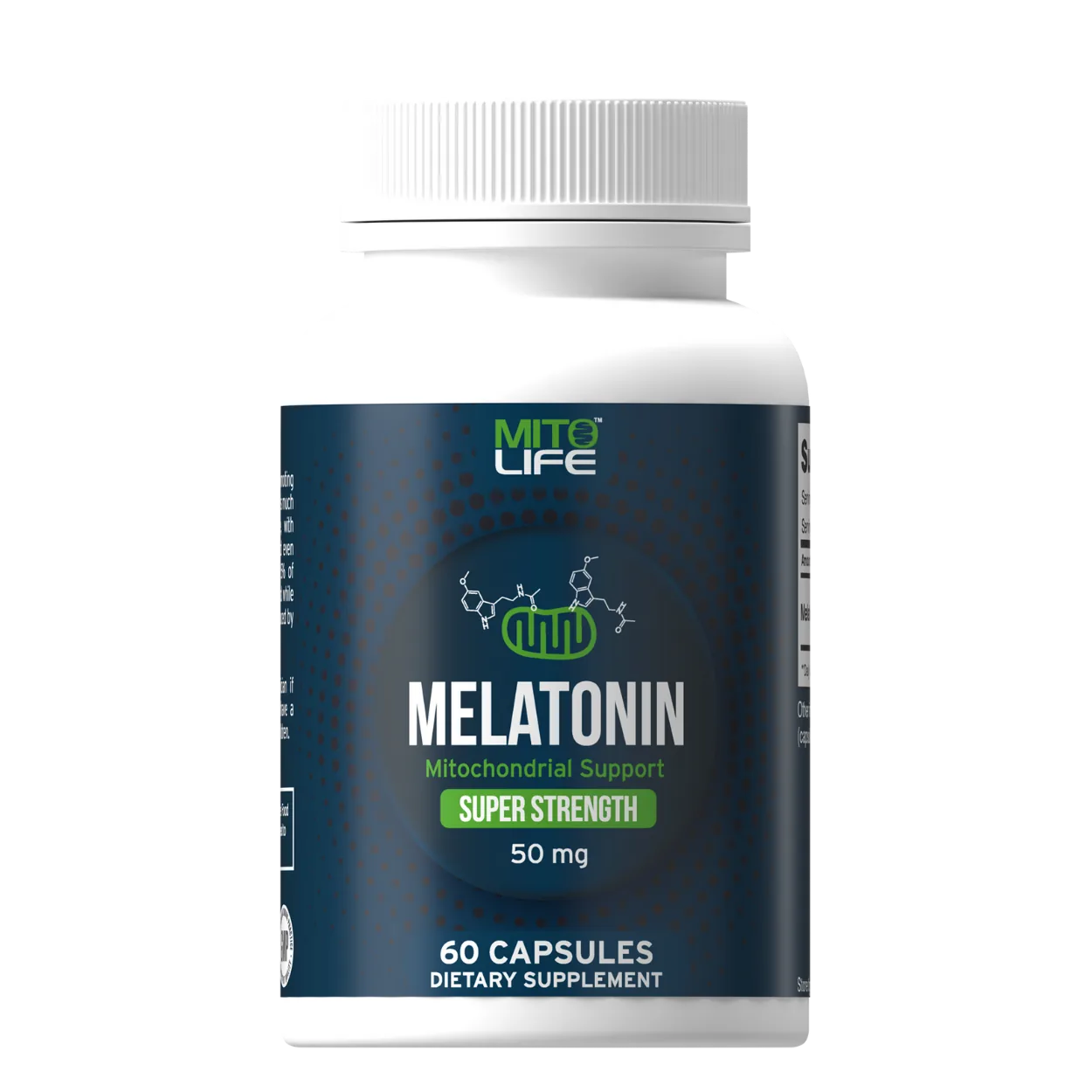
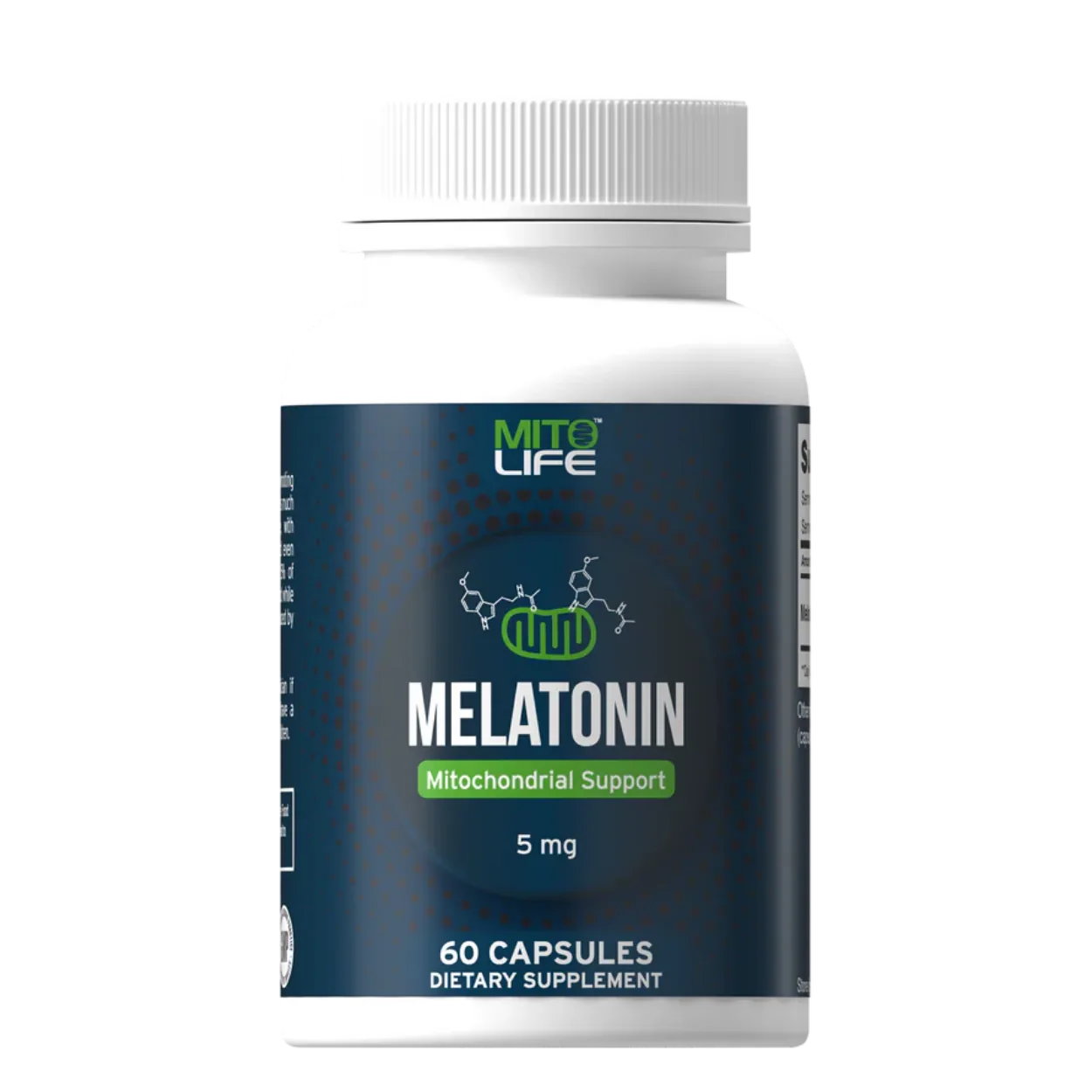
A melatonin supplement offered in a lower everyday amount and a higher amount. Most people know melatonin as the hormone the body releases as darkness falls -- a timing signal that helps realign a drifted sleep-wake rhythm rather than sedating you. But that is only half of it: melatonin is also one of the body's own antioxidants, made and concentrated right inside the mitochondria, the cell's power plants. Because our own production falls steeply with age, the offering spans a low everyday dose and a higher one.
Why the evidence supports it
Melatonin is one of the most heavily studied molecules in science, and its familiar roles -- shortening the time to fall asleep and shifting a clock that has drifted with travel or late-night light -- are only the surface. The deeper, far-less-marketed story is that melatonin is a mitochondrial antioxidant: it is produced and concentrated inside the mitochondria themselves, it helps protect their membranes from oxidative wear, and it works as part of a team rather than alone, helping regenerate vitamins C and E back toward their active forms. Since the body's own output declines markedly with age, topping up that signal is a structure/function rationale that reaches well past sleep. Its safety record is also unusually clean: melatonin has no established lethal dose and is well tolerated across a wide range in the research, which is why both a low everyday amount and a higher one are offered. Kept honest, it supports the Mind's Regulate function -- the night-time timing signal -- and the cell's own antioxidant defenses in the mitochondria; it is not a sedative, and not a treatment for any condition.
What it supports
- Supports your natural circadian (sleep-wake) timing
- Acts as a mitochondrial antioxidant, supporting the cell's own defenses
- Helps regenerate vitamins C and E as part of the antioxidant network
- Tops up a signal the body produces less of with age
Which function it supports
Ties to the Mind's Regulate function and the cell's antioxidant defense -- melatonin is both the body's own circadian messenger and a mitochondrial antioxidant, so it supports the timing of your sleep-wake cycle and the cell's protection from oxidative wear.
Learn the why behind this pillarHow it relates to your cells and mind
Every product here ties back to a specific job your body does. This one touches the functions below -- follow either link to see the mechanism in full, then dig into the studies.
What it is made of -- and the mechanisms behind it
Each ingredient acts on several of the body's functions. Taken together, this product touches these cell and mind functions -- follow any to see the mechanism in full.
The ingredients
Mechanisms drawn from our ingredient knowledge base (1 profiled ingredients). Structure and function only -- not a treatment claim.
What’s actually in it
Label revision label image on the product page, read 2026-09-11Transcribed from the manufacturer’s official Product Information Page, exactly as printed. Ingredient names that link open our research page for that ingredient, with the studies behind it.
| Amount per 1 capsule | Amount | % DV |
|---|---|---|
| Melatonin | 5 mg | ** |
- Servings per container:
- 60
- Other ingredients:
- Vegetarian capsule (hypromellose and water), bamboo extract.
Source: official Product Information Page . Amounts are the manufacturer’s, not ours. Structure and function only -- nothing here is medical advice, and nothing here may be used to diagnose, treat, cure, or prevent any disease.
The science on the ingredients
These studies are research on the ingredients and mechanisms in this product, not on the finished product itself, and they are shown for education. Nothing here is medical advice, and nothing here may be used to diagnose, treat, cure, or prevent any disease. Talk to your own provider about what is right for you.
- Effects of melatonin supplementation on blood glycemic indices in adults: a GRADE-assessed systematic review and dose-response meta-analysis of randomized controlled trials.
Nutrition & metabolism · 2026
Across 30 randomized trials, melatonin supplementation modestly reduced fasting blood glucose, insulin, and HOMA-IR and improved an insulin sensitivity index, but had no significant effect on HbA1c, with high heterogeneity.
- Optimizing timing and dose of exogenous melatonin administration in neuropsychiatric pediatric populations: a meta-analysis on sleep outcomes.
Sleep medicine reviews · 2025
Melatonin reached the maximal efficacy between 2 and 4 mg/day.
- Mechanism of Herbal Pairs Modulating Endogenous Melatonin to Ameliorate Sleep Disorders: Data Mining, Network Pharmacology and Meta-Analysis.
Combinatorial chemistry & high throughput screening · 2025
A meta-analysis on Melatonin found that meta-analysis and network pharmacology suggest that the PA-BR pair might offer superior efficacy by modulating membrane potential and nicotine addiction pathways, targeting GRIN2A, GRIN1, GRIN3A, and GRIN2B to regulate melatonin levels.
- Optimizing the Time and Dose of Melatonin as a Sleep-Promoting Drug: A Systematic Review of Randomized Controlled Trials and Dose-Response Meta-Analysis
Journal of Pineal Research · 2024
This dose-response meta-analysis found melatonin's benefit for reducing sleep onset latency peaked around 3 to 5 mg per day, with diminishing added benefit at higher doses.
- Efficacy of melatonin and ramelteon for the acute and long-term management of insomnia disorder in adults: A systematic review and meta-analysis.
Journal of sleep research · 2023
PR melatonin and ramelteon appear efficacious compared with placebo for insomnia symptoms with PR melatonin showing mostly small to medium effect sizes. PR melatonin for individuals with a mean age ≥ 55 and ramelteon show larger effect sizes.
- The therapeutic effect of exogenous melatonin on depressive symptoms
Frontiers in Psychiatry · 2022
BDI subgroup improved -- Overall pooled depression effect was not significant (Melatonin evidence)
Melatonin and Vitamins: A Promising Combination to Augment Conventional Anticancer TherapiesEmergingExpert review2025
This review discusses proposed synergistic mechanisms studied when melatonin is combined with vitamins C, E, and D, involving oxidative-stress regulation, apoptosis signaling, and immune modulation in oncology models.
Talib WH; Sabri SM; Hadi RW; Prémusz V; Beregi T -- Nutrients
Melatonin's paradox: From therapeutic benefits to toxicity warningsEmergingExpert review2025
This review presents melatonin's dual profile, summarizing both its antioxidant and anti-inflammatory actions and the emerging toxicological concerns reported with exogenous use in certain populations.
Amrollahi-Sharifabadi M; Oladejo TO; Ibrahim AS; Shakoor B; Mehrpour O; Sadeghi-Hashjin G; Gonçalves S -- Chemico-biological interactions
Melatonin supplementation: new insights into health and diseaseEmergingExpert review2025
This review of seventy-one studies summarized melatonin's antioxidant and anti-inflammatory properties across many conditions and evaluated supplementation protocols, adverse effects, and associated risks.
Minari TP; Pisani LP -- Sleep & breathing = Schlaf & Atmung
Preventive effects of melatonin on periodontal tissue destruction due to psychological stress in rats with experimentally induced periodontitis.2024
In rats with induced gum disease and psychological stress, melatonin injections lowered stress hormone levels and reduced stress-related bone loss around the teeth compared to untreated stressed rats with periodontitis.
Bostan SA; Yemenoglu H; Kose O; Akyildiz K; Mercantepe T; Saral S -- Journal of periodontal research
Sleep and endocrine effects of acupuncture for insomnia: a systematic review and meta-analysis of randomized controlled trialsEstablishedSystematic review2026
Across 12 randomized trials, acupuncture for insomnia raised serum melatonin, lowered salivary cortisol, and improved sleep quality scores and polysomnography-measured sleep efficiency compared with controls.
Yun Hu; Yi Liu; Wenwen Li; Yuting Wang
Melatonin in glioblastoma therapy: clinical promise and mechanistic insights from bench to bedside.EmergingSystematic review2026
A systematic review found that preclinical data consistently showed that melatonin inhibited GBM proliferation, migration, invasion, stemness, and angiogenesis; disrupted mitochondrial metabolism; induced apoptosis; and modulated key pathways (EZH2 -- STAT3, HIF-1α, SIRT1, MT1/MT2, miRNAs).
Alomari O; Güney B; Juhmani RA; Alrabadi B; Mokresh ME; Odabas H; Alomari T; Reiter RJ -- Neurosurgical review
Effects of melatonin supplementation on blood glycemic indices in adults: a GRADE-assessed systematic review and dose-response meta-analysis of randomized controlled trials.ContestedMeta-analysis2026
Across 30 randomized trials, melatonin supplementation modestly reduced fasting blood glucose, insulin, and HOMA-IR and improved an insulin sensitivity index, but had no significant effect on HbA1c, with high heterogeneity.
Hadi S; Hadi V; Mohammadzadeh M; Jahangirfard B -- Nutrition & metabolism
The protective effects of melatonin against electromagnetic waves of cell phones in animal models: A systematic review.Systematic review2025
A systematic review of 11 animal studies found melatonin significantly protected the brain, skin, eyes, testis, and kidneys from cell phone electromagnetic wave-induced oxidative stress, tissue atrophy, and cell death.
Amiri M; Khazaie H; Mohammadi M -- Animal models and experimental medicine
Optimizing timing and dose of exogenous melatonin administration in neuropsychiatric pediatric populations: a meta-analysis on sleep outcomes.EmergingMeta-analysis2025
Melatonin reached the maximal efficacy between 2 and 4 mg/day.
Bruno S; Cenerini G; Lo Giudice L; Cruz-Sanabria F; Benedetti D; Crippa A; Fiori S; Ferri R; Masi G; Faraguna U -- Sleep medicine reviews
Optimizing the Time and Dose of Melatonin as a Sleep-Promoting Drug: A Systematic Review of Randomized Controlled Trials and Dose-Response Meta-AnalysisMeta-analysis2024
This dose-response meta-analysis found melatonin's benefit for reducing sleep onset latency peaked around 3 to 5 mg per day, with diminishing added benefit at higher doses.
Cruz-Sanabria F; Bruno S; Crippa A; Frumento P; Scarselli M; Skene DJ; Faraguna U -- Journal of Pineal Research
Mechanism of Herbal Pairs Modulating Endogenous Melatonin to Ameliorate Sleep Disorders: Data Mining, Network Pharmacology and Meta-Analysis.EmergingMeta-analysis2025
A meta-analysis on Melatonin found that meta-analysis and network pharmacology suggest that the PA-BR pair might offer superior efficacy by modulating membrane potential and nicotine addiction pathways, targeting GRIN2A, GRIN1, GRIN3A, and GRIN2B to regulate melatonin levels.
Zhai Z; Dai J; Kong F; Zhu Z; Cai J; Xie D; Huang S; Jiang T; Xu Y; Sun T -- Combinatorial chemistry & high throughput screening
Postnatal Development of the Circadian Rhythmicity of Human Pineal Melatonin Synthesis and Secretion (Systematic Review)Systematic review2024
This systematic review traces how the melatonin rhythm develops after birth and matures into the adult evening-rise pattern controlled by the brain's central circadian clock.
Ekkehart Paditz -- Frontiers journal
Melatonin and vitamin D, two sides of the same coin, better to land on its edge to improve multiple sclerosisSystematic review2023
Skin sunlight exposure drives vitamin D synthesis while light absence drives pineal melatonin synthesis; the two pathways move inversely with sun exposure.
Majid Ghareghani; Kazem Zibara; Serge Rivest -- PNAS
The short-term and long-term adverse effects of melatonin treatment in children and adolescents: a systematic review and GRADE assessmentSystematic review2023
No major increase in serious adverse events was established -- Non-serious adverse events were increased; long-term puberty and bone evidence remained uncertain
Händel MN et al. -- EClinicalMedicine
Heat-Treated <i>Limosilactobacillus fermentum</i> PS150 Improves Sleep Quality with Severity-Dependent Benefits: A Randomized, Placebo-Controlled TrialEstablishedRandomized controlled trial2025
In a randomized trial of 84 adults with poor sleep, heat-treated Limosilactobacillus fermentum PS150 did not outperform placebo on overall sleep scores, but raised nocturnal melatonin and showed greater benefit in more severe insomnia.
Mon-Chien Lee; Chao-Yuan Chen; Ching-Yun Chen; Chi-Chang Huang
Melatonin Impairs Glucose Tolerance, First-Phase Insulin Secretion, and Insulin Feedback Inhibition; Interaction With MTNR1B Diabetes Risk Variant.EmergingRandomized controlled trial2026
A randomized controlled trial on Melatonin found that these findings identify blunted β-cell responsivity to glucose and dysregulated insulin negative feedback as key mechanisms linking melatonin signaling to diabetes risk.
Qian J; Stefanovski D; Andersen PAK; Vujovic N; Kelly L; Lepson J; Nguyen H; Byrne S; Wang W; Mandrup-Poulsen T; Adler G; Garaulet M -- Diabetes care
Sex and Seasonal Variations in Melatonin Suppression and Alerting Response to LightClinical trial2025
Melatonin's sensitivity to light exposure varied by both sex and season of testing in this human study.
Fatemeh Fazlali; Rafael Lazar; Faady Yahya; Oliver Stefani; Manuel Spitschan; Christian Cajochen -- PubMed Central (PMC)
The effects of resistance are superior to aerobic exercise in improving delayed sleep-wake phase disorder in male college studentsEstablishedRandomized controlled trial2025
In male college students with delayed sleep-wake phase disorder, resistance exercise improved more sleep measures and raised melatonin and IL-10 more than aerobic exercise, while both types reduced anxiety scores.
Hu YX; Liu XM; Zhang NX; Ma ZY; Zhu Z; Cao ZB -- Sleep medicine
Melatonin Supplementation Improves Pain, Sleep Quality, and Total Plasma Antioxidant Capacity in Women with Fibrocystic Breast Disease: A Randomized, Double-blind, Placebo-controlled TrialEmergingRandomized controlled trial2026
In a 12-week trial of 66 women with fibrocystic breast disease, melatonin supplementation reduced breast pain and improved sleep quality versus placebo, but did not change anxiety, depression or C-reactive protein.
Esmaeel Abdolrahim-Kashi; Hosein Sadeghi; Shima Shafagh; Nushin Moussavi Biuki; Alireza Abed; Gholam Abbass Moosavi
Comparison of melatonin and music therapy as a preoperative anxiolytic for patients undergoing impacted mandibular third molar extraction: a double-blind randomised controlled trial.Randomized controlled trial2025
A randomized trial compared 6 mg oral melatonin with 20 minutes of relaxing music for managing preoperative anxiety, pulse rate, and blood pressure before third molar extraction.
Mukherjee A; Raghu K; Kumar S; Sethupathy R; Chatterjee S -- The British journal of oral & maxillofacial surgery
The Safety and Comparative Effectiveness of Non-Psychoactive Cannabinoid Formulations for the Improvement of Sleep: A Double-Blinded, Randomized Controlled TrialEstablishedRandomized controlled trial2024
In 1,793 adults with disturbed sleep, four weeks of 15 mg cannabidiol improved sleep scores but no more than 5 mg melatonin, and adding cannabinol or cannabichromene changed nothing; 12% reported mild side effects.
Saleska JL; Bryant C; Kolobaric A; D'Adamo CR; Colwell CS; Loewy D; Chen J; Pauli EK -- Journal of the American Nutrition Association
Hepatic Safety of Adjunctive High-Dose Melatonin in Participants Receiving Ocrelizumab for Primary Progressive Multiple Sclerosis: Liver Toxicity Findings from a Phase I/II Randomised Clinical Trial (MELATOMS-1).EmergingRandomized controlled trial2026
This trial testing high-dose (300 mg/day) melatonin added to ocrelizumab in multiple sclerosis patients was halted early after 3 of 4 melatonin-treated patients, all women on other liver-cleared medications, developed liver enzyme elevations that resolved after stopping.
Bejarano I; Jiménez-Jorge S; Lobo-Acosta MÁ; Álvarez-López AI; Rosso-Fernández CM; López-Ruiz R; Eichau S; Ruiz-Peña JL; Géniz MÁ; Ampuero J; Ponce-España E; Merino-Bohorquez V -- CNS drugs
Melatonin Supplementation for Cancer-Related Fatigue in Patients With Early Stage Breast Cancer Receiving Radiotherapy: A Double-Blind Placebo-Controlled TrialRandomized controlled trial2024
No clinically meaningful positive endpoint -- No fatigue; sleep; anxiety; pain; appetite; nausea; or broad quality-of-life benefit; interim futility led to early stop
Mukhopadhyay ND et al. -- The Oncologist
Shining a light on sleep in ADHDEmergingRandomized controlled trial2025
In a placebo-controlled trial of 51 adults with ADHD and delayed sleep phase, melatonin advanced the circadian rhythm and reduced ADHD symptoms by 14%, but adding fixed early-morning bright light advanced the rhythm further without improving ADHD symptoms.
Elisabeth Marianne van Andel
Balanced by design -- we show supporting and contradicting findings. Search all studies
If you have had labs done
These are lab markers where this product's ingredients have measured evidence in our citation library. This is not a claim that the product will change your results -- the research attaches to the ingredient, and what a marker means depends on the whole picture. Each one links to its full entry, including what typically moves it and how to read it.
- Cortisolsolid evidence
via Melatonin · 36 studies, 13 in people
What people often notice when this marker sits outside the usual range
Higher: "Wired but tired" -- exhausted all day, then alert the moment the head hits the pillow.
Lower: Profound fatigue that is worst in the morning, and improves slightly through the day -- the reverse of the usual pattern.
- Hemoglobin A1c (HbA1c)emerging evidence
via Melatonin · 4 studies, 4 in people
What people often notice when this marker sits outside the usual range
Higher: Everything listed under fasting glucose, but with more time behind it -- HbA1c is a three-month average, so symptoms are usually established rather than new.
- Glucose (Fasting)mixed evidence
via Melatonin · 9 studies, 3 in people
GRADE-assessed evidence on blood glycaemic indices in adults.
What people often notice when this marker sits outside the usual range
Higher: Waking at 3am, often with a racing heart -- 'why do i wake up at 3am every night'.
Lower: Shakiness, sweating, sudden anxiety and difficulty concentrating that resolve within minutes of eating.
Lab results are interpreted by a qualified clinician who knows your history. Nothing here diagnoses anything or replaces that conversation.
No product works in isolation
Every cell function above -- Sense, Exchange, Transform, Build, Maintain, Adapt -- needs the same broad base of optimal micronutrient levels running underneath it, all the time. Melatonin is not a stand-alone fix; it is one piece that plugs into that larger system. The foundation comes first, and this supports it.
Stacks well with
Pick your goal -- here is what Melatonin pairs with for each. Nothing works in isolation; these share the same systems.
For Brain & Sleep
Foundational, or targeted?
Not everything in the shop is meant to be taken forever. Some products here are foundational -- a daily nutrient base built for long-term, ongoing use. Others are targeted -- shorter-term support for a specific season, not a lifelong habit. If you are not sure which one this is, that is a fair question to ask us before you buy.
Learn more, on your terms
Do not take our word for it -- go read. Each topic below opens a pre-loaded search so you can explore the nutrient, the mechanism, or the device for yourself.
Search the full studies libraryHow to use it
Take it about 30-60 minutes before the bedtime you are aiming for, in a dark-ish room so the signal lands. Start with the lower amount and see how you respond. The higher-dose option is a personal choice worth discussing with your provider first rather than assuming more is better.
Use code HOLISTICLOVE at checkout.
Where to get it
Ready when you are. This link takes you to the official, verified source for this product.
Get MelatoninThe studies
See the research behind the science we point to.
Explore studiesThe blog
Plain-language reads on how it all fits together.
Read the blogOptimal nutrients are the definition of longevity
Long-term cell function depends on having what it needs, at the level it needs it, for as long as it needs it. That is the whole thesis behind everything we point you to here.
When you buy through our links, we earn a small commission -- and that is what funds all the free education here. It never costs you more. Products are not intended to diagnose, treat, cure, or prevent any disease.
Melatonin is offered in a lower everyday amount and a higher amount. Melatonin is the signal your body already uses to mark nighttime, so a small dose can help nudge your sleep timing when your rhythm has drifted. It fits people whose sleep clock is off from travel or late screens.
FAQ
What does Melatonin support?
It supports your natural circadian (sleep-wake) timing, an easier drift into sleep at night, and the body's own nighttime antioxidant activity, and it helps when travel or late screens have shifted your rhythm.
How do I take it?
Take it about 30 to 60 minutes before the bedtime you are aiming for, in a dark-ish room so the signal lands. Start with the lower amount and see how you respond.
What makes it different?
It is used the way the body actually uses it -- as a timing signal, not a sedative. Starting low to find the smallest amount that helps is better than assuming more is better.