$49.00
$60.00 save $11.00 -- applied automatically through this link
When you buy through our links, we earn a small commission -- and that is what funds all the free education here. It never costs you more. Products are not intended to diagnose, treat, cure, or prevent any disease.
What it is
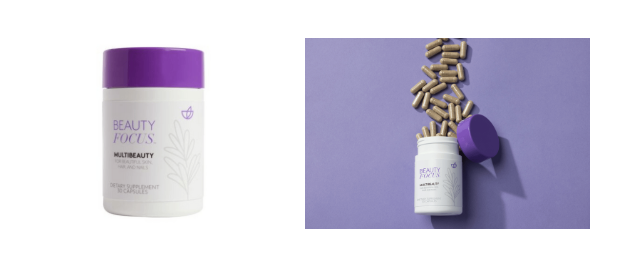
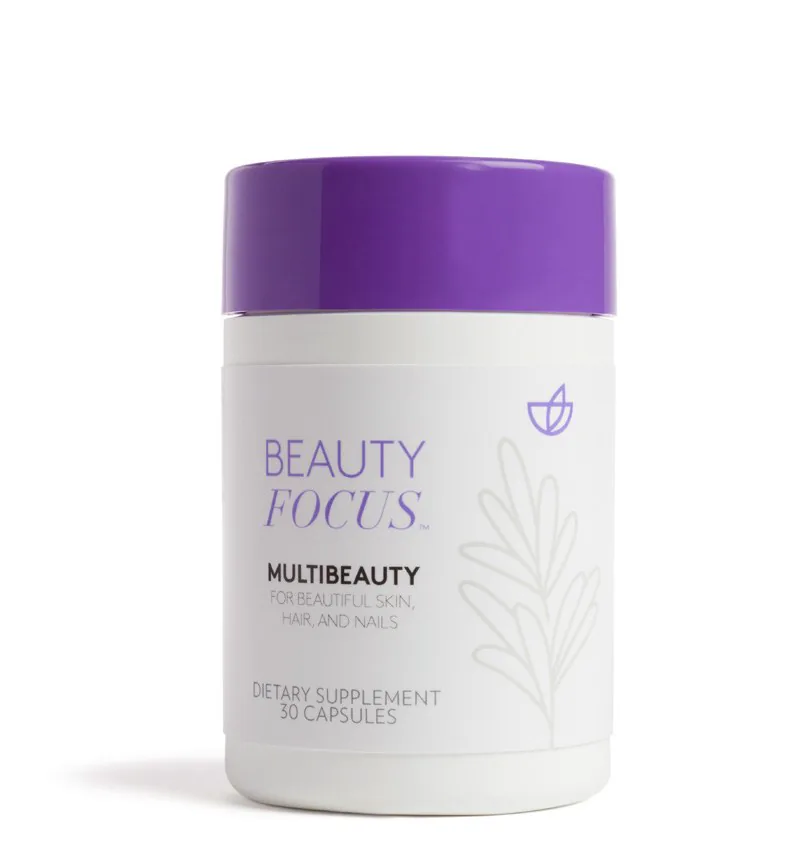
A once-daily hair, skin, and nail formula built around biotin (vitamin B7, 2,500 mcg) and a clinically studied grapefruit-and-rosemary polyphenol pairing, backed by antioxidant vitamins A (as beta-carotene), C, and E and a B-complex. Biotin is a cofactor the body uses to make keratin, while the grapefruit and rosemary extracts are studied for helping skin resist everyday environmental and light stress. It is aimed at the ordinary nutritional side of hair, skin, and nail health, not at treating hair loss or nail disease.
Why the evidence supports it
The two standout ingredients each have their own research: biotin is a genuine, if uncommon, factor in hair and nail changes and is studied for nail strength, and the grapefruit-plus-rosemary polyphenol combination has human and cell work on protecting skin proteins like collagen and elastin from oxidative and photo-stress. Vitamins C and E and beta-carotene add recognized antioxidant support, with vitamin C also a cofactor for the skin's own collagen synthesis. The honest note is that the biotin here sits far above the level the body can actually use, which is common in this category and no advantage. Taken for the long haul, it is an evidence-based way to support the cell's Build function -- the cofactors and antioxidants the cells that build keratin and skin structure rely on -- with hair and nail changes taking months to show.
What it supports
- Supports the everyday nutrient needs behind healthy hair growth
- Supports nail strength and structure
- Provides biotin (vitamin B7), a cofactor nutrient for keratin production
- Complements a protein- and mineral-sufficient diet
Which function it supports
Ties to the cell's Build function -- biotin, antioxidant vitamins, and the grapefruit-and-rosemary polyphenols are the cofactors and protective compounds the cells that build hair, skin, and nail keratin rely on.
Learn the why behind this pillarHow it relates to your cells and mind
Every product here ties back to a specific job your body does. This one touches the functions below -- follow either link to see the mechanism in full, then dig into the studies.
What it is made of -- and the mechanisms behind it
Each ingredient acts on several of the body's functions. Taken together, this product touches these cell and mind functions -- follow any to see the mechanism in full.
The ingredients
Mechanisms drawn from our ingredient knowledge base (3 profiled ingredients). Structure and function only -- not a treatment claim.
What’s actually in it
Label revision US PIP dated 09/14/23Transcribed from the manufacturer’s official Product Information Page, exactly as printed. Ingredient names that link open our research page for that ingredient, with the studies behind it.
| Amount per 1 capsule | Amount | % DV |
|---|---|---|
| Vitamin A100% as beta carotene from Blakeslea trispora | 900 mcg RAE | 100% |
| Vitamin Cas calcium ascorbate | 200 mg | 222% |
| Vitamin Eas d-alpha tocopheryl succinate | 30 mg | 200% |
| Thiaminas thiamine mononitrate | 1.2 mg | 100% |
| Riboflavin | 1.3 mg | 100% |
| Niacinas niacinamide | 16 mg NE | 100% |
| Vitamin B6as pyridoxine HCl | 1.3 mg | 76% |
| Folateas folic acid | 400 mcg DFE | 100% |
| Vitamin B12as cyanocobalamin | 2.4 mcg | 100% |
| Biotin | 2500 mcg | 8333% |
| Pantothenic Acidas d-calcium pantothenate | 5 mg | 100% |
| Calcium | 90 mg | 7% |
| GrapefruitCitrus paradisi, fruit extract | 50 mg | * |
| RosemaryRosmarinus officinalis, leaf extract | 50 mg | * |
- Servings per container:
- 30
- Other ingredients:
- Hypromellose, microcrystalline cellulose, stearic acid.
Source: official Product Information Page . Amounts are the manufacturer’s, not ours. Structure and function only -- nothing here is medical advice, and nothing here may be used to diagnose, treat, cure, or prevent any disease.
The science on the ingredients
If you have had labs done
These are lab markers where this product's ingredients have measured evidence in our citation library. This is not a claim that the product will change your results -- the research attaches to the ingredient, and what a marker means depends on the whole picture. Each one links to its full entry, including what typically moves it and how to read it.
- Ferritin, Iron, Iron Saturation & TIBCsolid evidence
via Vitamin C · 100 studies, 23 in people
What people often notice when this marker sits outside the usual range
Higher: Often SILENT for years, which is what makes iron overload dangerous.
Lower: Fatigue that rest does not fix -- and it appears at LOW FERRITIN, long before haemoglobin falls or anaemia exists.
- White Blood Cell Count & Differentialsolid evidence
via Vitamin C · 14 studies, 10 in people
What people often notice when this marker sits outside the usual range
Higher: Usually an active infection -- fever, feeling unwell, a specific site that hurts.
Lower: Frequent or lingering infections; mouth ulcers; slow recovery.
- Uric Acidsolid evidence
via Vitamin C · 20 studies, 5 in people
What people often notice when this marker sits outside the usual range
Higher: Sudden severe pain, redness and swelling in one joint -- classically the base of the big toe, often starting overnight.
- Uric Acidemerging evidence
via Vitamin C · 20 studies, 5 in people
What people often notice when this marker sits outside the usual range
Lower: A low-within-range uric acid is generally viewed as more favourable for vascular and kidney load -- though that is a mechanistic read, not a validated target.
- Leademerging evidence
via Vitamin C · 3 studies, 1 in people
What people often notice when this marker sits outside the usual range
Higher: In adults, usually SILENT at the levels now common.
Lower: No symptoms. Lead has no biological function -- there is no deficiency, and lower is always better.
Lab results are interpreted by a qualified clinician who knows your history. Nothing here diagnoses anything or replaces that conversation.
No product works in isolation
Every cell function above -- Sense, Exchange, Transform, Build, Maintain, Adapt -- needs the same broad base of optimal micronutrient levels running underneath it, all the time. Multi Beauty is not a stand-alone fix; it is one piece that plugs into that larger system. The foundation comes first, and this supports it.
Stacks well with
Pick your goal -- here is what Multi Beauty pairs with for each. Nothing works in isolation; these share the same systems.
For Skin & Beauty
Foundational, or targeted?
Not everything in the shop is meant to be taken forever. Some products here are foundational -- a daily nutrient base built for long-term, ongoing use. Others are targeted -- shorter-term support for a specific season, not a lifelong habit. If you are not sure which one this is, that is a fair question to ask us before you buy.
Learn more, on your terms
Do not take our word for it -- go read. Each topic below opens a pre-loaded search so you can explore the nutrient, the mechanism, or the device for yourself.
Search the full studies libraryHow to use it
Take the labeled daily serving with a meal. Hair and nail changes take months to show, since both grow slowly, so give it a consistent 8 to 12 weeks before judging results.
Where to get it
Ready when you are. This link takes you to the official, verified source for this product.
Get Multi BeautyThe studies
See the research behind the science we point to.
Explore studiesThe blog
Plain-language reads on how it all fits together.
Read the blogOptimal nutrients are the definition of longevity
Long-term cell function depends on having what it needs, at the level it needs it, for as long as it needs it. That is the whole thesis behind everything we point you to here.
When you buy through our links, we earn a small commission -- and that is what funds all the free education here. It never costs you more. Products are not intended to diagnose, treat, cure, or prevent any disease.
Beauty Focus MultiBeauty is a once-daily hair, skin and nail formula built around biotin with a clinically studied grapefruit-and-rosemary polyphenol pairing, backed by antioxidant vitamins. It is the capsule half of the beauty-nutrition range.
FAQ
What does MultiBeauty support?
It supports normal hair, skin and nail structure, supplies biotin which supports the maintenance of normal hair and skin, and provides antioxidant vitamins that support the skin against everyday oxidative stress.
How do I take it?
One serving daily with food, per the label. Hair and nail changes follow growth cycles, so give it months rather than weeks.
What makes it different?
It pairs biotin with a specific studied polyphenol combination rather than relying on biotin alone. ⚠️ Worth knowing: high-dose biotin interferes with thyroid and some cardiac blood tests -- stop it 48 to 72 hours before bloods.