

$29.99
When you buy through our links, we earn a small commission -- and that is what funds all the free education here. It never costs you more. Products are not intended to diagnose, treat, cure, or prevent any disease.
What it is
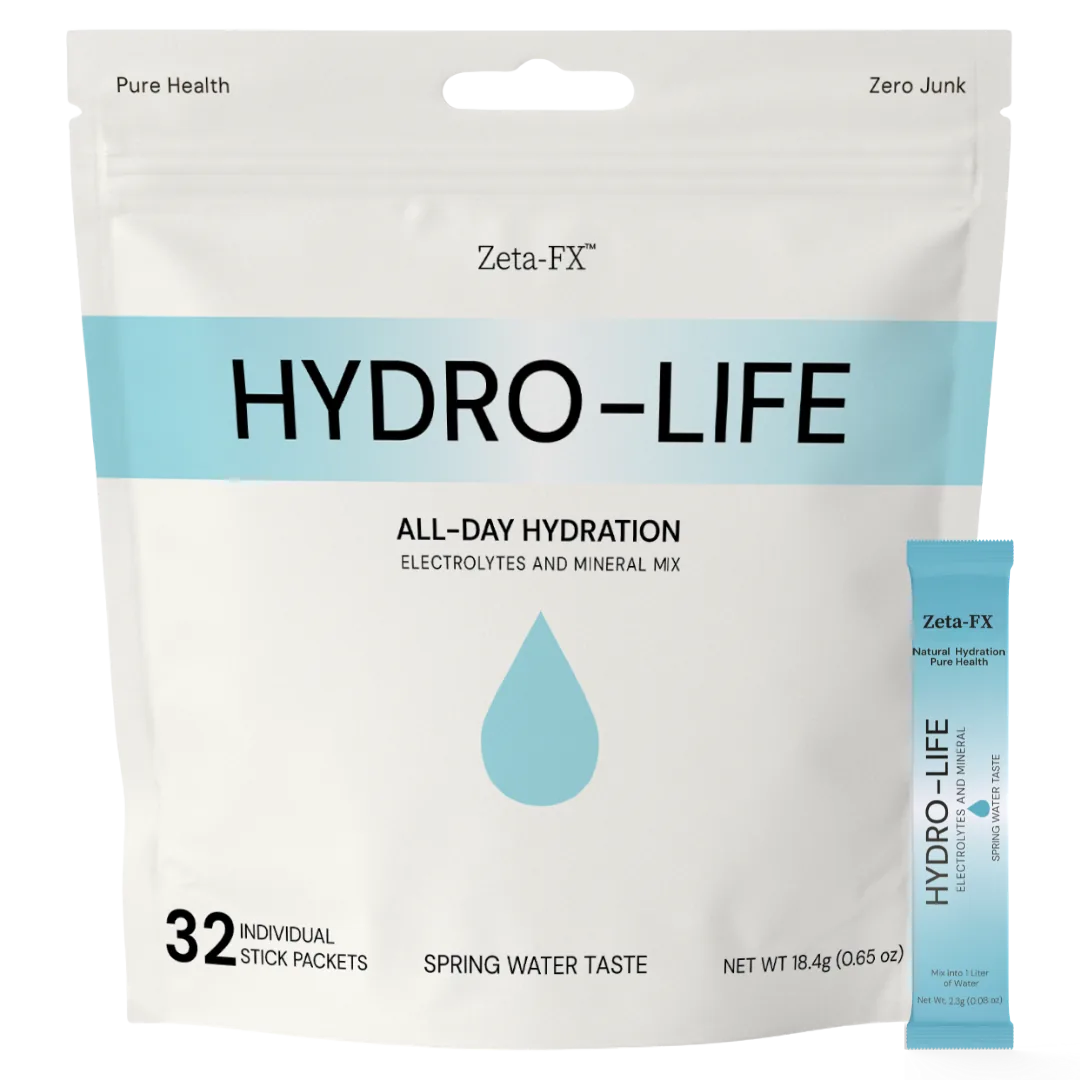
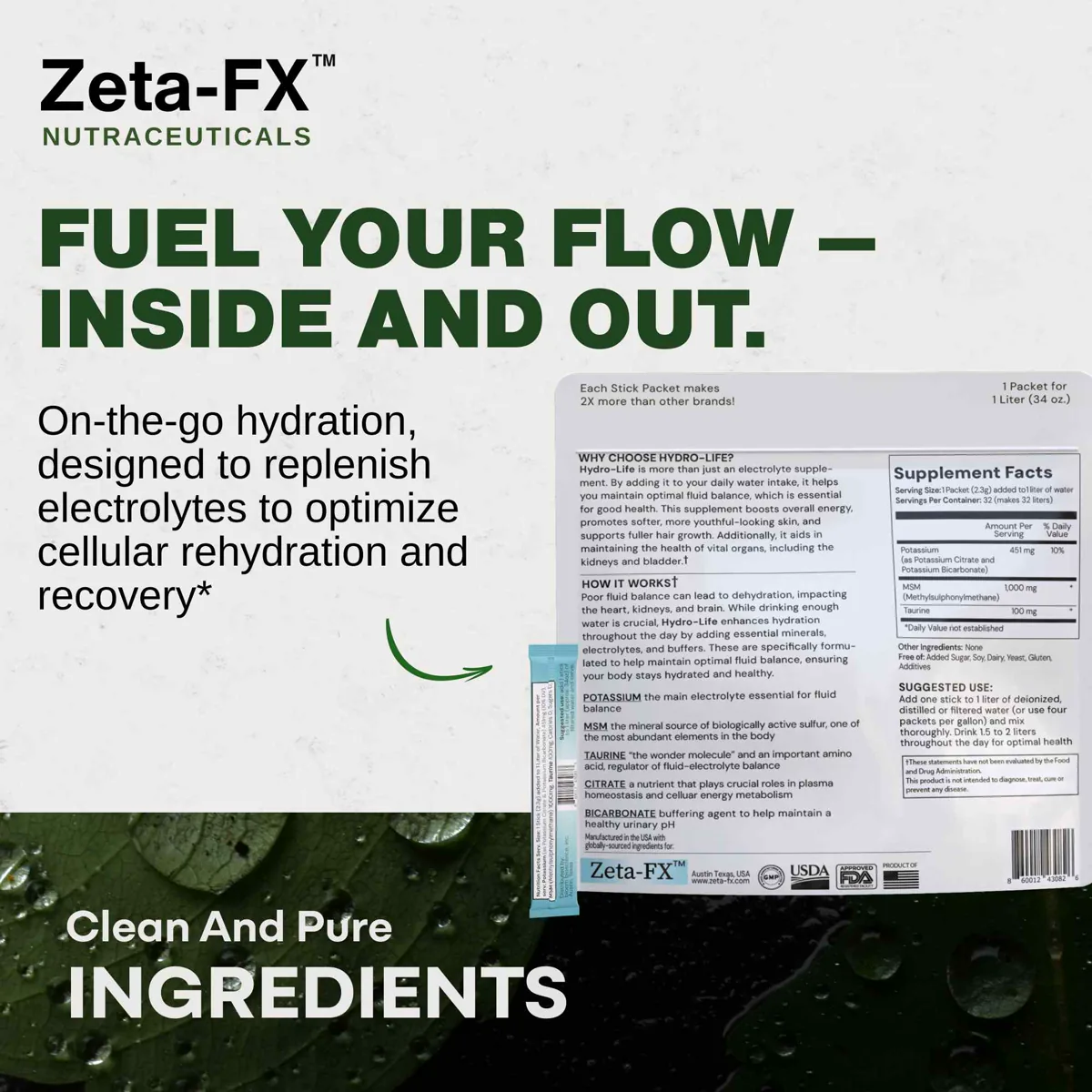
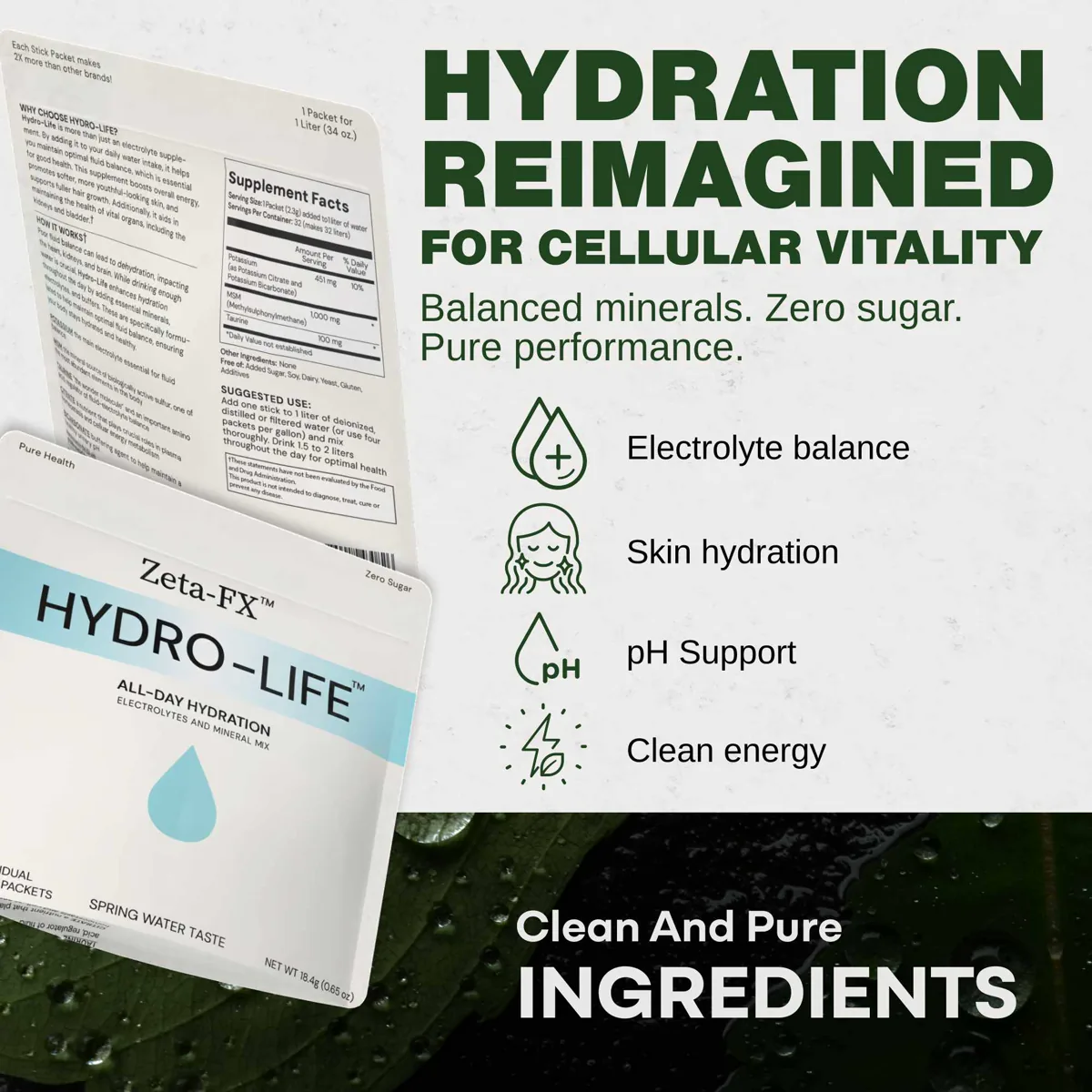
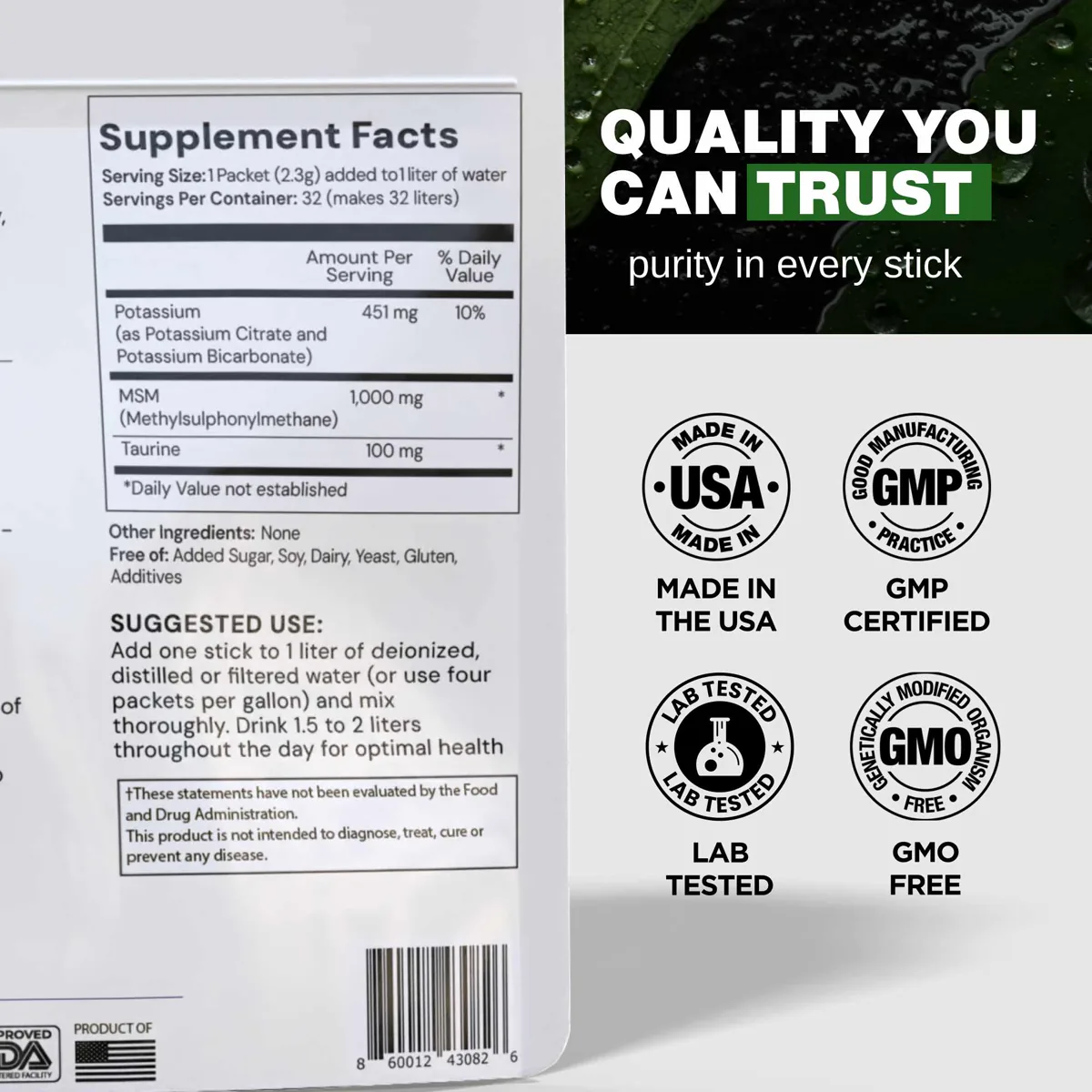
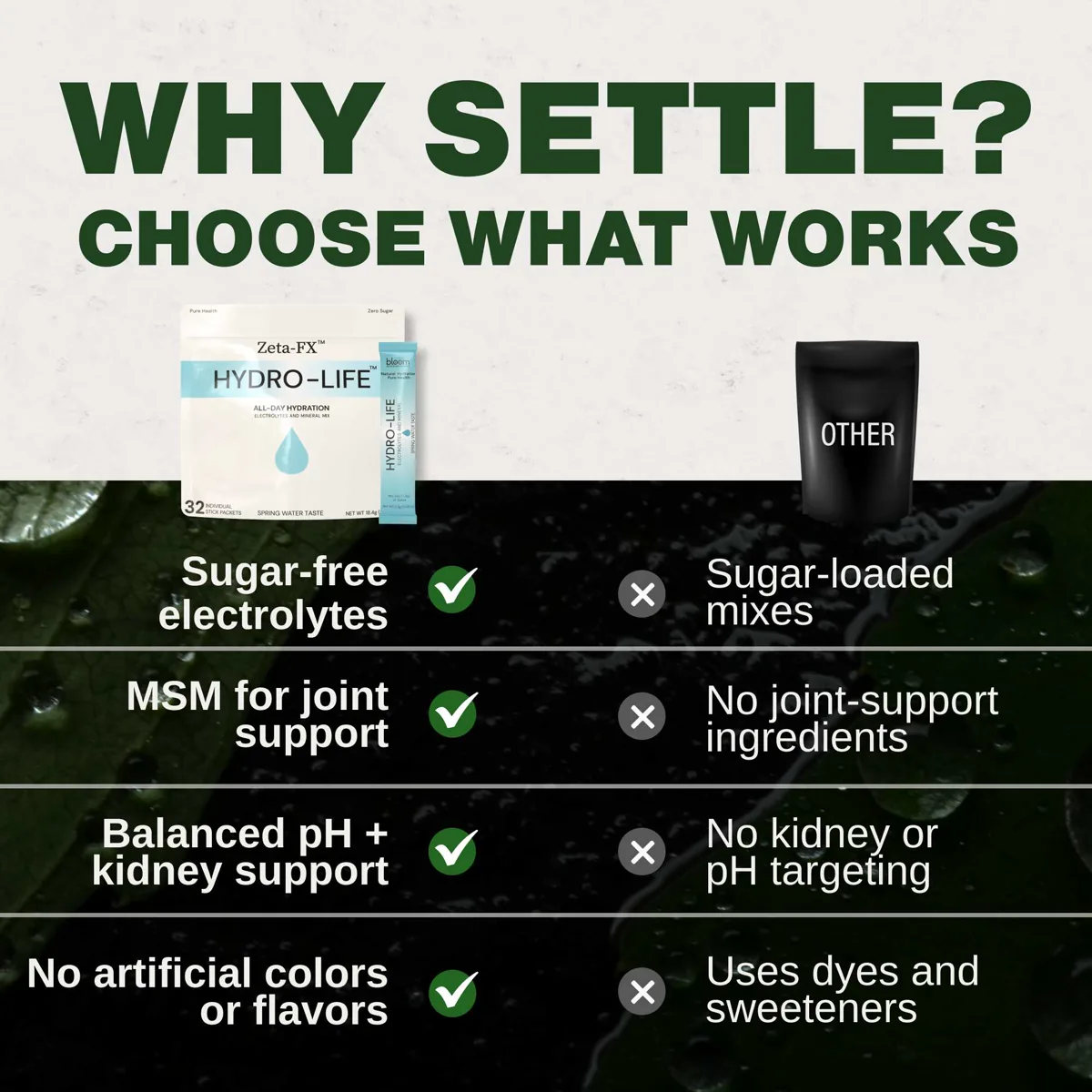
An unflavored mineral stick you stir into a litre of filtered water. It is built around potassium delivered as two salts -- potassium citrate and potassium bicarbonate -- alongside MSM and taurine. One 2.3 g packet per litre gives 451 mg of potassium (10% of the Daily Value), 1000 mg of MSM, and 100 mg of taurine. There are no other ingredients at all: no added sugar, no flavoring, no soy, dairy, or yeast. It comes as single-serve sticks and as a tub you scoop from.
Why the evidence supports it
Potassium is one of the few nutrients the Dietary Guidelines single out as a public-health shortfall -- most adults sit well under the target, and it is the mineral that sets the electrical charge across every cell membrane. Worth understanding clearly: the citrate and the bicarbonate are both carriers for potassium, so it arrives by two routes rather than being one item in a list of five. The 451 mg is the total elemental potassium across both salts, and the label does not separately quantify citrate or bicarbonate, so no amount-based claim can be made about either one on its own.
What it supports
- Supports normal daily hydration
- Contributes meaningful potassium toward a commonly under-met intake
- Supports normal fluid and electrolyte balance
- Supports the normal membrane potential cells depend on
Which function it supports
Ties to the cell's Exchange function -- potassium is the ion that sets the charge across the cell membrane, which is what lets nutrients, signals, and waste move in and out.
Learn the why behind this pillarHow it relates to your cells and mind
Every product here ties back to a specific job your body does. This one touches the functions below -- follow either link to see the mechanism in full, then dig into the studies.
What it is made of -- and the mechanisms behind it
Each ingredient acts on several of the body's functions. Taken together, this product touches these cell and mind functions -- follow any to see the mechanism in full.
The ingredients
Mechanisms drawn from our ingredient knowledge base (3 profiled ingredients). Structure and function only -- not a treatment claim.
The science on the ingredients
These studies are research on the ingredients and mechanisms in this product, not on the finished product itself, and they are shown for education. Nothing here is medical advice, and nothing here may be used to diagnose, treat, cure, or prevent any disease. Talk to your own provider about what is right for you.
- Oral potassium supplementation lowers clinic blood pressure in untreated primary hypertension -- systematic review and meta-analysis of randomized trials
2025
In a meta-analysis of 19 randomized trials with 803 untreated hypertensive adults, oral potassium supplementation lowered clinic blood pressure by 7.2 over 4.0 mmHg, though ambulatory blood pressure effects were smaller and less certain.
- Effects of potassium supplementation on plasma aldosterone: a systematic review and meta-analysis in humans
Journal of hypertension · 2024
In humans, OBJECTIVES: Effects of potassium supplementation on blood pressure (BP) may be offset by an increase in plasma aldosterone
- Magnesium and Potassium Supplementation for Systolic Blood Pressure Reduction in the General Normotensive Population: A Systematic Review and Subgroup Meta-Analysis for Optimal Dosage and Treatment Length
Nutrients · 2024
In a review, BACKGROUND/OBJECTIVES: Studies have shown that consistent reductions of 2 mm Hg in systolic blood pressure (SBP) for the general normotensive population can result in significant decreases in mortality from heart disease and stroke
- Global mean potassium intake: a systematic review and Bayesian meta-analysis
European journal of nutrition · 2023
Across 104 studies from 52 countries covering 1,640,664 people, mean global potassium intake was 2.25 g daily, highest in Eastern and Western Europe at 3.53 g daily.
- The impact of baseline potassium intake on the dose-response relation between sodium reduction and blood pressure change: systematic review and meta-analysis of randomized trials
Journal of human hypertension · 2021
In a review, higher baseline potassium intake was consistently associated with greater blood pressure reduction from reduced sodium, though findings were nonsignificant given data limitations.
- Association between the Urinary Sodium to Potassium Ratio and Blood Pressure in Adults: A Systematic Review and Meta-Analysis
Advances in nutrition (Bethesda, Md.) · 2021
In a meta-analysis of adults, a lower 24-hour urinary sodium to potassium ratio was associated with lower systolic and diastolic blood pressure, with very high heterogeneity between studies.
Sodium and potassium intake in rheumatoid arthritis: a systematic review of clinical studies with implications for disease-related outcomesEstablishedSystematic review2026
This systematic review of 8 studies covering 1,283 rheumatoid arthritis patients found that higher dietary sodium and lower potassium intake were generally linked to worse disease-related and autoimmune outcomes, though cardiovascular data were limited.
Panagiota Anyfanti; Christina Antza; Konstantinos Tragiannidis; Andrej Belančić; Yusuf Ziya Şener; Andrea Katrin Faour; Alexandra Ainatzoglou; Elena Angeloudi; Evangelia Chaida; Theodoros Dimitroulas; Vasilios Kotsis
Renal effects of short-term ketone monoester supplementation in healthy adults: A randomized, placebo-controlled studyEstablishedRandomized controlled trial2026
In a crossover trial of 13 healthy adults, short-term ketone monoester supplementation acutely increased kidney filtration rate and urinary sodium excretion while decreasing potassium excretion, though 24-hour totals were unchanged.
Trine Z Lyksholm; Camilla L Duus; Steffen F Nielsen; Henrik H Thomsen; Jesper N Bech
Effects of a combination of olive leaf extract and potassium on blood pressure in participants with mild to moderate hypertension: A double blind, randomized, placebo-controlled trialEstablishedRandomized controlled trial2026
In 70 adults with mild-to-moderate hypertension, olive leaf extract (1000 mg) and potassium (300 mg) daily for 12 weeks reduced systolic blood pressure by 5.4 mmHg and improved lipid profile.
Fladerer-Grollitsch JP; Bucar F; Klein T; Kompek A; Menzel D; Schön C -- Phytomedicine : international journal of phytotherapy and phytopharmacology
Study protocol for a prospective, multicenter, single-arm study investigating the impact of the implementation of standardized hyperkalemia management in chronic kidney disease patientsEstablishedClinical trial2026
A single-arm multicenter protocol will test whether standardized hyperkalemia care sustains renin-angiotensin inhibitor use and improves long-term cardio-renal outcomes.
Yeqing Xie; Yang Li; Yimei Wang; Jing Lin; Yuxin Nie; Wuhua Jiang; Nana Song; Shuan Zhao; Ziyan Shen; Qing Li; Xiaoyan Zhang; Xiaoqiang Ding
Fluid and Electrolyte Therapy in the Patient with Cardiac DiseaseEmergingExpert review2026
In a review of cardiac disease, fluid management across resuscitation, rehydration and maintenance was set out with monitoring of sodium, potassium and chloride emphasised in heart failure and renal impairment.
Adin D; Odunayo A -- The Veterinary clinics of North America. Small animal practice
A Narrative Review of Candidate Biomarkers of Total Fruit and Vegetable IntakeEmergingExpert review2026
This narrative review discusses candidate biomarkers of fruit and vegetable intake, including urinary potassium, flavonoids, hippuric acid, vitamin C, and skin and blood carotenoids, weighing their benefits and limitations for dietary assessment.
Matthew P Madore; Seoeun Ahn; Kijoon Kim; Kunsun Eom; Myoung Hoon Jung; HyunSeok Moon; Jin-Young Park; Ock K Chun
The exquisite link between potassium homeostasis regulation and cardiovascular health: exploration and analysisEmergingExpert review2026
In a review integrating experimental and clinical evidence, potassium homeostasis was linked to arrhythmia pathophysiology, with strategies proposed for optimising it therapeutically.
Ci Wang; Xiangyuan Huang; Zeyu Zhang; Dongming Lin; Shuwei Huang
A Review of the Effects of Herbal Medicines on the Conductance of Ion ChannelsEmergingExpert review2026
This review summarizes evidence that about 50 medicinal plant compounds modulate calcium, potassium, sodium, and chloride ion channels, relevant to conditions such as arrhythmia, epilepsy, anxiety, and pain, without new data.
M A Rajizadeh; S Joukar; F Rostamzadeh; M D Zaboli
Management of hypertension in chronic kidney diseaseEmergingExpert review2026
A review recommended low potassium dietary advice and oral binders to manage hyperkalaemia rather than stopping beneficial medications, and discussed aldosterone synthase inhibitors, endothelin antagonists and renal denervation.
Tim Doulton; Pauline A Swift; Swapnil Hiremath
Potassium channels in vascular smooth muscle cellsEmergingExpert review2026
In a review, five families of potassium channel in blood vessel muscle cells set vessel tone and cell growth; their mix differs by vessel type and shifts with sex, pregnancy and aging.
Tessa A C Garrud; Daniel M Collier; Jonathan H Jaggar
Aldosterone synthase inhibitors across the translational spectrum: Mechanistic foundations and emerging clinical applicationsEmergingExpert review2026
This review reports that next-generation aldosterone synthase inhibitors show over 100-fold selectivity for CYP11B2 over CYP11B1, and reduced blood pressure and albuminuria while normalizing potassium in early-phase primary aldosteronism trials.
Matteo Merlo; Francesca Zoccatelli; Gabriele Costa; Lucia Panepinto; Simonetta Friso; Luigi Marzano
Mineralocorticoid Receptor Antagonists in Chronic Kidney Disease: Clinical Evidence, Pharmacology, and Drug-Drug Interactions for Personalized Management of HyperkalemiaEmergingExpert review2026
A review recommended correcting metabolic acidosis with sodium bicarbonate and lowering potassium with loop and thiazide diuretics and SGLT2 inhibitors, with novel binders enabling maximum-tolerated mineralocorticoid antagonist doses.
Toshinori Hirai; Kan Katayama
Electrolyte homeostasis in pregnancy: from physiological adaptations to clinical disturbances - a nephrologist's perspectiveEmergingExpert review2026
This nephrology review explains how pregnancy shifts normal sodium, potassium, magnesium and calcium ranges, including a physiological drop in blood sodium and doubled calcium absorption, meaning non-pregnant lab norms can misread real disturbances.
Priti Meena; Aisha Batool
Early life stress and the pathogenesis of visceral hypersensitivity: mechanisms and implications for disorders of gut-brain interactionEmergingExpert review2026
This narrative review proposes early life stress produces persistent visceral hypersensitivity in irritable bowel syndrome through HPA axis and epigenetic changes in limbic circuits, spinal BDNF and potassium channel changes, and peripheral mast cell and microbiota alterations.
Enfu Tao
Non-steroidal mineralocorticoid receptor antagonists in non-diabetic kidney disease: a narrative review of mechanisms and clinical advancesEmergingExpert review2026
The phase III FIND-CKD trial found finerenone slowed eGFR decline in adults with proteinuric chronic kidney disease who did not have diabetes, with added antiproteinuric effect when combined with SGLT2 inhibitors.
Fei Luo; Jingjia Hu; Hongliang Fang; Xianfa Li; Caifeng Zhu; Ziyang Bao
Clean sweep or pathogen paradise? A critical review of cleaning and disinfection practices in broiler barnsEstablished2026
A systematic review of 77 broiler barn disinfection papers found aldehydes most effective overall and iodine or potassium peroxymonosulfate worst, but average methodological reporting density was only 44.81%.
Adrian Drögmöller; Helen Louton
K<sub>v</sub>7 and K<sub>2P</sub> Potassium Channels in Thalamocortical Function and Their Therapeutic Potential in Childhood Absence EpilepsyEmerging2026
A review summarises how Kv7 and K2P potassium channels stabilise neuronal resting potential and thalamocortical rhythms, and their therapeutic potential in childhood absence epilepsy and other thalamocortical dysrhythmias.
Anushka Takhi; Guiscard Seebohm; Thomas Budde; Annika Lüttjohann
The kidney distal tubule potassium switch, modern diet and hypertension.2026
A review describes a kidney distal tubule 'potassium switch,' involving Kir4.1/Kir5.1 channels and WNK kinase signaling, that senses dietary potassium to regulate sodium-chloride cotransporter activity relevant to hypertension.
Welling PA; Delpire E; Ellison DH; Staub O; Stowasser M; Fenton RA -- Nature reviews. Nephrology
Comparative effects of salt substitutes on blood pressure, cardiovascular events and mortality: a systematic review and network meta-analysisEstablished2026
Pooling 34 randomised trials in 37,063 adults, moderate-potassium low-sodium salt substitutes lowered systolic blood pressure 4.39 to 4.64 mmHg and mortality by 7-17 deaths per 1,000, but one Chinese trial drove the mortality result.
Honghao Lai; Gihad Nesrallah; Gordon H Guyatt; Robin W M Vernooij; Jiayi Liu; Weilong Zhao; Liangying Hou; Bei Pan; Jiajie Huang; Norm R C Campbell; Jinhui Tian; Kehu Yang; Long Ge; Bradley C Johnston
ARumenamides as Multitarget Ion Channel Modulators: Insights from Fenestration-Focused Docking, ADMET Profiling, and Molecular DynamicsEmerging2026
Docking and 250-nanosecond simulations of 20 ARumenamide derivatives against 15 voltage-gated sodium, calcium and potassium channels predicted broad multitarget binding, with AR-769 most stable at Cav1.2 fenestration and pore sites.
Mena Abdelsayed; Yassir Boulaamane
Potassium and the kidney.2026
Review describes low dietary potassium as promoting salt-sensitive hypertension and chronic kidney disease progression, while potassium-rich diets and potassium salt substitutes enhance natriuresis, lower blood pressure, and reduce cardiovascular events, though hyperkalemia risk in CKD remains a concern.
Hoorn EJ; Subramanya AR; Boyd-Shiwarski CR -- Nature reviews. Nephrology
The impact of a potassium-enriched salt substitute on blood pressure control in patients with resistant arterial hypertension: A randomized pilot trialEstablished2026
In a 24-week pilot trial randomising 60 adults with resistant hypertension, a 50% potassium chloride salt substitute lowered 24-hour systolic blood pressure by 2.47 mmHg versus regular salt, with no hyperkalaemia.
Enilson Carmo Barbosa Dos Santos; Yasmin de Souza Lima Bitar; Jorge Luís Motta Dos Anjos; Cristiano Ricardo Bastos de Macedo; Apoenna Marina Noronha Brito; Marina Pereira Ferreira; Tomaz Mattedi Carvalho; Gabriele Eliza Assis; Jackson Pedro Barros Pereira; Ana Beatriz Cazé Ceron; Victoria Bastos Rodrigues; Leonardo Roever; André Rodrigues Durães
Do Not Dismiss Incidental Hyperkalemia in Childhood: Early Recognition of Pseudohypoaldosteronism Type IIEmergingCase report2026
This case report describes a 3-year-old boy whose adenovirus infection unmasked persistent hyperkalemia from pseudohypoaldosteronism type II, a genetic potassium-handling disorder confirmed by a KLHL3 gene variant and corrected with hydrochlorothiazide.
Hiroaki Kanai; Hiroki Sato
Chemical Properties of Mucilage Extracts from Cladodes of <i>Opuntia ficus-indica</i> (L.) Miller for Gel Formulation: Comparative Study with PectinEmerging2026
Compared with commercial pectin, prickly pear cladode mucilage carried significantly higher calcium, magnesium and potassium plus arabinose, galactose and rhamnose, but also methoxypyrazines that could affect taste.
Federica Torregrossa; Luciano Cinquanta; Francesca Mazza; Francesca Malvano; Natale Badalamenti; Maurizio Bruno; Matteo Pollon
Balanced by design -- we show supporting and contradicting findings. Search all studies
If you have had labs done
These are lab markers where this product's ingredients have measured evidence in our citation library. This is not a claim that the product will change your results -- the research attaches to the ingredient, and what a marker means depends on the whole picture. Each one links to its full entry, including what typically moves it and how to read it.
- Potassiumsolid evidence
via Potassium · 83 studies, 19 in people
What people often notice when this marker sits outside the usual range
Higher: Serum potassium is a SAFETY marker, tightly regulated -- the body defends the blood level even when dietary intake is low, so a normal serum value does not confirm good dietary intake.
Lower: A low serum potassium (hypokalaemia) can cause muscle cramps, weakness, fatigue, constipation and palpitations -- also a medical finding to address with a clinician.
- Sodium (and the Na:K Ratio)solid evidence
via Potassium · 83 studies, 19 in people
What people often notice when this marker sits outside the usual range
Higher: Serum sodium is tightly regulated and mostly reflects hydration, so it is not a gauge of dietary sodium intake.
Lower: A low serum sodium (hyponatraemia) can cause headache, nausea, confusion and, when severe, seizures -- usually from overhydration or illness, and a medical finding for a clinician.
- Potassiumsolid evidence
via Potassium · 83 studies, 19 in people
What people often notice when this marker sits outside the usual range
Higher: Serum potassium is a tightly regulated SAFETY marker -- the body defends the blood level even when dietary intake is low, so a normal serum value does not confirm good dietary intake.
Lower: A low serum potassium (hypokalaemia) can cause muscle cramps, weakness, fatigue, constipation and palpitations -- also a medical finding to address with a clinician.
- Sodiumsolid evidence
via Potassium · 83 studies, 19 in people
What people often notice when this marker sits outside the usual range
Higher: Serum sodium is tightly regulated and mostly reflects hydration, so it is not a gauge of dietary sodium intake.
Lower: A low serum sodium (hyponatraemia) can cause headache, nausea, confusion and, when severe, seizures -- usually from overhydration or illness, and a medical finding for a clinician.
- Magnesiumsolid evidence
via Potassium · 60 studies, 13 in people
What people often notice when this marker sits outside the usual range
Higher: Almost always caused by supplements plus reduced kidney function, not by food.
Lower: Muscle cramps, especially calves at night; eyelid twitching that goes on for days.
- Magnesiumemerging evidence
via Potassium · 60 studies, 13 in people
What people often notice when this marker sits outside the usual range
Higher: Because muscle-meat and refined foods are low in magnesium, shortfall is common on modern diets.
Lower: A high serum magnesium is rare and almost always tied to impaired kidney function (weakness, low blood pressure) -- a medical finding, since magnesium is renally cleared.
- Magnesiumemerging evidence
via Potassium · 60 studies, 13 in people
What people often notice when this marker sits outside the usual range
Higher: A high serum magnesium is rare and almost always tied to impaired kidney function (weakness, low blood pressure) -- a medical finding, since magnesium is renally cleared.
Lab results are interpreted by a qualified clinician who knows your history. Nothing here diagnoses anything or replaces that conversation.
No product works in isolation
Every cell function above -- Sense, Exchange, Transform, Build, Maintain, Adapt -- needs the same broad base of optimal micronutrient levels running underneath it, all the time. Hydro-Life is not a stand-alone fix; it is one piece that plugs into that larger system. The foundation comes first, and this supports it.
Stacks well with
Pick your goal -- here is what Hydro-Life pairs with for each. Nothing works in isolation; these share the same systems.
For Minerals
For Mood & Hormones
Foundational, or targeted?
Not everything in the shop is meant to be taken forever. Some products here are foundational -- a daily nutrient base built for long-term, ongoing use. Others are targeted -- shorter-term support for a specific season, not a lifelong habit. If you are not sure which one this is, that is a fair question to ask us before you buy.
Learn more, on your terms
Do not take our word for it -- go read. Each topic below opens a pre-loaded search so you can explore the nutrient, the mechanism, or the device for yourself.
Search the full studies libraryHow to use it
One stick per litre of filtered, distilled, or deionized water, sipped through the day. The label suggests 1.5-2 litres daily, which works out to roughly 677-902 mg of added potassium a day. That is a real amount of potassium, and the kidneys are what clear it -- so reduced kidney function and blood-pressure medication are the two things that change the arithmetic. ACE inhibitors, ARBs, and potassium-sparing diuretics all raise potassium on their own, so know your own starting point before adding to it.
Where to get it
Ready when you are. This link takes you to the official, verified source for this product.
Get Hydro-LifeThe studies
See the research behind the science we point to.
Explore studiesThe blog
Plain-language reads on how it all fits together.
Read the blogOptimal nutrients are the definition of longevity
Long-term cell function depends on having what it needs, at the level it needs it, for as long as it needs it. That is the whole thesis behind everything we point you to here.
When you buy through our links, we earn a small commission -- and that is what funds all the free education here. It never costs you more. Products are not intended to diagnose, treat, cure, or prevent any disease.
Hydro-Life is an unflavoured mineral stick you stir into a litre of filtered water, built around potassium delivered as two salts (citrate and bicarbonate) with MSM and taurine. Potassium is one of the nutrients most people genuinely run short on, and this is aimed at the water you already drink.
FAQ
What does Hydro-Life support?
It supports normal hydration and electrolyte balance, and supplies potassium, which supports normal muscle and nerve function and normal blood pressure as part of a balanced diet.
How do I take it?
Stir one stick into about a litre of filtered water and drink through the day, per the label. It is unflavoured, so it does not change what your water tastes like much.
What makes it different?
Most electrolyte products lead with sodium. This one is potassium-forward, which is the mineral the typical diet actually runs low on. ⚠️ If your kidney function is reduced, potassium needs a doctor's input before you add it.