$63.00
$79.00 save $16.00 -- applied automatically through this link
When you buy through our links, we earn a small commission -- and that is what funds all the free education here. It never costs you more. Products are not intended to diagnose, treat, cure, or prevent any disease.
What it is
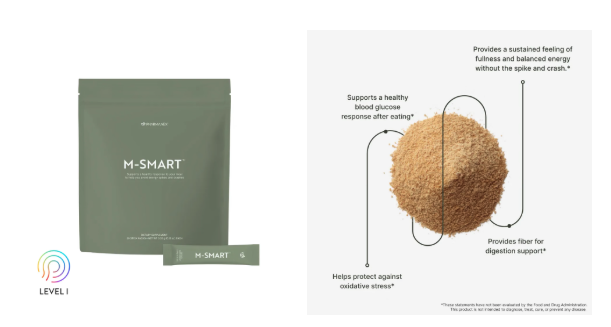
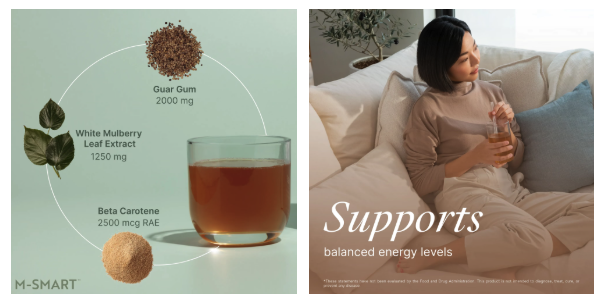
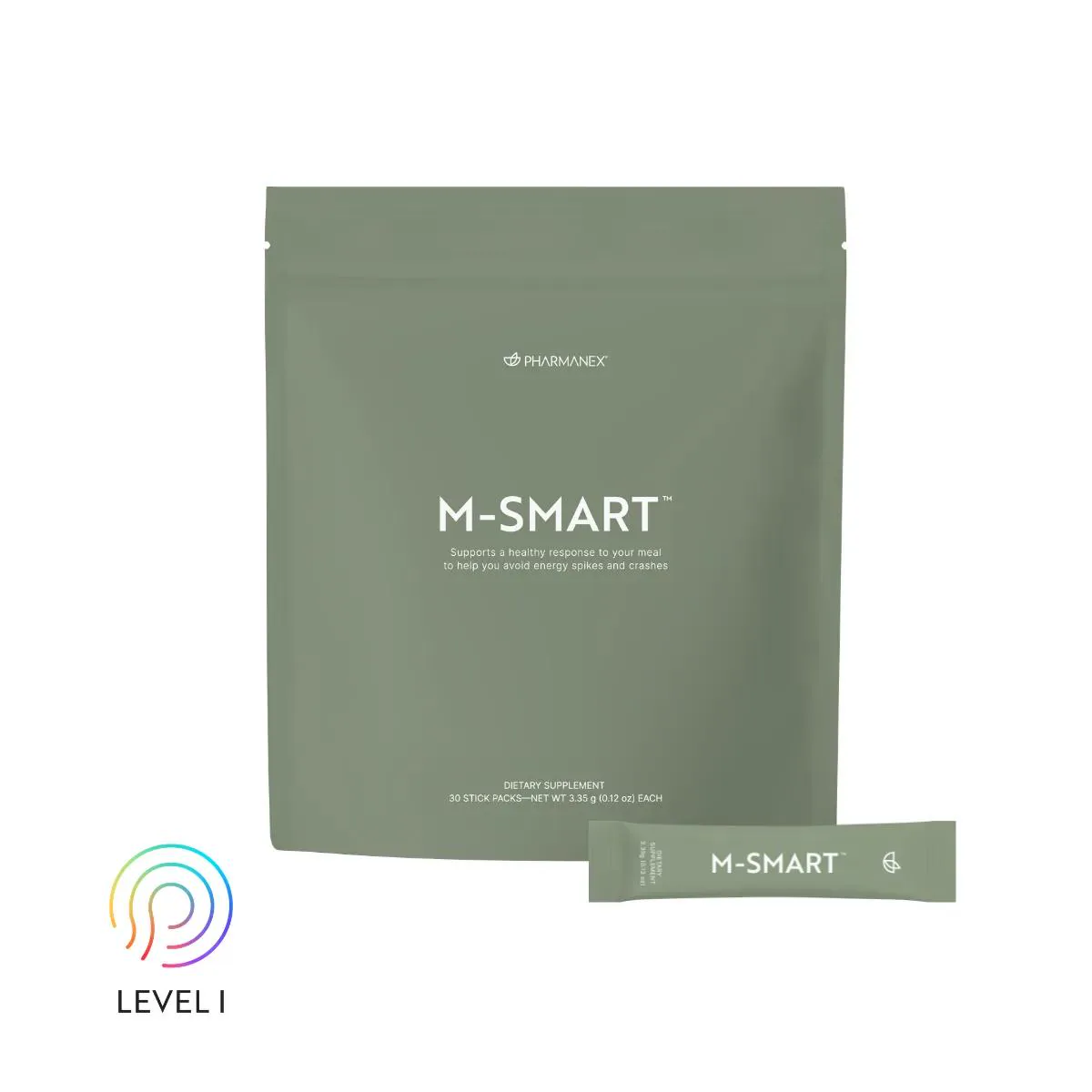
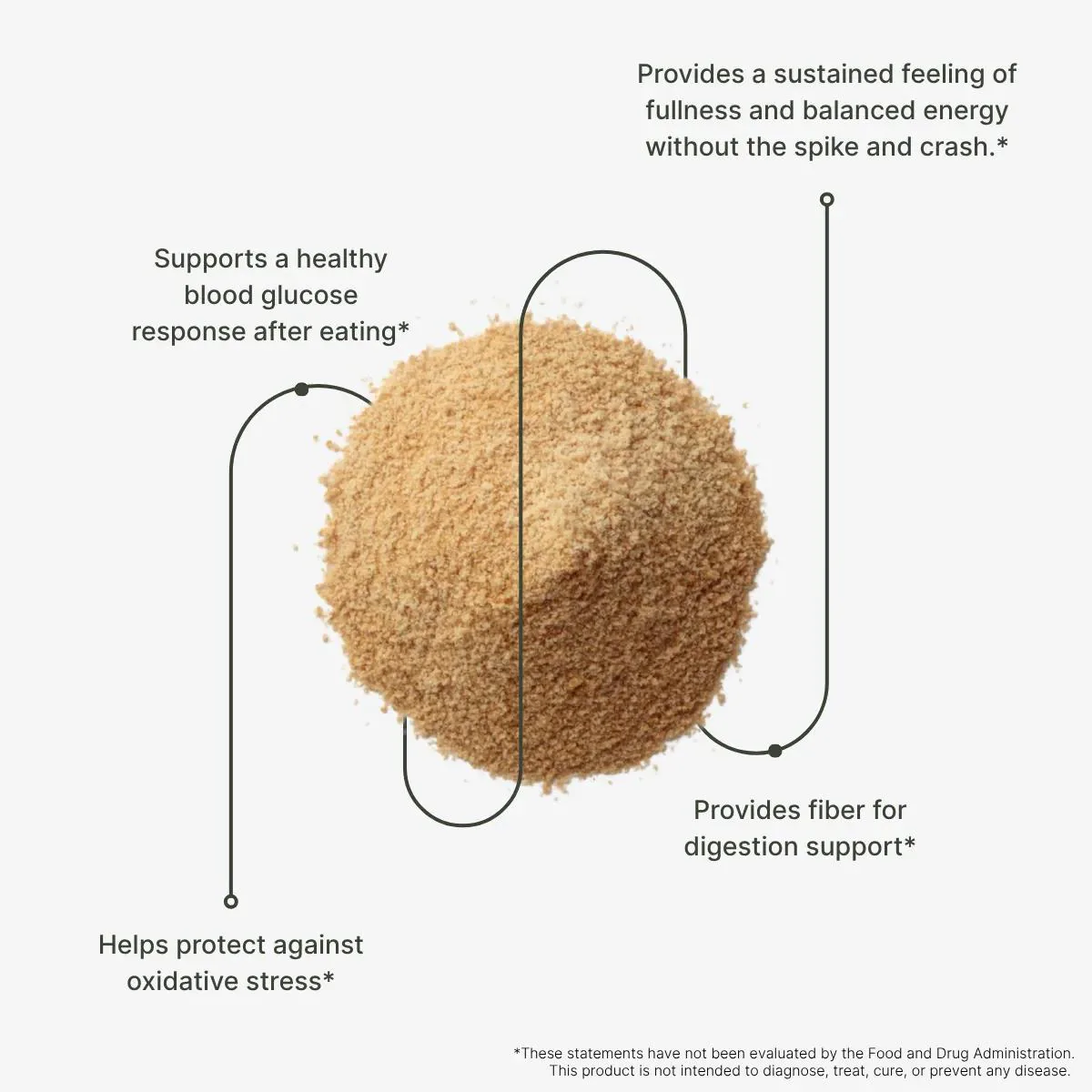
Pharmanex's metabolic-support formula, taken with meals. It is built around mulberry leaf extract standardized to 1-deoxynojirimycin (DNJ) -- a natural alpha-glucosidase inhibitor that slows the breakdown of dietary carbohydrates -- plus guar gum, a soluble viscous fiber that slows how quickly glucose is absorbed. Together they blunt the post-meal blood-sugar rise. Blood-sugar handling and gut health are closely linked, which is why it belongs in the gut-and-metabolism cluster.
Why the evidence supports it
The current evidence is a small company-sponsored, placebo-controlled crossover bulletin in adults after a high-carbohydrate test meal. It reported a lower 0-to-120-minute glucose AUC, but it did not measure insulin resistance, HbA1c, long-term weight change, or disease prevention, and it has not been treated as a peer-reviewed finished-product trial. The ingredient mechanism is clearer: mulberry DNJ slows alpha-glucosidase, while hydrolyzed guar gum supplies viscous soluble fiber that changes digestion timing. Kept honest, that supports a healthy post-meal response already within normal range and the cell's Transform function around meals -- not a treatment for a blood-sugar condition.
What it supports
- Supports a healthy blood-sugar response to a meal, already within a normal range
- Supports everyday metabolic balance
- Complements a gut-health and foundation-nutrition routine
- Best used as a targeted add-on once the daily foundation is in place
Which function it supports
Ties to the cell's Transform function -- supporting how the body handles the glucose from a meal and everyday metabolic balance. Because blood-sugar handling and the gut are linked, it also supports the Gut Health picture.
Learn the why behind this pillarHow it relates to your cells and mind
Every product here ties back to a specific job your body does. This one touches the functions below -- follow either link to see the mechanism in full, then dig into the studies.
What it is made of -- and the mechanisms behind it
Each ingredient acts on several of the body's functions. Taken together, this product touches these cell and mind functions -- follow any to see the mechanism in full.
The ingredients
Mechanisms drawn from our ingredient knowledge base (3 profiled ingredients). Structure and function only -- not a treatment claim.
What’s actually in it
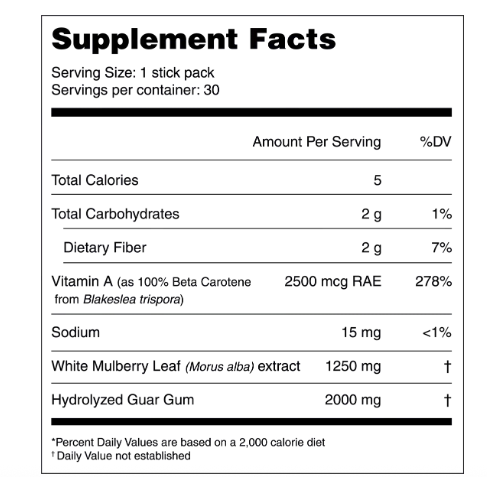
Transcribed from the manufacturer’s official Product Information Page, exactly as printed. Ingredient names that link open our research page for that ingredient, with the studies behind it.
| Amount per 1 stick pack | Amount | % DV |
|---|---|---|
| Total Calories | 5 | |
| Total Carbohydrates | 2 g | 1% |
| Dietary Fiber | 2 g | 7% |
| Vitamin Aas 100% Beta Carotene from Blakeslea trispora | 2500 mcg RAE | 278% |
| Sodium | 15 mg | <1% |
| White Mulberry Leaf extractMorus alba | 1250 mg | † |
| Hydrolyzed Guar Gum | 2000 mg | † |
- Servings per container:
- 30
- Other ingredients:
- Sea Salt, Stevia, Natural Flavor, Gum Arabic.
Source: official Product Information Page . Amounts are the manufacturer’s, not ours. Structure and function only -- nothing here is medical advice, and nothing here may be used to diagnose, treat, cure, or prevent any disease.
The science on the ingredients
These studies are research on the ingredients and mechanisms in this product, not on the finished product itself, and they are shown for education. For this ingredient most of the published work is laboratory or animal research rather than human trials, so read it as biology worth knowing rather than proof of an effect in people. Nothing here is medical advice, and nothing here may be used to diagnose, treat, cure, or prevent any disease. Talk to your own provider about what is right for you.
- Vitamins D, A and E, and Beta-Carotene in Adherent and Non-Adherent Individuals with Phenylketonuria: Cross-Sectional Study, Systematic Review and Meta-AnalysisPubMed
2025
In a cross-sectional study and meta-analysis of people with phenylketonuria aged 6 to 41, dietary adherence was linked to higher vitamin D, but vitamin E and beta-carotene levels showed no difference by adherence status.
- Role of Beta-Carotene in Lung Cancer Primary Chemoprevention: A Systematic Review with Meta-Analysis and Meta-RegressionPubMed
Nutrients · 2022
Pooling eight randomized trials in 167,141 participants, beta carotene supplementation was associated with increased lung cancer risk overall and more strongly among smokers and asbestos workers, with no relationship to dose.
- Is beta-carotene consumption associated with thyroid hormone levels?PubMed
2023
A review of beta-carotene and thyroid function found mixed evidence for direct associations, identified bidirectional interactions between thyroid hormones and retinol conversion, and noted vitamin A derivatives in thyroid cancer research.
- The Effect of Beta-Carotene on Cognitive Function: A Systematic ReviewPubMed
Brain sciences · 2023
Across 16 studies, beta carotene intake or serum levels were associated with better cognitive measures in seven of ten epidemiological studies, while supplementation alone showed no clear benefit in the intervention trials.
- Dietary, circulating beta-carotene and risk of all-cause mortality: a meta-analysis from prospective studiesPubMed
Scientific Reports · 2016
A meta-analysis found that higher dietary and circulating beta-carotene levels were each associated with a significantly lower risk of all-cause mortality across prospective studies.
- Estimation of Lycopene and Beta-Carotene Contents in Different Tomato Plant TissuesDOI
Rafidain Journal of Science · 2026
Tomato callus tissue cultured on 2,4-D medium accumulated significantly higher lycopene and beta-carotene concentrations than intact seedling or differentiated tissues.
Circulating Lycopene and β-Carotene Levels Are Inversely Associated with Carotid Intima-Media Thickness: A Systematic Review and Meta-AnalysisEmergingSystematic review2026
Across eight observational studies, higher circulating lycopene was associated with lower carotid artery wall thickness, a marker of subclinical atherosclerosis; beta-carotene showed only a marginal association and the link was stronger in men.
Cavero-Redondo I, Saz-Lara A, Saz-Lara AD, Martínez-Cifuentes Ó, Otero-Luis I, González-Collado A, Rey-López JP. -- Nutrients
Exploration of the Potential Mechanisms of Yinqiao Powder in Treating Atopic Dermatitis: Integrating Network Pharmacology, Single-Cell, and Bulk RNA SequencingEstablishedClinical trial2026
Blood transcriptome analysis of 15 adults with atopic dermatitis versus 15 controls identified CTNNB1, ERBB2, TP53, and HIF1A as key genes linked to Yinqiao powder's proposed mechanism, with beta-carotene and quercetin as candidate active compounds.
Lila Luo
Lycopene, Carotenoids, and Retinoids in Cancer Chemoprevention: Molecular Mechanisms and Clinical ImplicationsEmergingExpert review2026
This review concludes that dietary carotenoid and retinoid intake is associated with lower risk of several cancers, whereas high-dose isolated supplementation, particularly beta-carotene in smokers, showed null or harmful effects in trials.
Ecem Kalemoglu; Kazim Sahin; Nurhan Sahin; Omer Kucuk
Association of gut microbiota dietary index with MAFLD and the risk of liver fibrosis: the mediating effect of vitaminsEmergingPrimary research (design unspecified)2026
Higher dietary index for gut microbiota was inversely associated with MAFLD and fibrosis risk, with vitamin C and beta-carotene as key nutritional mediators of this relationship.
Jinlu Han; Teng Zhou; Jiong Chen; Ling Xu; Wen Shan; Qinghui Zhang
The Impact of Physical Training on Circulating Retinol-Binding Protein 4: A Systematic ReviewEstablishedSystematic review2026
This systematic review of 16 studies found that aerobic and combined aerobic-resistance exercise significantly lowered circulating RBP4 levels in people with obesity or type 2 diabetes, but not consistently in healthy individuals.
Z Alsahafi; A Baashar
Comparative efficacy of nutritional supplements for the prevention of respiratory tract infections in children: a systematic review and network meta-analysisEstablishedMeta-analysis2026
High-dose vitamin D reduced childhood respiratory infection risk by 24%, while low-dose vitamin D, vitamin A, zinc, and probiotics showed no significant benefit in network meta-analysis.
Yanmin Xing; Dongdong Huang; Lele Niu; Ying Liu
Serum Vitamin A Is Associated with Variations in the Relationship between Plasma B6 Vitamers and Cardiovascular Disease RiskEstablishedRandomized controlled trial2026
Vitamin A status modified the association between vitamin B6 metabolites and acute myocardial infarction risk: low B6 activity predicted worse outcomes primarily when vitamin A was elevated.
Indu Dhar; Gard Ft Svingen; Arve Ulvik; Espen Ø Bjørnestad; Jørn V Sagen; Ottar K Nygård
Xerophthalmia and ocular manifestations of vitamin A deficiency in children in high-income countries: A systematic reviewEmergingExpert review2026
Xerophthalmia in high-income countries children resulted from restrictive diets, autism, or malabsorption; 75% had dietary restriction and 49% had autism.
Ouyang CMH; Fan L; Kandel H; Watson SL -- Survey of ophthalmology
Micronutrient Networks in Nutritional Anemia: A Narrative Review Beyond Pathophysiology, Diagnosis, and Management of Iron DeficiencyEmergingExpert review2026
This review argues that nutritional anemia often results from combined deficiencies in iron, folate, vitamin B12, vitamin A, zinc, copper, and selenium rather than iron deficiency alone.
Shridhar Chougule; Malavika T; Amar Mohite; Vinod Choudhary; Sivanathan Thangvelu; Kailas Datkhile; Jayant Pawar
Vitamin A Status in Cystic Fibrosis in the Current Era of CFTR-Directed TherapiesEmergingExpert review2026
This review found that in people with cystic fibrosis, CFTR-directed therapies have shifted vitamin A status from deficiency toward higher, sometimes toxic, serum levels.
Senthilkumar Sankararaman; Terri Schindler; Kay Vavrina; Maria Mascarenhas
Gut microbiota profile in school-aged children with vitamin A depletion and vitamin E deficiency: A cross-sectional studyEmergingPrimary research (design unspecified)2027
In this cross-sectional study of 179 school-aged children (funding not stated), vitamin A depletion was linked to enrichment of Veillonella, Haemophilus and Streptococcus in gut microbiota, while vitamin E deficiency showed no microbiota differences.
Blanca Estela López-Contreras; Paola León-Mimila; Hugo Villamil-Ramírez; Sofía Morán-Ramos; Daniel Cerqueda-García; Blanca E. Del-Río-Navarro; Carlos A. Aguilar-Salinas; Teresa Villarreal-Molina; Mariela Camacho-Barrón; Olga P. García; Samuel Canizales-Quinteros -- Gut Microbes Reports
Antioxidant regulatory mechanisms of retinoic acid and its therapeutic potential in oxidative stress-related diseases.2026
A review found that retinoic acid, a vitamin A metabolite, regulates antioxidant gene expression through nuclear receptors and the Nrf2-Keap1 pathway, with studied relevance to oxidative-stress-related conditions including neurodegeneration.
Tang Y; Lv D; Hu W -- Biochemical pharmacology
Prevalence of Xerophthalmia and Associated Factors Among Pregnant Women in Tigray Region, EthiopiaEmerging2026
In 1355 pregnant Ethiopian women in Tigray, 25 percent had xerophthalmia, a sign of vitamin A deficiency, and not taking iron supplements was one of the significant risk factors.
Ebud Ayele Dagnazgi; Shewit Engdashet Berhe; Guesh Gebreayezgi; Goitom Girmay Gebremariam; Yohannes Kinfe Gebreyohannes; Tsega Gebremichael Gebremeskel; Embaba Tekelaye Welesemayat; Teklehaymanot Huluf Abraha; Gebregziabher Kidanemariam Asfaw
Phytochemicals and REDOX Modulation: Molecular Mechanisms, Clinical Relevance, and Therapeutic Perspectives.2026
A review found that phytochemicals such as polyphenols, flavonoids, and carotenoids act as redox modulators affecting cellular signaling and inflammation, mechanisms studied for relevance to chronic diseases including cardiovascular and neurodegenerative conditions.
Singh DD; Yadav DK; Shin D -- Antioxidants (Basel, Switzerland)
Saliva as a Matrix for Primary Care: Feasibility and Scoping of Its Use for Assessment of Nutrition and InflammationEmerging2026
A scoping review of 76 studies found ferritin, iron, zinc and vitamin A can be measured in saliva, but standardized collection methods and accuracy compared with blood tests are still lacking.
Shah Mohammad Fahim; Mahesa Miah; Mia Marcotte; Nancy Zoria; Mahdia Ahmed; Samantha L Huey; David Erickson; Julia L Finkelstein; Saurabh Mehta
Deconstructing White Dot Syndromes-Multimodal Imaging in Uveitis (MUV) Taskforce: Report 11.2026
A perspective review used advanced retinal imaging techniques to critically re-examine whether 'white dot syndromes,' a historical grouping of non-infectious posterior uveitis conditions, remains a clinically valid diagnostic category.
Invernizzi A; Agarwal A; Jampol LM; Sadda SR; Cimino L; Gangaputra S; Staurenghi G; Tugal-Tutkun I; El-Asrar AMA; Pavesio CE; Jabs DA; McCluskey P; Okada AA; Agrawal R; Accorinti M; DE Smet M; Sarraf D; Gupta V; Multimodal Imaging in Uveitis (MUV) Task Force -- American journal of ophthalmology
Ocular Clues to Liver Disease: A Strategic Diagnostic LensEmerging2026
A review of 59 sources found eye signs, including those from vitamin A deficiency and hereditary hemochromatosis, can point to underlying liver disease and support earlier diagnosis.
Muhammad Dahshan; Hassan Dahshan; Ayhan Basoglu; Huseyin Kadikoy
Redox regulation of PDE6 and cGMP signaling in diabetic retinal neurodegeneration.2026
Redox imbalance is proposed to disrupt PDE6 enzyme activity and cGMP signaling in photoreceptors through proteostasis mechanisms, a pathway implicated in diabetic retinal neurodegeneration.
Perez-Martinez CJ; Lewis-Luján LM; Cota-Arrayales CA; Guerrero-Magaña DE; Vargas-Durazo JT; Trushin MV; Osadchuk MA; Iloki-Lewis AP; Galvez-Ruiz JC; Iloki-Assanga SB -- Biochemistry and biophysics reports
Anemia Prevalence and its Determinants among Adolescent Girls in Gujarat, India: A Cross-Sectional StudyEmerging2026
In 750 adolescent girls in Gujarat, India, 54.5% had latent iron deficiency (low serum ferritin despite normal hemoglobin), and anemia was linked to low zinc and vitamin A levels and limited intake of nuts, seeds, and leafy greens.
Shalu R Chaudhary; Varsha J Gadhavi; Rupali Chauhan; Kripanshu Garasiya; Shreya Shah; Astha Vala; Harsh Bakshi; Somen Saha; Amiruddin M Kadri; Deepak B Saxena
Vitamin A and its relationship with insulin secretion and diabetes mellitus: a review.2026
Vitamin A and its retinoid derivatives influence pancreatic beta-cell development, insulin secretion, and protection against oxidative damage, with retinoids also shown to reduce autoimmune processes in type 1 diabetes.
Dahmer DSV; Spada ECL; Allebrandt Neto EW; Silva WBD; Latorraca MQ; Lemes SAF -- Anais da Academia Brasileira de Ciencias
Nutritional Assessment of Polish Middle-Distance Runners: Analysis of Biochemical Parameters and Antioxidant Status-Pilot StudyEmergingPrimary research (design unspecified)2026
In a pilot study of 44 Polish adults, middle-distance runners had higher dietary vitamin A and E intake than non-runners, yet researchers flagged the runners' vitamin E intake as still needing improvement.
Agnieszka Chrustek; Anna Przybylska; Oliwia Pakuła; Anna Proszowska; Anna Filarecka; Agnieszka Dombrowska-Pali; Dorota Olszewska-Słonina; Marcin Koba
Prevalence of Clinical Vitamin A Deficiency and Associated Factors Among Children Aged 24-59 Months in Finote Selam Town, Ethiopia: A Community Based Cross-Sectional Study, 2022EmergingPrimary research (design unspecified)2026
Clinical vitamin A deficiency affected 3.7% of Ethiopian children aged 24-59 months, primarily manifesting as night blindness, with odds increased in children whose mothers lacked postnatal care.
Molla Mekuria; Getachew Tesfaw Walle; Zewdie Aderaw; Mekuriaw Alemu Tenaw; Etsehiwot Debe Worku; Melese Linger Endalifer
Rethinking Vitamin A Deficiency: Its Causes, Ophthalmologic Presentation, and Management Gaps at a New England Tertiary HospitalEmergingPrimary research (design unspecified)2026
Vitamin A deficiency was common in 27.7% of tested patients at a tertiary hospital, driven primarily by cirrhosis and post-bariatric surgery, yet ophthalmologic evaluation occurred in only 9.6% despite strong association with mortality.
Katherine H Fearon; Corbin M Dameron; Shannon L Kelleher; Amer Al-Nimr; Michael E Zegans
Bilateral Optic Disc Edema Secondary to Severe Vitamin A Deficiency: A Rare Cause of Acute Vision LossEmergingCase report2026
Bilateral optic disc edema secondary to severe vitamin A deficiency below 5 micrograms per deciliter resolved with intramuscular and high-dose oral replacement therapy.
Daniel M Markowitz; Rebecca F Silverman; Lauren Colwell; Turner D Wibbelsman; Danijel Josip Pericic; Shruthi Harish; Sarah Thornton
Balanced by design -- we show supporting and contradicting findings. Search all studies
If you have had labs done
These are lab markers where this product's ingredients have measured evidence in our citation library. This is not a claim that the product will change your results -- the research attaches to the ingredient, and what a marker means depends on the whole picture. Each one links to its full entry, including what typically moves it and how to read it.
- Retinol (Vitamin A)solid evidence
via Beta-carotene · 194 studies, 45 in people
A precursor the body converts at a variable and SELF-LIMITING rate -- which is precisely why it does not carry retinol's toxicity risk.
What people often notice when this marker sits outside the usual range
Higher: Headache, bone and joint pain, dry cracked lips, hair loss, liver enzyme elevation.
Lower: Night vision that is worse than it was -- the earliest and most specific sign.
- Zincsolid evidence
via Vitamin A · 110 studies, 45 in people
What people often notice when this marker sits outside the usual range
Higher: Nausea and metallic taste at high oral doses.
Lower: Frequent colds that last longer than everyone else's.
- Hemoglobin, Hematocrit, RBC Count, MCV & RDWsolid evidence
via Vitamin A · 20 studies, 16 in people
What people often notice when this marker sits outside the usual range
Higher: Commonest causes are dehydration (a false rise), smoking, sleep apnoea, altitude and testosterone therapy -- all worth asking about before anything rarer.
Lower: LOW MCV (small cells) points at iron deficiency, or at thalassaemia trait if iron studies are normal.
- Ferritin, Iron, Iron Saturation & TIBCemerging evidence
via Vitamin A · 48 studies, 18 in people
Mobilise iron from stores and improve absorption -- which is why iron deficiency that resists iron sometimes turns out to be a vitamin A problem.
What people often notice when this marker sits outside the usual range
Higher: Often SILENT for years, which is what makes iron overload dangerous.
Lower: Fatigue that rest does not fix -- and it appears at LOW FERRITIN, long before haemoglobin falls or anaemia exists.
- White Blood Cell Count & Differentialemerging evidence
via Beta-carotene · 7 studies, 4 in people
What people often notice when this marker sits outside the usual range
Higher: Usually an active infection -- fever, feeling unwell, a specific site that hurts.
Lower: Frequent or lingering infections; mouth ulcers; slow recovery.
- Vitamin Amixed evidence
via Beta-carotene · 194 studies, 45 in people
The safer route for adequacy.
What people often notice when this marker sits outside the usual range
Lower: For the full symptom picture in both directions, read the main vitamin A entry -- it is the same measurement, and repeating it here would only risk the two drifting apart.
Lab results are interpreted by a qualified clinician who knows your history. Nothing here diagnoses anything or replaces that conversation.
No product works in isolation
Every cell function above -- Sense, Exchange, Transform, Build, Maintain, Adapt -- needs the same broad base of optimal micronutrient levels running underneath it, all the time. M-Smart is not a stand-alone fix; it is one piece that plugs into that larger system. The foundation comes first, and this supports it.
Stacks well with
Pick your goal -- here is what M-Smart pairs with for each. Nothing works in isolation; these share the same systems.
For Epigenetics
For Gut Health
Foundational, or targeted?
Not everything in the shop is meant to be taken forever. Some products here are foundational -- a daily nutrient base built for long-term, ongoing use. Others are targeted -- shorter-term support for a specific season, not a lifelong habit. If you are not sure which one this is, that is a fair question to ask us before you buy.
Learn more, on your terms
Do not take our word for it -- go read. Each topic below opens a pre-loaded search so you can explore the nutrient, the mechanism, or the device for yourself.
Search the full studies libraryHow to use it
Take with carbohydrate-containing meals, per the label -- most useful around your larger meals of the day.
Where to get it
Ready when you are. This link takes you to the official, verified source for this product.
Get M-SmartThe studies
See the research behind the science we point to.
Explore studiesThe blog
Plain-language reads on how it all fits together.
Read the blogOptimal nutrients are the definition of longevity
Long-term cell function depends on having what it needs, at the level it needs it, for as long as it needs it. That is the whole thesis behind everything we point you to here.
When you buy through our links, we earn a small commission -- and that is what funds all the free education here. It never costs you more. Products are not intended to diagnose, treat, cure, or prevent any disease.
M-Smart is a metabolic-support formula taken with meals, built around mulberry leaf extract standardised to DNJ, a natural alpha-glucosidase inhibitor that slows the breakdown of starch into sugar. It is aimed at the post-meal rise rather than at fasting numbers.
FAQ
What does M-Smart support?
It supports normal blood sugar metabolism already within a healthy range and helps blunt the post-meal glucose rise, supporting everyday metabolic balance.
How do I take it?
Take it with meals, per the label -- timing matters more here than with most supplements, because it acts on carbohydrate as it is being digested.
What makes it different?
It acts in the gut on starch digestion rather than on the pancreas, which is an unusual mechanism among everyday metabolic supplements.