
$50.00
Your discount applies with code HOLISTICLOVE.
When you buy through our links, we earn a small commission -- and that is what funds all the free education here. It never costs you more. Products are not intended to diagnose, treat, cure, or prevent any disease.
What it is
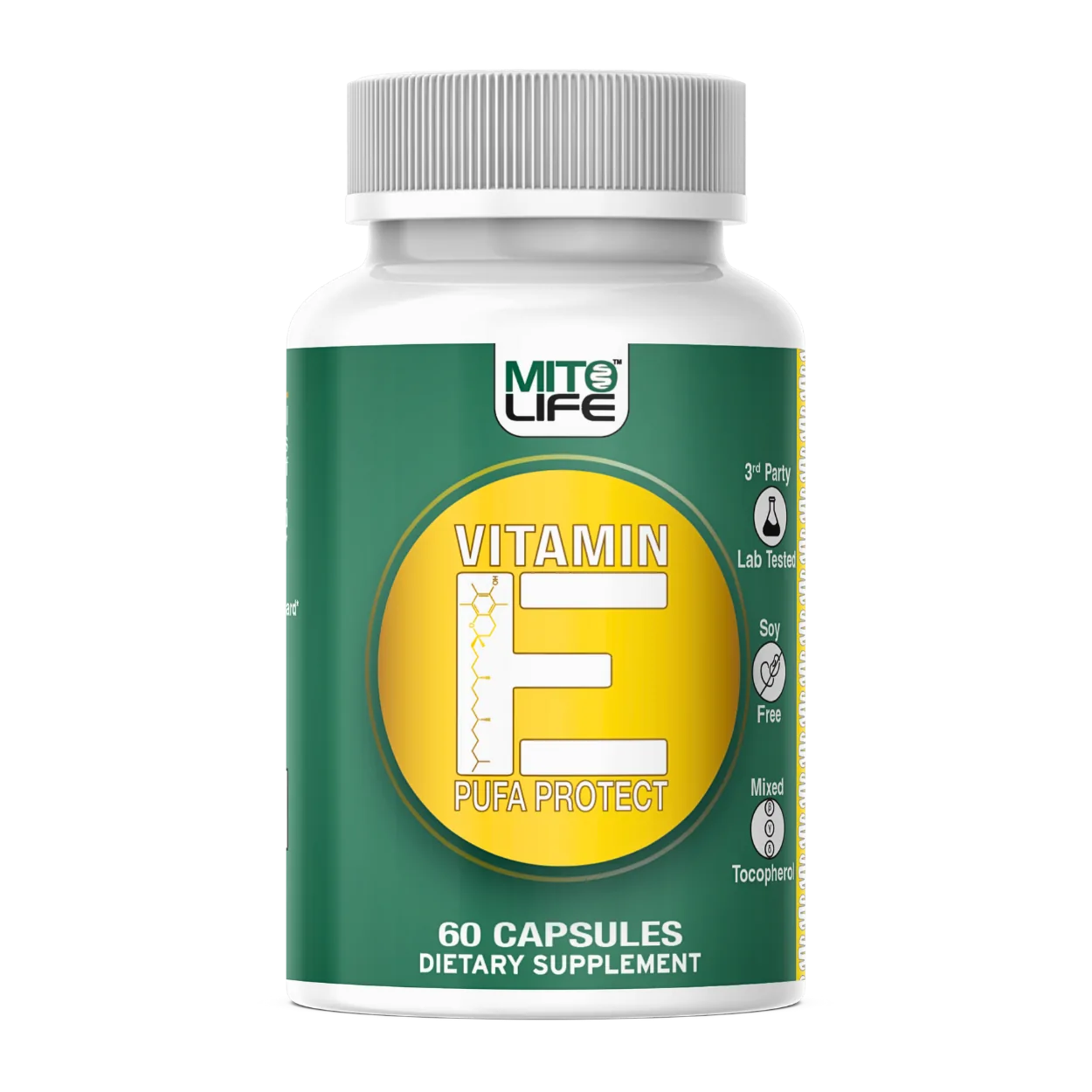
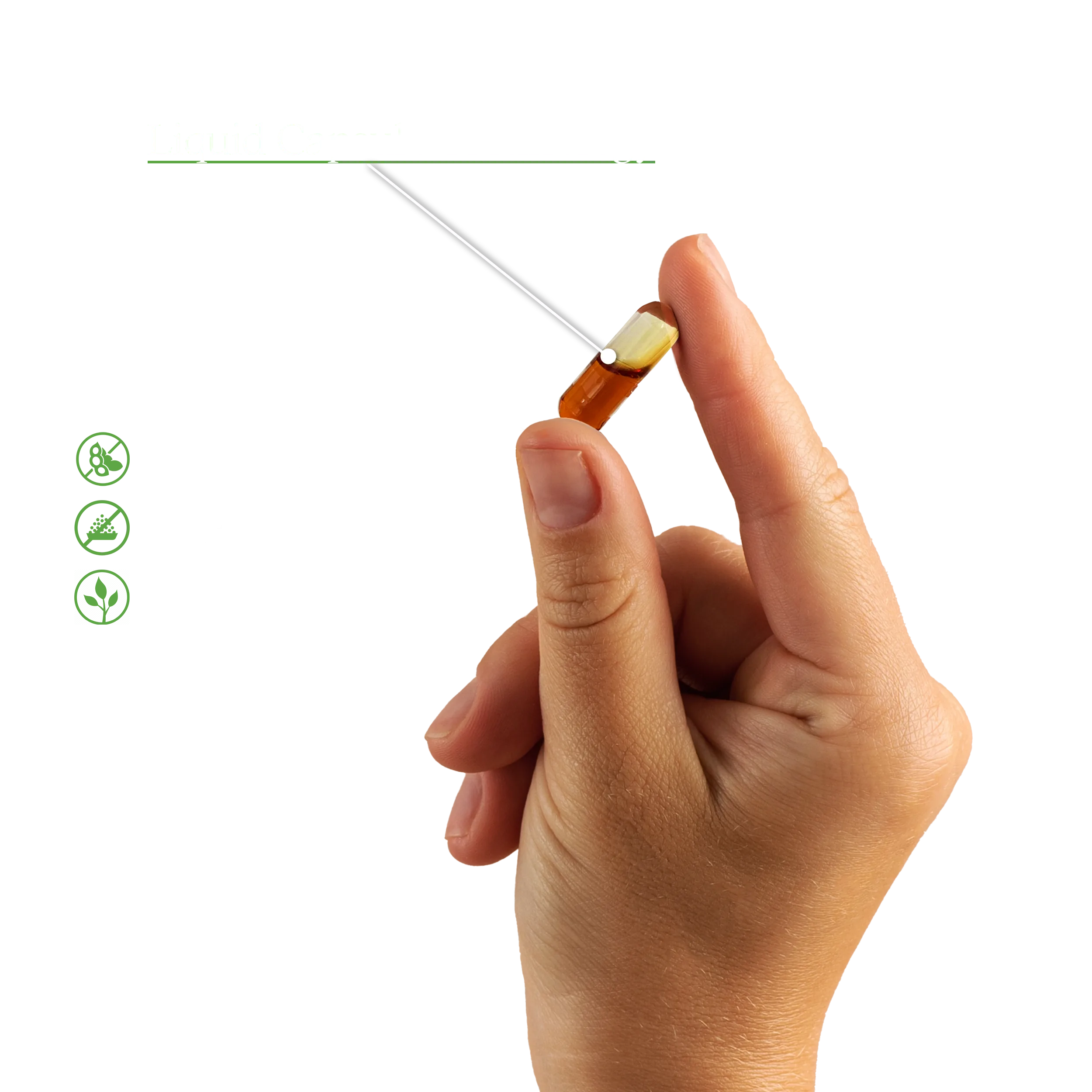
A vitamin E supplement built on natural d-alpha-tocopherol -- 335 mg (about 826 IU) per capsule -- alongside a smaller fraction of the other natural tocopherols (beta, gamma and delta, roughly 40 mg combined). It is taken to protect the delicate polyunsaturated fats (PUFAs) in your cell membranes from oxidation. Because vitamin E is fat-soluble, it sits inside the membrane itself and takes the oxidative hits so the structural fats stay intact. Think of it as the guard for the fats your dietary omega-3s help build in. It is sunflower-derived, in a vegetarian capsule.
Why the evidence supports it
The rationale here is basic membrane chemistry: the body's vitamin E requirement is understood to scale with how much polyunsaturated fat you take in, and vitamin E is the chain-breaking antioxidant that keeps those fats from going rancid inside the membrane. The more omega-3s you feed your membranes, the more of that cover they need -- which is why this pairs logically with a fish-oil or high-PUFA diet. That is the cell's Maintain function at the membrane level: keeping the structural fats intact so the membrane holds its healthy shape. We will say the honest limits as plainly as the rationale, because both are true. This is a HIGH dose of alpha-tocopherol, far above the roughly 15 mg daily requirement, and the large trials that gave lots of alpha-tocopherol to broad populations were mostly disappointing -- so this makes sense for someone actually eating a lot of PUFAs to protect, not as a blanket high-dose antioxidant for everyone. And there is no clinical-outcome trial on this exact formula, so it is framed as membrane and antioxidant support, not a treatment for any condition.
What it supports
- Supports protection of cell membrane fats from oxidation
- Supports the body's normal antioxidant defenses
- Complements a fish-oil or high-PUFA diet
- Supports healthy cell membrane integrity
Which function it supports
Ties to the cell's Maintain function via the cell membrane -- vitamin E sits in the membrane and takes the oxidative hits so the structural fats stay intact.
Learn the why behind this pillarHow it relates to your cells and mind
Every product here ties back to a specific job your body does. This one touches the functions below -- follow either link to see the mechanism in full, then dig into the studies.
What it is made of -- and the mechanisms behind it
Each ingredient acts on several of the body's functions. Taken together, this product touches these cell and mind functions -- follow any to see the mechanism in full.
The ingredients
Mechanisms drawn from our ingredient knowledge base (1 profiled ingredients). Structure and function only -- not a treatment claim.
The science on the ingredients
These studies are research on the ingredients and mechanisms in this product, not on the finished product itself, and they are shown for education. Nothing here is medical advice, and nothing here may be used to diagnose, treat, cure, or prevent any disease. Talk to your own provider about what is right for you.
- Vitamin E Does not Favor Recovery After Exercises: Systematic Review and Meta-analysis.
International journal of sports medicine · 2024
A meta-analysis found vitamin E supplementation did not favor post-exercise recovery, with high heterogeneity across carbonyl, interleukin-6, and muscle soreness markers.
- Consumption and supplementation of vitamin E in breast cancer risk, treatment, and outcomes: A systematic review with meta-analysis
Clinical nutrition ESPEN · 2023
This systematic review of 22 studies found no significant link between vitamin E consumption and breast cancer risk, but dietary vitamin E was inversely associated with cancer recurrence, with no effect on mortality.
- Vitamin E, Alpha-Tocopherol, and Its Effects on Depression and Anxiety: A Systematic Review and Meta-Analysis
2022
In a meta-analysis of 12 trials, vitamin E supplementation was linked to lower depression scores, but the anxiety benefit was not statistically significant, and most trials combined vitamin E with other compounds.
- A meta-analysis of effects of vitamin E supplementation alone and in combination with omega-3 or magnesium on polycystic ovary syndrome.
Scientific reports · 2022
A meta-analysis of 10 trials in women with polycystic ovary syndrome found vitamin E, alone or with omega-3 or magnesium, significantly lowered triglycerides, LDL, cholesterol, CRP, and hirsutism, and raised nitric oxide, but not hormone or blood sugar levels.
- Systematic review with meta-analysis: The effect of vitamin E supplementation in adult patients with non-alcoholic fatty liver disease.
Journal of gastroenterology and hepatology · 2021
A systematic review found vitamin E supplementation improved biochemical and histological liver markers, particularly in non-alcoholic steatohepatitis, in patients with fatty liver disease.
- A systematic review and meta-analysis on the impact of oral vitamin E supplementation on apolipoproteins A1 and B100
Clinical nutrition ESPEN · 2021
This meta-analysis of 7 trials in 1,284 adults found no significant effect of alpha-tocopherol supplementation on apolipoprotein A1 or B levels, markers used alongside standard lipid profiles for cardiovascular risk.
Vitamin E and Selenium-Related Manifestations of Muscle Disease.2025
A veterinary review of horses describes how vitamin E and selenium deficiency, alone or together, can cause muscle and heart disease, noting these deficiencies are diagnosed through diet review and blood testing.
Finno CJ; McKenzie EC -- The Veterinary clinics of North America. Equine practice
A network meta-analysis of interventions for anxiety and depression in PCOSEstablishedMeta-analysis2026
Across 25 randomized trials in 1,453 women with polycystic ovary syndrome, emotion-focused therapy, peer support, omega-3 plus vitamin E, and mindfulness stress management were linked to reduced anxiety and depression scores.
Zuolin Tan; Yunqing Li; Jingyuan Liu; Xinyin Hu; Xuhan Su; Yuhua Huang
Vitamins and Cancer Risk: A Comprehensive Review of Epidemiologic and Clinical EvidenceEmergingSystematic review2026
In a scoping review that mapped evidence without pooling it, routine vitamin supplementation was judged unsupported in cancer care; beta carotene was linked to higher lung cancer risk in smokers and vitamin E to higher prostate cancer risk.
El Halabi L; AlBayeh A; Khoury A; Katrib M; Nasr J; Al-Obaidi A -- Kansas journal of medicine
Cold pressed oils: a systematic review on physicochemical properties, nutritional composition and pharmacological activitiesEstablishedSystematic review2026
Cold-pressed oils retain significantly higher levels of PUFAs, antioxidants (vitamin E), and bioactive compounds than refined oils; stability is challenged by oxidation of unsaturated fats and can be enhanced by natural antioxidants and controlled storage.
Biswabhusan Dash; Ashirbad Sarangi; Ananya Nayak; Bhabani Shankar Das; Sudipta Jena; Asit Ray; Pratap Chandra Panda; Sanghamitra Nayak; Ambika Sahoo
Vitamin E Does not Favor Recovery After Exercises: Systematic Review and Meta-analysis.EmergingMeta-analysis2024
A meta-analysis found vitamin E supplementation did not favor post-exercise recovery, with high heterogeneity across carbonyl, interleukin-6, and muscle soreness markers.
de Lima KS; Schuch F; Righi NC; Neto LJR; Nunes GS; Puntel G; Chagas P; da Silva AMV -- International journal of sports medicine
Efficacy of pharmacotherapies on pediatric patients with metabolic dysfunction-associated steatotic liver disease: a systematic review and network meta-analysisEstablishedMeta-analysis2025
A network meta-analysis of 26 trials in 1503 pediatric MASLD patients found vitamin D most consistently improved lipid profile and liver enzymes, with vitamin E linked to greater NASH resolution.
Yaser S; Yaser H; Mohammed HE; Nasser M; Darwish MK; Haseeb ME; Heiba AH; Ghonaim MM; Aboeldahab H; Bady Z -- BMC gastroenterology
Vitamins D, A and E, and Beta-Carotene in Adherent and Non-Adherent Individuals with Phenylketonuria: Cross-Sectional Study, Systematic Review and Meta-AnalysisEstablishedMeta-analysis2025
In a cross-sectional study and meta-analysis of people with phenylketonuria aged 6 to 41, dietary adherence was linked to higher vitamin D, but vitamin E and beta-carotene levels showed no difference by adherence status.
Kamila Bokayeva; Małgorzata Jamka; Łukasz Kałużny; Monika Duś-Żuchowska; Natalia Wichłacz-Trojanowska; Renata Mozrzymas; Agnieszka Chrobot; Dariusz Walkowiak; Olga Ļubina; Ilya Rabkevich; Szymon Kurek; Anna Miśkiewicz-Chotnicka; Gulnara Sultanova; Karl-Heinz Herzig; Madara Auzenbaha; Jarosław Walkowiak
Antioxidant vitamins supplementation reduce endometriosis related pelvic pain in humans: a systematic review and meta-analysisEstablishedMeta-analysis2023
Across 13 randomized trials in 589 women with endometriosis, vitamin E supplementation was linked to less pelvic pain, while vitamin D's effect on pain was not statistically significant.
Zheng SH; Chen XX; Chen Y; Wu ZC; Chen XQ; Li XL -- Reproductive biology and endocrinology : RB&E
Consumption and supplementation of vitamin E in breast cancer risk, treatment, and outcomes: A systematic review with meta-analysisEstablishedMeta-analysis2023
This systematic review of 22 studies found no significant link between vitamin E consumption and breast cancer risk, but dietary vitamin E was inversely associated with cancer recurrence, with no effect on mortality.
de Oliveira VA; Oliveira IKF; Pereira IC; Mendes LKF; Carneiro da Silva FC; Torres-Leal FL; de Castro E Sousa JM; Paiva AA -- Clinical nutrition ESPEN
Almond Consumption Improves Inflammatory Profiles Independent of Weight Change: A 6-Week Randomized Controlled Trial in Adults with ObesityEstablishedRandomized controlled trial2026
In a 6-week RCT of 69 adults with obesity, daily almonds raised dietary alpha-tocopherol intake and reduced inflammatory cytokines IL-6, TNF-alpha, and IFN-gamma, but serum alpha-tocopherol levels themselves did not change, with no weight loss.
Ayodeji Adepoju; Elaheh Rabbani; Philip Brickey; Victoria Vieira-Potter; Jaapna Dhillon
Ameliorative Effects of Vitamin E and Lutein on Hydrogen Peroxide-Triggered Oxidative Cytotoxicity via Combined Transcriptome and Metabolome Analysis.EmergingClinical trial2025
In cultured human liver cells, not a clinical trial, vitamin E reduced hydrogen peroxide-induced cell damage and shifted metabolic pathways including thiamine metabolism and vitamin absorption, more effectively than lutein did.
Lv H; He Y; Guo S -- Cells
A randomized, crossover study to evaluate α-tocopherol bioavailability via a microemulsion gel or dry tablet delivery in healthy adults.ContestedRandomized controlled trial2024
A randomized controlled trial on Vitamin E found that we conclude that a mixture of dietary lipids and emulsification agents in the form of a microemulsion gel formula was able to significantly improve bioavailability of serum α-tocopherol compared to a.
Stefan MW; Sharp MH; Gheith RH; Lowery RP; Wilson JM -- Nutrition and health
Effects of daily almond consumption on glycaemia in adults with elevated risk for diabetes: a randomised controlled trialEstablishedRandomized controlled trial2024
In a 16-week trial of 81 adults with elevated HbA1c, daily almond intake raised serum alpha-tocopherol but did not improve HbA1c, blood glucose, or body composition compared to a matched snack control.
Li-Chu Huang; Gregory C Henderson; Richard D Mattes
Beneficial changes in total cholesterol, LDL-C, biomarkers of intestinal inflammation, and vitamin E status in adults with metabolic syndrome consuming almonds as snack foods: a randomized controlled clinical trial.EmergingRandomized controlled trial2025
A randomized controlled trial on Vitamin E found that total body weight, caloric intake, and markers of carbohydrate metabolism (glucose, insulin), systemic inflammation (plasma interleukin-6, C-reactive protein, lipopolysaccharide-binding protein, CD14), and oxidative damage (malondialdehyde) were not altered by almond consumption.
Beaver LM; Leonard SW; Uesugi SL; Wong CP; Lytle LM; Vasudevan A; Papenhausen EM; Jupudi Y; Bella D; Bobe G; Traber MG; Ho E -- Nutrition research (New York, N.Y.)
Effect of Vitamin E Supplementation on Chronic Insomnia Disorder in Postmenopausal Women: A Prospective, Double-Blinded Randomized Controlled Trial.ContestedRandomized controlled trial2023
In a placebo-controlled trial of 160 postmenopausal women, 400 units of mixed tocopherol vitamin E daily for one month improved self-reported sleep quality scores more than placebo and reduced sedative drug use.
Thongchumnum W; Vallibhakara SA; Sophonsritsuk A; Vallibhakara O -- Nutrients
Impact of Genetic Variants on Vitamin E Levels in an Italian Cohort of Bariatric Surgery Patients: A Focus on SNPs Involved with Transport and Bioavailability.EmergingClinical trial2025
In an observational study of 140 Italian bariatric surgery patients, not a clinical trial testing a treatment, certain gene variants (CD36, SCARB1, ABCA1) were linked to changes in vitamin E levels after surgery.
Ricci C; Bufano A; Iraci Sareri G; Simon Batzibal M; Marzocchi C; Simoncelli G; Righi D; Salvemini A; Ciuoli C; Di Stefano L; Benenati N; Regoli T; Miedviedieva K; Tirone A; Voglino C; Pirisinu S; Cantara S -- International journal of molecular sciences
Vitamin E ameliorates blood cholesterol level and alters gut microbiota composition: A randomized controlled trial.EmergingRandomized controlled trial2025
A randomized controlled trial on Vitamin E found that VE could promote health by lowering LDL-C, partly and indirectly by affecting gut bacteria with the ability to produce SCFAs or metabolize bile acids.
Chen B; Li Y; Li Z; Hu X; Zhen H; Chen H; Nie C; Hou Y; Zhu S; Xiao L; Li T -- Nutrition, metabolism, and cardiovascular diseases : NMCD
An Examination into the Effects of a Nutraceutical Supplement on Cognition Stress Eye Health and Skin Satisfaction in Adults with Self-Reported Cognitive Complaints: A Randomized Double-Blind Placebo-Controlled TrialEmergingRandomized controlled trial2024
In adults with memory complaints, a 12-week vitamin E, astaxanthin, and grape juice supplement improved one of three primary memory measures and some blood biomarkers, with no effect on working memory or verbal learning.
Lopresti AL et al. -- Nutrients
Role of antioxidants in reducing oxidative stress and seizure frequency in drug-resistant epileptic patients.EmergingRandomized controlled trial2024
In a randomized trial of 100 children with drug-resistant epilepsy, adding vitamin C and E to routine care for eight weeks significantly reduced seizure frequency compared with placebo, though oxidative stress marker changes did not differ between groups.
Ismy J; Soebadi A; Mangunatmadja I; Monica M; Sari TT; Yuliarti K -- Narra J
Efficacy of Vitamin E on Renal Function and Preventing Proximal Tubulopathy Caused by Iron Chelation Therapy in Thalassemia Major Patients: A Randomized Controlled Clinical TrialEmergingRandomized controlled trial2023
In 60 thalassemia patients on deferasirox, no kidney injury occurred in either arm of this unblinded trial, leaving the question unanswerable; vitamin E blunted a serum creatinine rise at one week only, with no difference by one month.
Mahdi Moradi Goudarzi; Vahid Falahati; Parsa Yousefichaijan; Amin Tajerian -- Nephro-Urology Monthly
Potential Antidote Against Lead Toxicity-A ReviewEmergingExpert review2026
This review of animal studies on lead poisoning describes spirulina, curcumin, garlic, vitamin C and vitamin E as antioxidants that may lessen some of lead's toxic effects, while noting that safe dosing still needs to be established.
Romanowska Z; Ścibior A; Radko L; Męcik-Kronenberg T -- International journal of molecular sciences
The triad of collagen, vitamin C, and vitamin E in aging: emerging roles in mood and psychological health, neurotrophic support, cognitive function, endurance, and sarcopeniaEmergingExpert review2026
A review of collagen, vitamin C, and vitamin E research suggests this nutrient combination, alongside exercise, may support muscle, cognitive, and mood-related outcomes in aging, though most evidence looks at each nutrient separately.
Chunzi Xiong
Efficacy of Vitamin E Supplementation During Pregnancy on the Vitamin E Nutritional Status of the Mother-Child Dyad: A Systematic Review and Meta-Analysis of Randomized Controlled TrialEmergingExpert review2026
A meta-analysis of six trials (3,823 pregnant women) found vitamin E supplementation raised maternal serum alpha-tocopherol levels but did not improve gestational age or birth weight, so the higher serum readings brought no clear neonatal benefit.
Byanca Rodrigues Carneiro; Anny Cristine de Araújo; Yvi Melo Sisinano; Amanda Freitas de Oliveira; Adriana Augusto de Rezende; Karla Danielly da Silva Ribeiro
Exploring Vitamin E's Role in Colorectal Cancer Growth Using Rodent Models: A Scoping ReviewEmergingExpert review2026
This scoping review of rodent studies reports gamma- and delta-tocopherols and delta-tocotrienol reduced colorectal tumor volume and formation; it notes colorectal cancer patients tend to have lower serum vitamin E, though dosing and bioavailability barriers remain.
Nuraqila Mohd Murshid; Jo Aan Goon; Khaizurin Tajul Arifin
Balanced by design -- we show supporting and contradicting findings. Search all studies
If you have had labs done
These are lab markers where this product's ingredients have measured evidence in our citation library. This is not a claim that the product will change your results -- the research attaches to the ingredient, and what a marker means depends on the whole picture. Each one links to its full entry, including what typically moves it and how to read it.
- Seleniumsolid evidence
via Vitamin E · 66 studies, 13 in people
What people often notice when this marker sits outside the usual range
Higher: A garlic smell on the breath with no garlic eaten -- the classic early sign.
Lower: Frequent infections and slow recovery from them -- selenium is required by the immune system's antioxidant defences.
- Omega-3/Omega-6 Fatty Acid Panel (EPA, DHA, DPA, Arachidonic Acid, Linoleic Acid, Ratios)solid evidence
via Vitamin E · 6 studies, 3 in people
What people often notice when this marker sits outside the usual range
Higher: Very high intakes: easier bruising, longer bleeding from small cuts, and a fishy aftertaste or reflux.
Lower: Dry, rough or bumpy skin on the backs of the arms; dry eyes; dry, brittle hair.
- High-Sensitivity C-Reactive Protein (hs-CRP)emerging evidence
via Vitamin E · 5 studies, 5 in people
Improved biomarkers of intestinal inflammation alongside lipid changes -- again the gut-barrier route rather than a direct antioxidant effect on the marker.
What people often notice when this marker sits outside the usual range
Higher: Deep, unrefreshing fatigue -- searched as 'tired all the time blood tests normal' and 'why am i tired even after 8 hours sleep'.
Lower: No symptoms. Low is the desirable direction.
- hs-CRP (High-Sensitivity C-Reactive Protein)emerging evidence
via Vitamin E · 5 studies, 5 in people
What people often notice when this marker sits outside the usual range
Higher: A high hs-CRP reflects low-grade inflammation SOMEWHERE -- you tend to feel the underlying cause (a cold, a flare, a sore joint, poor sleep, extra weight) rather than the CRP itself.
Lower: A low hs-CRP is favourable and simply reflects little systemic inflammation at the moment of the draw.
- hs-CRP (High-Sensitivity C-Reactive Protein)emerging evidence
via Vitamin E · 5 studies, 5 in people
What people often notice when this marker sits outside the usual range
Higher: hs-CRP is non-specific -- read it as a trend and in context, never as a stand-alone verdict.
Lower: A low hs-CRP is favourable and simply reflects little systemic inflammation at the moment of the draw.
- ALT & AST (Liver Enzymes)mixed evidence
via Vitamin E · 7 studies, 5 in people
What people often notice when this marker sits outside the usual range
Higher: Fatigue disproportionate to activity is the commonest complaint that turns out to have a raised ALT behind it.
Lab results are interpreted by a qualified clinician who knows your history. Nothing here diagnoses anything or replaces that conversation.
No product works in isolation
Every cell function above -- Sense, Exchange, Transform, Build, Maintain, Adapt -- needs the same broad base of optimal micronutrient levels running underneath it, all the time. PUFA Protect is not a stand-alone fix; it is one piece that plugs into that larger system. The foundation comes first, and this supports it.
Stacks well with
Pick your goal -- here is what PUFA Protect pairs with for each. Nothing works in isolation; these share the same systems.
For Epigenetics
For Gut Health
For Foundation Nutrition
Foundational, or targeted?
Not everything in the shop is meant to be taken forever. Some products here are foundational -- a daily nutrient base built for long-term, ongoing use. Others are targeted -- shorter-term support for a specific season, not a lifelong habit. If you are not sure which one this is, that is a fair question to ask us before you buy.
Learn more, on your terms
Do not take our word for it -- go read. Each topic below opens a pre-loaded search so you can explore the nutrient, the mechanism, or the device for yourself.
Search the full studies libraryHow to use it
Take with a meal that has some fat, since vitamin E is fat-soluble. Pairs naturally with your omega-3s at the same meal. Because this is a high dose of alpha-tocopherol, it suits people whose diet is genuinely PUFA-rich rather than everyone; follow the label. High-dose alpha-tocopherol slows clotting, so it stacks with a blood thinner -- that is the interaction worth knowing about yourself.
Use code HOLISTICLOVE at checkout.
Where to get it
Ready when you are. This link takes you to the official, verified source for this product.
Get PUFA ProtectThe studies
See the research behind the science we point to.
Explore studiesThe blog
Plain-language reads on how it all fits together.
Read the blogOptimal nutrients are the definition of longevity
Long-term cell function depends on having what it needs, at the level it needs it, for as long as it needs it. That is the whole thesis behind everything we point you to here.
When you buy through our links, we earn a small commission -- and that is what funds all the free education here. It never costs you more. Products are not intended to diagnose, treat, cure, or prevent any disease.
PUFA Protect is a vitamin E supplement, ideally with a full family of tocopherols and tocotrienols, that helps shield the delicate polyunsaturated fats in your cell membranes from oxidative wear. Think of it as a guard for the fats omega-3s help build in. It fits anyone already feeding their membranes with omega-3s.
FAQ
What does PUFA Protect support?
It supports protection of cell membrane fats from oxidation, the body's normal antioxidant defenses, and healthy cell membrane integrity, and it complements omega-3 intake.
How do I take it?
Take with a meal that has some fat, since vitamin E is fat-soluble. It pairs naturally with your omega-3s at the same meal. Follow the label.
What makes it different?
A full-spectrum tocopherol form is a more complete way to cover vitamin E than a lone synthetic fraction, and it makes sense to protect the membrane fats you are building in.