

$78.00
$96.00 save $18.00 -- applied automatically through this link
When you buy through our links, we earn a small commission -- and that is what funds all the free education here. It never costs you more. Products are not intended to diagnose, treat, cure, or prevent any disease.
What it is
A concentrated green tea extract standardized to 97% polyphenols, about 65% of them catechins, with more than 95 mg of EGCG per capsule -- roughly the antioxidant equivalent of seven cups of green tea in a 99.5% caffeine-free form. Standardization is the point: every capsule delivers a consistent catechin dose instead of the wide swing you get cup to cup.
Why the evidence supports it
Green tea catechins are among the most heavily studied plant antioxidants in nutrition science, and the mechanism is well mapped -- catechins like EGCG neutralize free radicals and help shield cell structures, including DNA, from oxidative wear. A standardized extract also has bioavailability behind it: a comparative study found the concentrated catechins raised plasma antioxidant capacity more effectively than drinking green or black tea. That makes a standardized, low-caffeine extract one of the most evidence-based ways to lean on antioxidant support day to day, feeding straight into the cell's Maintain function -- buffering oxidative stress so cells can hold their steady, healthy state.
What it supports
- Supports the body's normal antioxidant defenses
- Supports a healthy inflammation response already within normal range
- Provides standardized green tea catechins
- Supports healthy cellular aging as part of a balanced routine
Which function it supports
Ties to the cell's Maintain function -- catechins help neutralize oxidative stress so cells can hold their steady, healthy state.
Learn the why behind this pillarHow it relates to your cells and mind
Every product here ties back to a specific job your body does. This one touches the functions below -- follow either link to see the mechanism in full, then dig into the studies.
What it is made of -- and the mechanisms behind it
Each ingredient acts on several of the body's functions. Taken together, this product touches these cell and mind functions -- follow any to see the mechanism in full.
The ingredients
Mechanisms drawn from our ingredient knowledge base (1 profiled ingredients). Structure and function only -- not a treatment claim.
What’s actually in it
Label revision 2015Transcribed from the manufacturer’s official Product Information Page, exactly as printed. Ingredient names that link open our research page for that ingredient, with the studies behind it.
| Amount per 2 capsules | Amount | % DV |
|---|---|---|
| Green tea leaf ExtractCamellia sinensis | 500 mg | * |
- Servings per container:
- 60
- Other ingredients:
- Gelatin, Microcrystalline Cellulose, Stearic Acid, Silicon Dioxide.
Standardized to a minimum 97% pure polyphenols, 65% of which are catechins (>95 mg EGCg per capsule). Decaffeinated for labeling purposes: ~1.5-2 mg caffeine per capsule (a cup of coffee is 100-150 mg). Label caution: do not exceed 1,200 mg green tea combined with other green-tea-containing supplements.
Source: official Product Information Page . Amounts are the manufacturer’s, not ours. Structure and function only -- nothing here is medical advice, and nothing here may be used to diagnose, treat, cure, or prevent any disease.
The science on the ingredients
These studies are research on the ingredients and mechanisms in this product, not on the finished product itself, and they are shown for education. Nothing here is medical advice, and nothing here may be used to diagnose, treat, cure, or prevent any disease. Talk to your own provider about what is right for you.
- Salubrious Effects of Green Tea Catechins on Fatty Liver Disease: A Systematic Review.
Medicines (Basel, Switzerland) · 2022
A systematic review of rodent and human studies found EGCG or green tea extract reduced body weight and fat deposits and improved markers of lipid metabolism and oxidative stress in nonalcoholic fatty liver disease, though optimal dosing is unclear.
- Effect of Acute and Chronic Dietary Supplementation with Green Tea Catechins on Resting Metabolic Rate, Energy Expenditure and Respiratory Quotient: A Systematic Review.
Nutrients · 2021
A systematic review of 15 studies found that green tea catechin supplementation, especially at low doses of 100 to 300 mg, was associated with improved respiratory quotient, while effects on resting metabolic rate and energy expenditure were inconsistent across studies.
- The Effect of Dietary Supplementation of Green Tea Catechins on Cardiovascular Disease Risk Markers in Humans: A Systematic Review of Clinical Trials
Beverages · 2016
A review of clinical trials found green tea catechin supplementation showed inconsistent effects on cardiovascular risk markers such as blood pressure and lipids, varying by dose, duration, and population studied.
- Acute effect of green tea catechins on uric acid metabolism after alcohol ingestion in Japanese men
Clinical rheumatology · 2021
In ten healthy Japanese men, green tea catechins with alcohol increased urinary uric acid and xanthine/hypoxanthine excretion compared to alcohol alone; enhanced uric acid clearance by approximately 15 percent.
- Effect of Daily Intake of Green Tea Catechins on Cognitive Function in Middle-Aged and Older Subjects: A Randomized, Placebo-Controlled Study
Molecules · 2020
A randomized trial found daily decaffeinated green tea catechin intake was associated with improved reaction time and working memory measures in middle-aged and older adults.
- A Combination of Essential Fatty Acids, Panax Ginseng Extract, and Green Tea Catechins Modifies Brain fMRI Signals in Healthy Older Adults.
The journal of nutrition, health & aging · 2018
In a crossover trial of just 10 older adults, one month of combined fish oil, ginseng, and green tea catechins changed brain activity on fMRI, but cognitive test scores did not differ significantly from placebo.
Preclinical evidence construction for epigallocatechin-3-gallate against non-alcoholic fatty liver disease: a meta-analysis and machine learning study.EstablishedMeta-analysis2025
Preclinical evidence synthesis found EGCG's targets include antioxidant activity, lipid metabolism regulation, and reduced insulin resistance relevant to fatty liver disease pathways.
Zhang Y; Li J; Wang Z; Chen J; Zhao M; Guo C; Wang T; Li R -- Phytomedicine : international journal of phytotherapy and phytopharmacology
Effectiveness of epigallocatechin gallate nanoparticles on the in-vivo treatment of Alzheimer's disease in a rat/mouse model: a systematic review.EstablishedSystematic review2024
A systematic review found limited studies on EGCG nanoparticles in animal models of Alzheimer's disease, indicating insufficient data for firm conclusions.
Khalifa MKA; Abdel-Sattar SA; Amin OM; Kohaf NA; Zaky HS; Abd El-Fattah MA; Mohammed KHA; Badawi NM -- Daru : journal of Faculty of Pharmacy, Tehran University of Medical Sciences
Cardioprotective effect of epigallocatechin gallate in myocardial ischemia/reperfusion injury and myocardial infarction: a meta-analysis in preclinical animal studies.EstablishedMeta-analysis2023
A preclinical meta-analysis found EGCG reduced myocardial infarct size compared with controls, indicating a cardioprotective mechanism in ischemia-reperfusion injury models.
Wei XY; Zeng YF; Guo QH; Liu JJ; Yin N; Liu Y; Zeng WJ -- Scientific reports
Salubrious Effects of Green Tea Catechins on Fatty Liver Disease: A Systematic Review.EstablishedSystematic review2022
A systematic review of rodent and human studies found EGCG or green tea extract reduced body weight and fat deposits and improved markers of lipid metabolism and oxidative stress in nonalcoholic fatty liver disease, though optimal dosing is unclear.
Abunofal O; Mohan C -- Medicines (Basel, Switzerland)
Efficacy and safety of 7-day aerosolized epigallocatechin-3-gallate in oncologic patients with COVID-19 pneumonia.EmergingRandomized controlled trial2026
A trial found seven-day aerosolized EGCG improved radiological and clinical outcomes with a favorable safety profile in oncologic patients with COVID-19 pneumonia.
Zhu W; Jia L; Qiao Q; Li X; Peng X; Meng X; Kong L; Zhao H -- BMC cancer
Evaluating the Effect of Epigallocatechin Gallate (EGCG) in Reducing Folate Levels in Reproductive Aged Women by MTHFR and DHFR Genotype in Combination With Letrozole or Clomiphene.EmergingRandomized controlled trial2025
A 30-day course of EGCG at 720 mg daily was well tolerated and not associated with folate deficiency in reproductive-age women, alone or with fertility medications.
Johnson JJ; Siblini H; Al-Hendy A; Segars JH; González F; Taylor HS; Singh B; Carson SA -- Clinical and translational science
Epigallocatechin gallate alleviates non-alcoholic fatty liver disease through the inhibition of the expression and activity of Dipeptide kinase 4.EmergingRandomized controlled trial2024
EGCG was found to inhibit the expression and activity of dipeptidyl peptidase 4, a mechanism studied for non-alcoholic fatty liver disease biology.
Yang M; Yan R; Sha R; Wang X; Zhou S; Li B; Zheng Q; Cao Y -- Clinical nutrition (Edinburgh, Scotland)
Assessing the Hepatic Safety of Epigallocatechin Gallate (EGCG) in Reproductive-Aged Women.EmergingRandomized controlled trial2023
A daily 800 mg dose of EGCG, alone or with fertility medications, was well tolerated and not associated with liver toxicity or folate deficiency in reproductive-age women.
Siblini H; Al-Hendy A; Segars J; González F; Taylor HS; Singh B; Flaminia A; Flores VA -- Nutrients
The polyphenol epigallocatechin gallate lowers circulating catecholamine concentrations and alters lipid metabolism during graded exercise in man: a randomized cross-over study.EmergingRandomized controlled trial2023
In a small crossover trial of eight young men, a single 1450 mg EGCG dose lowered catecholamines during graded cycling exercise but did not change glucose or lactate response.
Churm R; Williams LM; Dunseath G; Prior SL; Bracken RM -- European journal of nutrition
The influence of green tea extract on nintedanib's bioavailability in patients with pulmonary fibrosis.EmergingRandomized controlled trial2022
A pharmacokinetic study examined whether green tea extract altered nintedanib bioavailability in patients with pulmonary fibrosis, testing for a herb-drug interaction.
Veerman GDM; van der Werff SC; Koolen SLW; Miedema JR; Oomen-de Hoop E; van der Mark SC; Chandoesing PP; de Bruijn P -- Biomedicine & pharmacotherapy = Biomedecine & pharmacotherapie
Safety and preliminary efficacy on cognitive performance and adaptive functionality of epigallocatechin gallate (EGCG) in children with Down syndrome. A randomized phase Ib clinical trial (PERSEUS study).EmergingRandomized controlled trial2022
A phase Ib trial found EGCG was safe and well tolerated in children with Down syndrome, though efficacy on cognitive performance was not supported.
Cieuta-Walti C; Cuenca-Royo A; Langohr K; Rakic C; López-Vílchez MÁ; Lirio J; González-Lamuño Leguina D; González TB -- Genetics in medicine : official journal of the American College of Medical Genetics
Epigallocatechin Gallate in Progressive MS: A Randomized, Placebo-Controlled Trial.EmergingRandomized controlled trial2021
A phase II trial found EGCG was safe and well tolerated but did not significantly reduce brain atrophy rate in patients with progressive multiple sclerosis.
Rust R; Chien C; Scheel M; Brandt AU; Dörr J; Wuerfel J; Klumbies K; Zimmermann H -- Neurology(R) neuroimmunology & neuroinflammation
EGCG-based nanoparticles: synthesis, properties, and applications.EmergingExpert review2025
Non-covalent and covalent interactions of EGCG with other substances improve the stability, efficacy, and pharmacokinetic profile of EGCG-based nanoparticles.
Peng X; McClements DJ; Liu X; Liu F -- Critical reviews in food science and nutrition
Neuroprotective potential of epigallocatechin gallate in Neurodegenerative Diseases: Insights into molecular mechanisms and clinical Relevance.EmergingExpert review2025
EGCG has been shown to slow amyloidogenic processes and decrease amyloid cytotoxicity, mechanisms relevant to neurodegenerative protein-aggregation pathways.
Amin MA; Zehravi M; Sweilam SH; Shatu MM; Durgawale TP; Qureshi MS; Durgapal S; Haque MA -- Brain research
Nano-Engineered Epigallocatechin Gallate (EGCG) Delivery Systems: Overcoming Bioavailability Barriers to Unlock Clinical Potential in Cancer Therapy.EmergingExpert review2025
EGCG modulates oncogenic pathways via NF-kB suppression, caspase activation, and MMP-9 downregulation, mechanisms studied across nano-delivery platforms for cancer research.
Qutub M; Hussain UM; Tatode A; Premchandani T; Khan R; Umekar M; Taksande J; Singanwad P -- AAPS PharmSciTech
Epigallocatechin Gallate as a Potential Therapeutic Agent in Endometriosis: A Narrative Review.EmergingExpert review2025
A narrative review discusses EGCG as part of green herbal extract research relevant to the significant quality-of-life impact of endometriosis.
Markowska A; Kojs Z; Antoszczak M; Markowska J; Huczyński A -- Nutrients
Investigating the therapeutic potential of epigallocatechin gallate (EGCG) for chronic pain management: mechanisms, applications, and future perspectives.EmergingExpert review2025
A review outlines proposed mechanisms for EGCG in chronic pain research, calling for further clinical trials to confirm efficacy and safety.
Liu Y; Chen ZJ; Fei Y; Yu X; Chen G -- Fitoterapia
Green Tea and Epigallocatechin Gallate (EGCG) for the Management of Nonalcoholic Fatty Liver Diseases (NAFLD): Insights into the Role of Oxidative Stress and Antioxidant Mechanism.EmergingExpert review2021
Animal and cellular studies show green tea and EGCG may alleviate oxidative stress and related metabolic dysfunction, inflammation, and fibrosis pathways in fatty liver disease.
Tang G; Xu Y; Zhang C; Wang N; Li H; Feng Y -- Antioxidants (Basel, Switzerland)
EGCG-Functionalized Selenium Nanoparticles Mitigate High-Fat Diet-Induced Hepatic Lipotoxicity Through Keap1/Nrf2 Redox Modulation and Transcriptional Regulation of AMPK/SIRT1/PGC-1α/MFN2-Associated Mitochondrial Homeostasis.EmergingAnimal study2026
EGCG-functionalized selenium nanoparticles modulated Keap1/Nrf2 redox signaling and mitochondrial homeostasis pathways in a high-fat-diet model of hepatic lipotoxicity.
Sayed FA; Maher MA; Elborlosy ME; Safwat MA; Mahmoud MS; Elmahdy FY; Tarek R; Faraag AHI -- International journal of molecular sciences
Epigallocatechin gallate-loaded alginate-peanut protein hydrogel beads: Influence of pectin-based crosslinking and chitosan-based coating strategies.EmergingPreclinical study2026
EGCG-loaded alginate-peanut protein hydrogel beads showed pH-responsive release behavior, remaining stable in gastric fluid but releasing EGCG more readily in intestinal fluid.
Wang Y; Wang X; Zhu Y; Chen Q; Guo Z; Kong B; Liu H; Li W -- Carbohydrate polymers
Starch-EGCG complex enhances EGCG bioavailability through microbial metabolism and ameliorates metabolic-associated fatty liver disease via gut-liver axis.EmergingPreclinical study2026
A starch-EGCG complex enhanced EGCG bioavailability via microbial metabolism and showed anti-inflammatory and antioxidant activity through AMPK pathway activation in a fatty liver disease model.
Zhou Z; Li L; Duan J; Zhu J; Wang X; Guo J; Li K; Shi L -- Carbohydrate polymers
Low-dose epigallocatechin gallate combined with L-theanine effectively alleviate obesity and metabolic dysfunction-associated steatotic liver disease by remodeling gut homeostasis and avoiding its hepatotoxicity.EmergingAnimal study2026
Low-dose EGCG combined with L-theanine improved metabolic health markers by remodeling gut microbiota, offering a safer strategy in a fatty liver disease model.
Zuo G; Shen Y; Wang L; Gao Y; Luo C; Wen J; Li J; Huang JA -- Phytomedicine : international journal of phytotherapy and phytopharmacology
Epigallocatechin gallate prevents and alleviates type 2 diabetes mellitus (T2DM) through gut microbiota and multi-organ interactions in Wistar healthy rats and GK T2DM rats.EmergingAnimal study2026
EGCG intervention reduced gut-microbiota-derived lipopolysaccharides, maintained oxidative stress homeostasis, and promoted beige fat thermogenesis in a rat model of type 2 diabetes.
Zeng H; Liu C; Wan L; Peng L; Wang K; Zhou F; Fang W; Wen S -- Journal of advanced research
Formulation optimization and biodistribution of epigallocatechin gallate phospholipid complex-loaded NLCs for rheumatoid arthritis treatment.EmergingPreclinical study2026
An EGCG phospholipid complex nanostructured lipid carrier showed sustained 24-hour drug release compared with rapid degradation of pure EGCG, studied for joint-tissue delivery.
Mangla B; Yadav S; Kumar P; Aggarwal G -- Journal of liposome research
Balanced by design -- we show supporting and contradicting findings. Search all studies
If you have had labs done
These are lab markers where this product's ingredients have measured evidence in our citation library. This is not a claim that the product will change your results -- the research attaches to the ingredient, and what a marker means depends on the whole picture. Each one links to its full entry, including what typically moves it and how to read it.
- Polyphenols (Gut Barrier)emerging evidence
via Green tea catechins/EGCG · 81 studies, 19 in people
- Prostate-Specific Antigen (PSA) Total, Free & Percent Freeemerging evidence
via Green tea catechins/EGCG · 6 studies, 3 in people
What people often notice when this marker sits outside the usual range
Higher: Frequently NOTHING -- which is the entire reason PSA is measured rather than waited for.
Lower: No symptoms. ⚠️ Note that finasteride and dutasteride roughly HALVE PSA -- a result on either must be doubled to be interpreted, and forgetting this hides real findings.
- Prostate-Specific Antigen (PSA)emerging evidence
via Green tea catechins/EGCG · 6 studies, 3 in people
What people often notice when this marker sits outside the usual range
Higher: Frequently NOTHING -- which is the entire reason PSA is measured rather than waited for.
Lower: ⚠️ Finasteride and dutasteride roughly HALVE PSA.
Lab results are interpreted by a qualified clinician who knows your history. Nothing here diagnoses anything or replaces that conversation.
No product works in isolation
Every cell function above -- Sense, Exchange, Transform, Build, Maintain, Adapt -- needs the same broad base of optimal micronutrient levels running underneath it, all the time. TeGreen 97 is not a stand-alone fix; it is one piece that plugs into that larger system. The foundation comes first, and this supports it.
Stacks well with
Pick your goal -- here is what TeGreen 97 pairs with for each. Nothing works in isolation; these share the same systems.
For Epigenetics
For Immune
Foundational, or targeted?
Not everything in the shop is meant to be taken forever. Some products here are foundational -- a daily nutrient base built for long-term, ongoing use. Others are targeted -- shorter-term support for a specific season, not a lifelong habit. If you are not sure which one this is, that is a fair question to ask us before you buy.
Learn more, on your terms
Do not take our word for it -- go read. Each topic below opens a pre-loaded search so you can explore the nutrient, the mechanism, or the device for yourself.
Search the full studies libraryHow to use it
Take with food and water, ideally not on an empty stomach and not late in the day. One capsule with a meal is a common routine. Follow the label.
Where to get it
Ready when you are. This link takes you to the official, verified source for this product.
Get TeGreen 97The studies
See the research behind the science we point to.
Explore studiesThe blog
Plain-language reads on how it all fits together.
Read the blogOptimal nutrients are the definition of longevity
Long-term cell function depends on having what it needs, at the level it needs it, for as long as it needs it. That is the whole thesis behind everything we point you to here.
When you buy through our links, we earn a small commission -- and that is what funds all the free education here. It never costs you more. Products are not intended to diagnose, treat, cure, or prevent any disease.
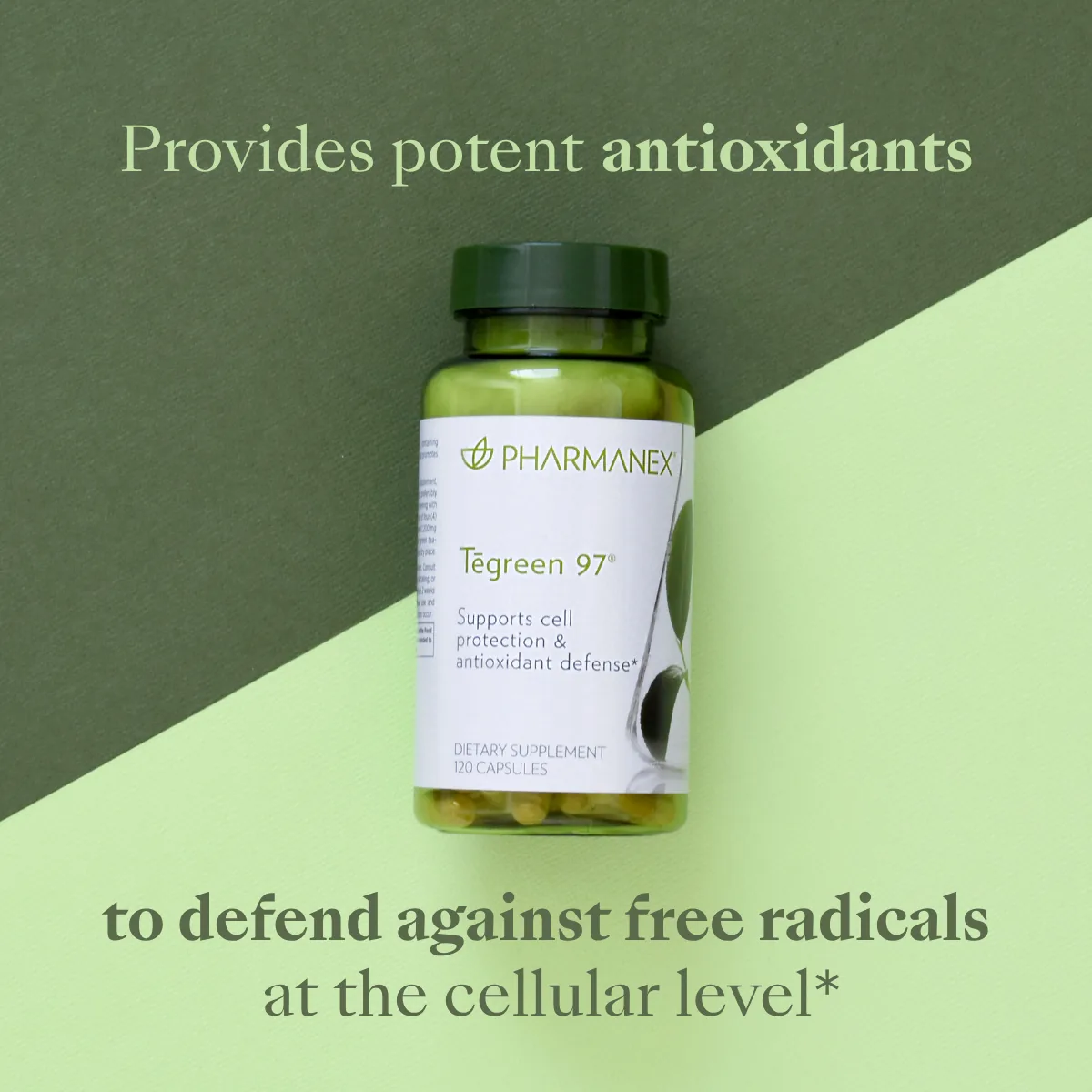
TeGreen 97 is a concentrated green tea extract standardized for catechins (including EGCG) in a low-caffeine form. It packs the useful part of many cups of green tea into a single capsule. It fits anyone who wants consistent antioxidant support without drinking cup after cup.
FAQ
What does TeGreen 97 support?
It supports the body's normal antioxidant defenses, a healthy inflammation response already within normal range, and healthy cellular aging as part of a balanced routine, while providing standardized green tea catechins.
How do I take it?
Take with food and water, ideally not on an empty stomach and not late in the day. One capsule with a meal is a common routine. Follow the label.
What makes it different?
Green tea is one of the most-studied everyday plants there is, and a reputable, low-caffeine standardized extract gives you a consistent catechin dose in one capsule.