
$60.00
$75.00 save $15.00 -- applied automatically through this link
When you buy through our links, we earn a small commission -- and that is what funds all the free education here. It never costs you more. Products are not intended to diagnose, treat, cure, or prevent any disease.
What it is
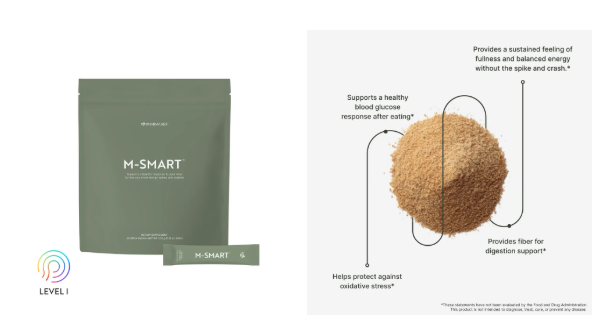
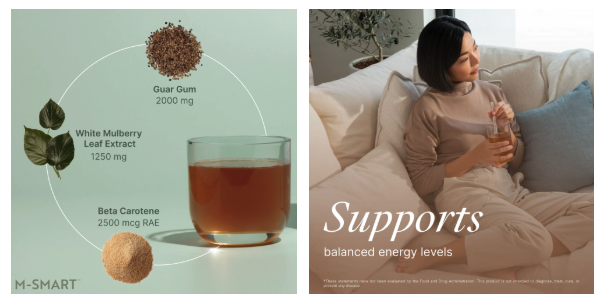
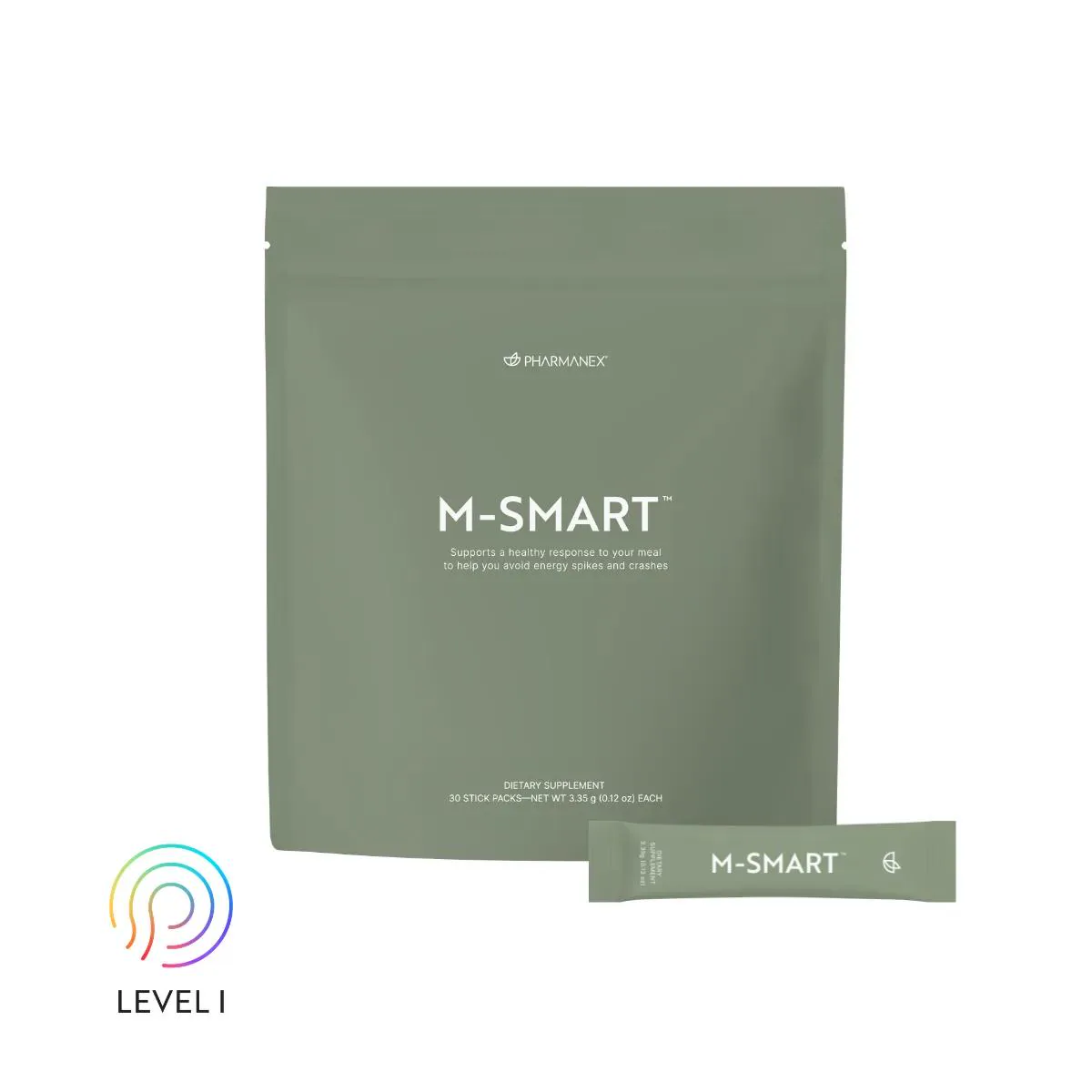
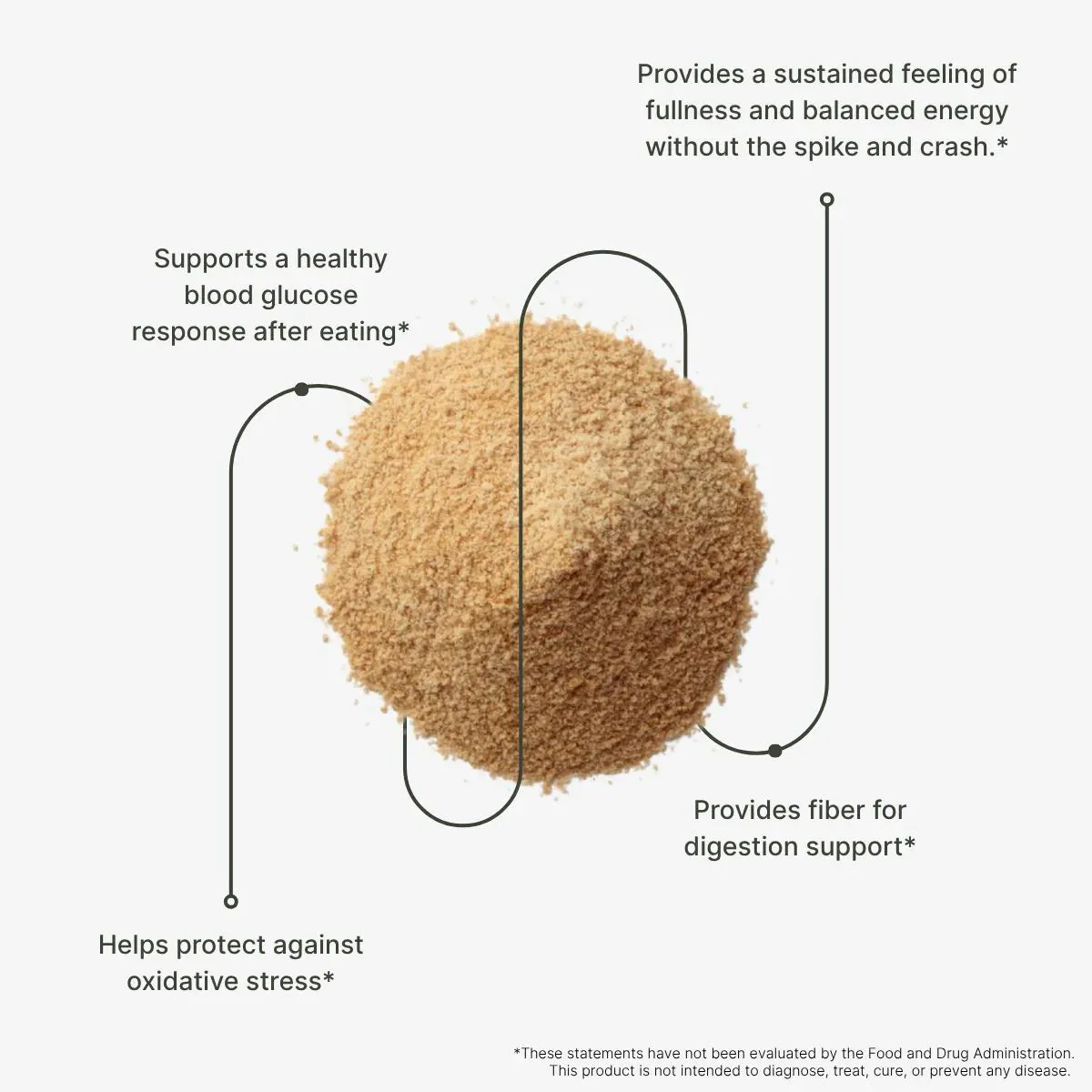
Pharmanex's metabolic-support formula, taken with meals. It is built around mulberry leaf extract standardized to 1-deoxynojirimycin (DNJ) -- a natural alpha-glucosidase inhibitor that slows the breakdown of dietary carbohydrates -- plus guar gum, a soluble viscous fiber that slows how quickly glucose is absorbed. Together they blunt the post-meal blood-sugar rise. Blood-sugar handling and gut health are closely linked, which is why it belongs in the gut-and-metabolism cluster.
Why the evidence supports it
The standout here is a real study on the finished product, not just its parts: in a randomized, double-blind, placebo-controlled crossover trial, the formula lowered the post-meal glucose rise by about 38% (the 0-to-120-minute glucose AUC) versus placebo after a test meal, with positive quality-of-life measures on continuous glucose monitoring and no adverse events. The mechanism is clean and well-understood -- the mulberry DNJ blocks alpha-glucosidase so fewer carbohydrates are freed into glucose at once, while guar gum's viscous fiber slows absorption, and both are independently studied for blunting the post-meal glucose spike. That is stronger, product-specific evidence than most metabolic supplements can point to. Kept honest, it supports a healthy blood-sugar response already within a normal range and the cell's Transform function around meals -- metabolic support, not a treatment for any blood-sugar condition.
What it supports
- Supports a healthy blood-sugar response to a meal, already within a normal range
- Supports everyday metabolic balance
- Complements a gut-health and foundation-nutrition routine
- Best used as a targeted add-on once the daily foundation is in place
Which function it supports
Ties to the cell's Transform function -- supporting how the body handles the glucose from a meal and everyday metabolic balance. Because blood-sugar handling and the gut are linked, it also supports the Gut Health picture.
Learn the why behind this pillarHow it relates to your cells and mind
Every product here ties back to a specific job your body does. This one touches the functions below -- follow either link to see the mechanism in full, then dig into the studies.
What it is made of -- and the mechanisms behind it
Each ingredient acts on several of the body's functions. Taken together, this product touches these cell and mind functions -- follow any to see the mechanism in full.
The ingredients
Mechanisms drawn from our ingredient knowledge base (3 profiled ingredients). Structure and function only -- not a treatment claim.
What’s actually in it
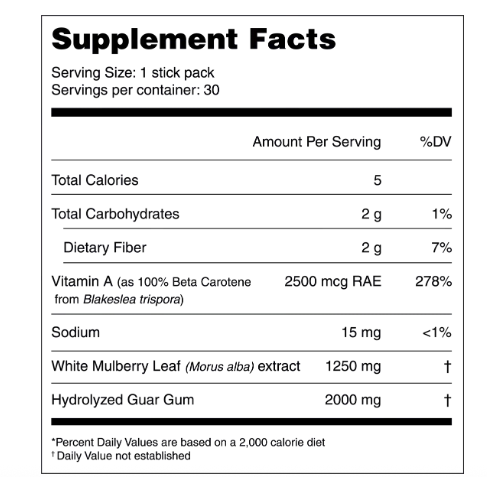
Transcribed from the manufacturer’s official Product Information Page, exactly as printed. Ingredient names that link open our research page for that ingredient, with the studies behind it.
| Amount per 1 stick pack | Amount | % DV |
|---|---|---|
| Total Calories | 5 | |
| Total Carbohydrates | 2 g | 1% |
| Dietary Fiber | 2 g | 7% |
| Vitamin Aas 100% Beta Carotene from Blakeslea trispora | 2500 mcg RAE | 278% |
| Sodium | 15 mg | <1% |
| White Mulberry Leaf extractMorus alba | 1250 mg | † |
| Hydrolyzed Guar Gum | 2000 mg | † |
- Servings per container:
- 30
- Other ingredients:
- Sea Salt, Stevia, Natural Flavor, Gum Arabic.
Source: official Product Information Page . Amounts are the manufacturer’s, not ours. Structure and function only -- nothing here is medical advice, and nothing here may be used to diagnose, treat, cure, or prevent any disease.
The science on the ingredients
If you have had labs done
These are lab markers where this product's ingredients have measured evidence in our citation library. This is not a claim that the product will change your results -- the research attaches to the ingredient, and what a marker means depends on the whole picture. Each one links to its full entry, including what typically moves it and how to read it.
- Retinol (Vitamin A)solid evidence
via Beta-carotene · 194 studies, 45 in people
A precursor the body converts at a variable and SELF-LIMITING rate -- which is precisely why it does not carry retinol's toxicity risk.
What people often notice when this marker sits outside the usual range
Higher: Headache, bone and joint pain, dry cracked lips, hair loss, liver enzyme elevation.
Lower: Night vision that is worse than it was -- the earliest and most specific sign.
- Zincsolid evidence
via Vitamin A · 110 studies, 45 in people
What people often notice when this marker sits outside the usual range
Higher: Nausea and metallic taste at high oral doses.
Lower: Frequent colds that last longer than everyone else's.
- Hemoglobin, Hematocrit, RBC Count, MCV & RDWsolid evidence
via Vitamin A · 20 studies, 16 in people
What people often notice when this marker sits outside the usual range
Higher: Commonest causes are dehydration (a false rise), smoking, sleep apnoea, altitude and testosterone therapy -- all worth asking about before anything rarer.
Lower: LOW MCV (small cells) points at iron deficiency, or at thalassaemia trait if iron studies are normal.
- Ferritin, Iron, Iron Saturation & TIBCemerging evidence
via Vitamin A · 48 studies, 18 in people
Mobilise iron from stores and improve absorption -- which is why iron deficiency that resists iron sometimes turns out to be a vitamin A problem.
What people often notice when this marker sits outside the usual range
Higher: Often SILENT for years, which is what makes iron overload dangerous.
Lower: Fatigue that rest does not fix -- and it appears at LOW FERRITIN, long before haemoglobin falls or anaemia exists.
- White Blood Cell Count & Differentialemerging evidence
via Beta-carotene · 7 studies, 4 in people
What people often notice when this marker sits outside the usual range
Higher: Usually an active infection -- fever, feeling unwell, a specific site that hurts.
Lower: Frequent or lingering infections; mouth ulcers; slow recovery.
- Vitamin Amixed evidence
via Beta-carotene · 194 studies, 45 in people
The safer route for adequacy.
What people often notice when this marker sits outside the usual range
Lower: For the full symptom picture in both directions, read the main vitamin A entry -- it is the same measurement, and repeating it here would only risk the two drifting apart.
Lab results are interpreted by a qualified clinician who knows your history. Nothing here diagnoses anything or replaces that conversation.
No product works in isolation
Every cell function above -- Sense, Exchange, Transform, Build, Maintain, Adapt -- needs the same broad base of optimal micronutrient levels running underneath it, all the time. M-Smart is not a stand-alone fix; it is one piece that plugs into that larger system. The foundation comes first, and this supports it.
Stacks well with
Pick your goal -- here is what M-Smart pairs with for each. Nothing works in isolation; these share the same systems.
For Epigenetics
For Gut Health
Foundational, or targeted?
Not everything in the shop is meant to be taken forever. Some products here are foundational -- a daily nutrient base built for long-term, ongoing use. Others are targeted -- shorter-term support for a specific season, not a lifelong habit. If you are not sure which one this is, that is a fair question to ask us before you buy.
Learn more, on your terms
Do not take our word for it -- go read. Each topic below opens a pre-loaded search so you can explore the nutrient, the mechanism, or the device for yourself.
Search the full studies libraryHow to use it
Take with carbohydrate-containing meals, per the label -- most useful around your larger meals of the day.
Where to get it
Ready when you are. This link takes you to the official, verified source for this product.
Get M-SmartThe studies
See the research behind the science we point to.
Explore studiesThe blog
Plain-language reads on how it all fits together.
Read the blogOptimal nutrients are the definition of longevity
Long-term cell function depends on having what it needs, at the level it needs it, for as long as it needs it. That is the whole thesis behind everything we point you to here.
When you buy through our links, we earn a small commission -- and that is what funds all the free education here. It never costs you more. Products are not intended to diagnose, treat, cure, or prevent any disease.
M-Smart is a metabolic-support formula taken with meals, built around mulberry leaf extract standardised to DNJ, a natural alpha-glucosidase inhibitor that slows the breakdown of starch into sugar. It is aimed at the post-meal rise rather than at fasting numbers.
FAQ
What does M-Smart support?
It supports normal blood sugar metabolism already within a healthy range and helps blunt the post-meal glucose rise, supporting everyday metabolic balance.
How do I take it?
Take it with meals, per the label -- timing matters more here than with most supplements, because it acts on carbohydrate as it is being digested.
What makes it different?
It acts in the gut on starch digestion rather than on the pancreas, which is an unusual mechanism among everyday metabolic supplements.