
$60.00
$76.00 save $16.00 -- applied automatically through this link
When you buy through our links, we earn a small commission -- and that is what funds all the free education here. It never costs you more. Products are not intended to diagnose, treat, cure, or prevent any disease.
What it is
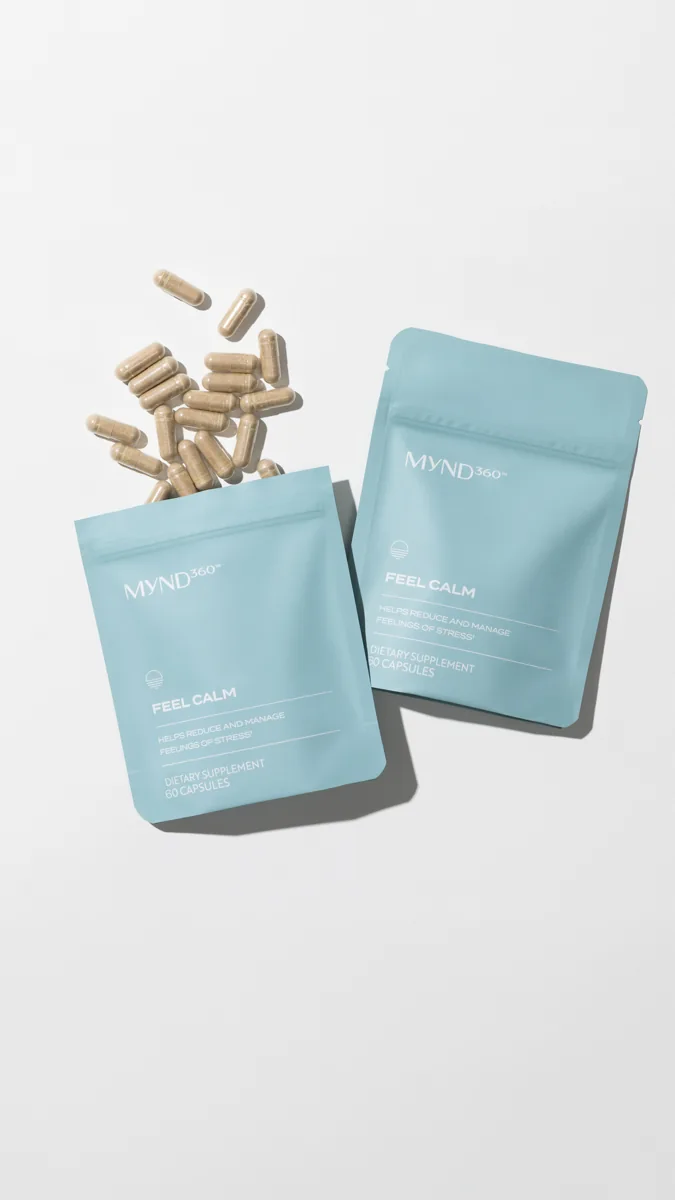
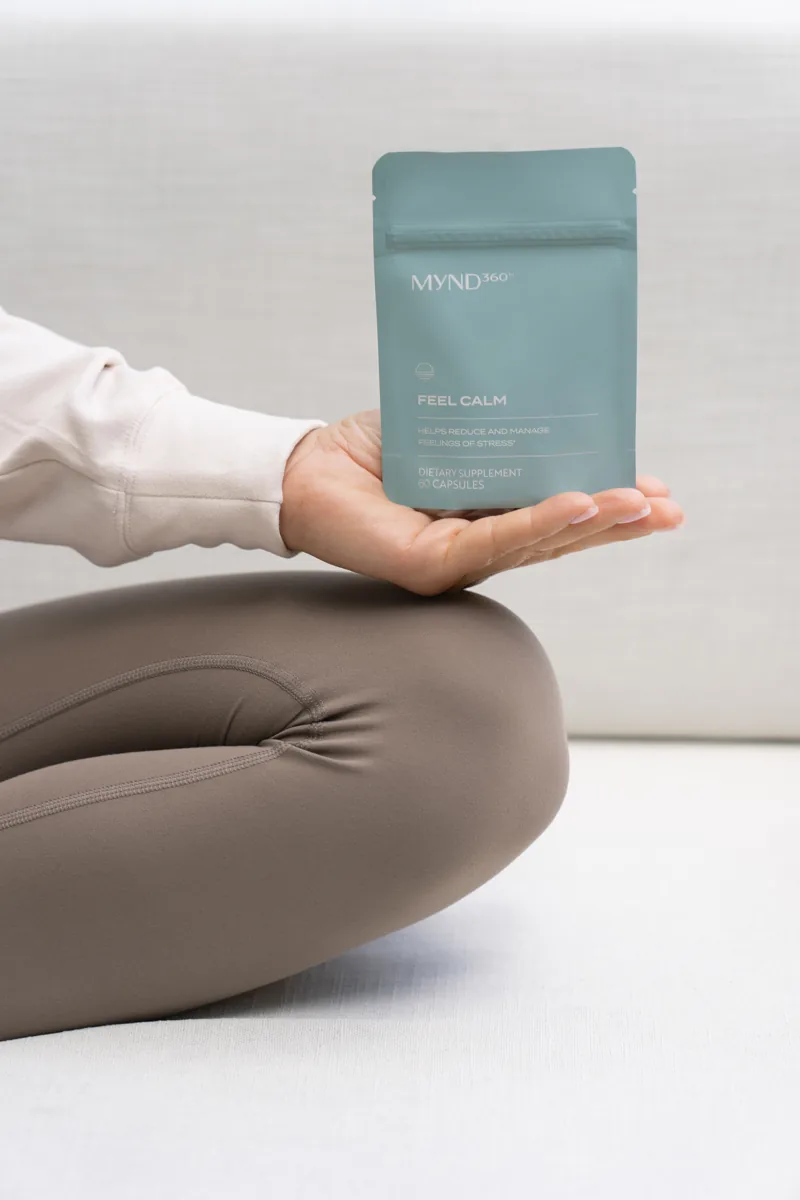
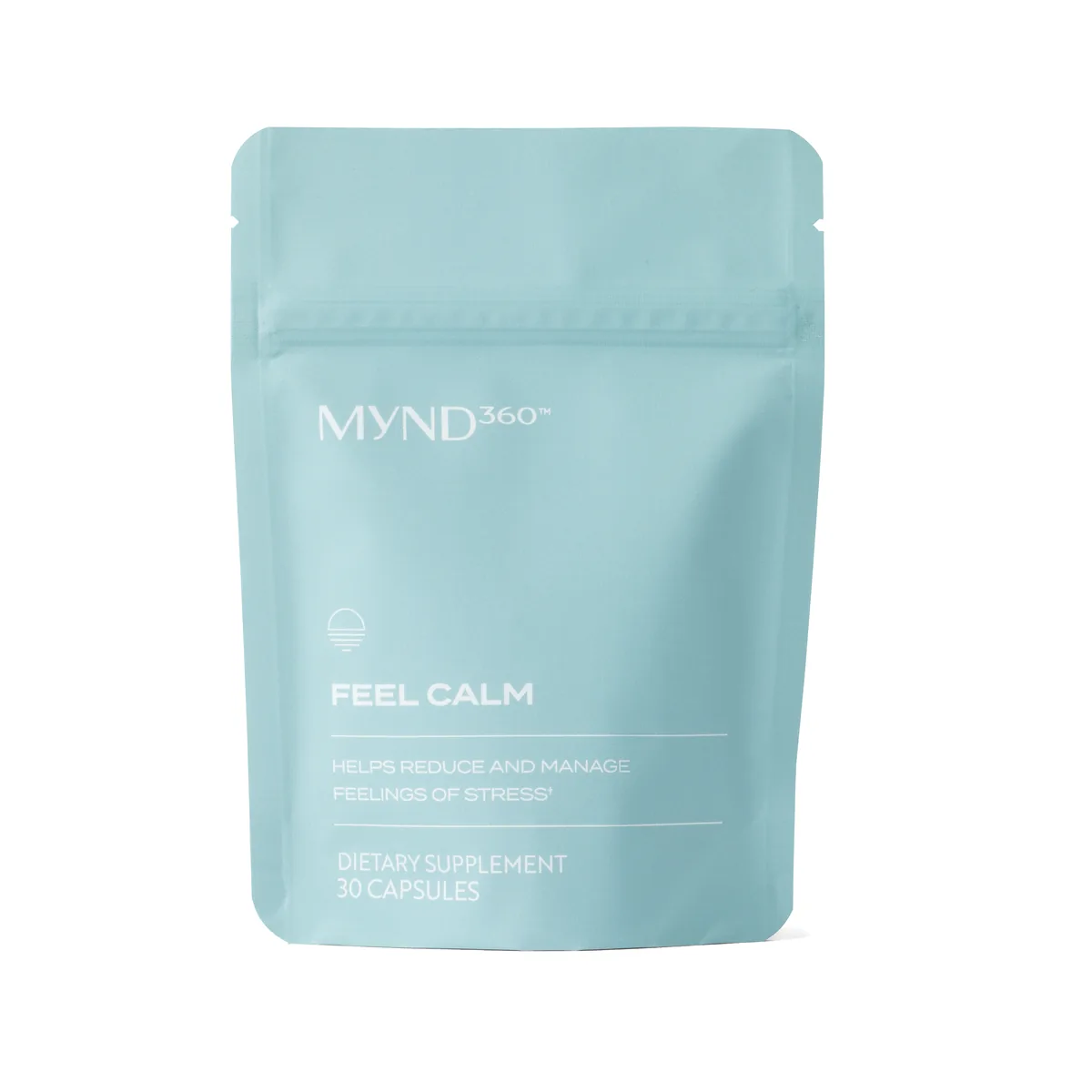
A daytime calm blend built around L-theanine (200 mg), with lemon balm (Melissa officinalis) leaf extract (600 mg) and magnolia bark extract standardized to honokiol (40 mg). L-theanine is the relaxing amino acid found in tea, and the formula is aimed at a settled, focused calm and a healthy cortisol response -- without a sedated or flat feeling. Taken as two capsules once a day.
Why the evidence supports it
Each of the three actives has human calming research behind it: L-theanine is studied for promoting relaxed, alert brain-wave states and steadier cortisol under stress, lemon balm for easing feelings of stress in acute testing, and magnolia's honokiol for mood and calmness. There is also a 30-day, double-blind, placebo-controlled study on the Feel Calm blend itself reporting improvements in occasional anxiousness and mood measures. With L-theanine dosed in line with its studies, it is an evidence-based way to support the Mind's Regulate function -- the nervous system's calm, steady baseline through a busy day. (Availability has come and gone, so check the current site.)
What it supports
- Supports a calm, settled state during the day
- Supports relaxed focus without feeling flat
- Provides L-theanine, a calming amino acid from tea
- Complements everyday stress-management habits
Which function it supports
Ties to the Mind world's Regulate function -- supporting the nervous system's calm, steady baseline during a busy day.
Learn the why behind this pillarHow it relates to your cells and mind
Every product here ties back to a specific job your body does. This one touches the functions below -- follow either link to see the mechanism in full, then dig into the studies.
What it is made of -- and the mechanisms behind it
Each ingredient acts on several of the body's functions. Taken together, this product touches these cell and mind functions -- follow any to see the mechanism in full.
The ingredients
Mechanisms drawn from our ingredient knowledge base (2 profiled ingredients). Structure and function only -- not a treatment claim.
What’s actually in it
Label revision US PIP dated 6/15/24Transcribed from the manufacturer’s official Product Information Page, exactly as printed. Ingredient names that link open our research page for that ingredient, with the studies behind it.
| Amount per 2 capsules | Amount | % DV |
|---|---|---|
| Lemon BalmMelissa officinalis, leaf extract | 600 mg | * |
| L-Theanine | 200 mg | * |
| MagnoliaMagnolia officinalis, bark extract | 40 mg | * |
- Servings per container:
- 30
- Other ingredients:
- Hypromellose, microcrystalline cellulose, rice fiber.
Source: official Product Information Page . Amounts are the manufacturer’s, not ours. Structure and function only -- nothing here is medical advice, and nothing here may be used to diagnose, treat, cure, or prevent any disease.
The science on the ingredients
These studies are research on the ingredients and mechanisms in this product, not on the finished product itself, and they are shown for education. Nothing here is medical advice, and nothing here may be used to diagnose, treat, cure, or prevent any disease. Talk to your own provider about what is right for you.
- Cognitive and affective effects of L-theanine: systematic review and meta-analysis of 31 randomized trialsPubMed
PubMed-indexed journal · 2026
Choice reaction time improved after single 200 mg dose -- Acute stress effect was modest and largely driven by studies at high risk of bias
- L-theanine consumption on sleep outcomesPubMed
Sleep Medicine Reviews · 2025
Small subjective sleep-latency daytime-dysfunction and sleep-quality benefits -- Few pure L-theanine studies
- Tea or L-theanine on cognition sleep and mood in healthy participantsPubMed
Nutrition Reviews · 2025
Selected attention and cognition signals -- Tea pure theanine and caffeine combinations differ (L-theanine evidence)
- Examining the effect of L-theanine on sleep: a systematic review of dietary supplementation trials.PubMed
Nutritional neuroscience · 2025
Among the included trials, beneficial effects were reported on both objective and participant-reported outcomes, including measures linked to sleep latency, maintenance and efficiency, perceived sleep satisfaction and feelings of refreshment and recovery on waking.
- The effects of L-theanine supplementation on the outcomes of patients with mental disorders: a systematic reviewPubMed
2024
L-theanine supplementation reduced psychiatric symptoms more effectively than placebo in individuals with schizophrenia, anxiety disorders, and ADHD.
- The Cognitive-Enhancing Outcomes of Caffeine and L-theanine: A Systematic Review.PubMed
Cureus · 2021
A systematic review found caffeine and L-theanine combined show cognitive-enhancing and neuroprotective effects linked to action on GABA-A receptors.
Cognitive and affective effects of L-theanine: systematic review and meta-analysis of 31 randomized trialsEmergingMeta-analysis2026
Choice reaction time improved after single 200 mg dose -- Acute stress effect was modest and largely driven by studies at high risk of bias
Gerolymos C et al. -- PubMed-indexed journal
Effects of combined GABA and L-theanine supplementation on sleep quality: an exploratory study.EmergingRandomized controlled trial2026
A randomized controlled trial on L-theanine found that we obtained results from 19 participants and found a significant improvement in the total PSQI score (mean ± standard deviation), from 9.42 ± 1.80 before to 6.26 ± 1.66 after supplement intake.
Konno H; Naganuma K; Kamada Y -- European review for medical and pharmacological sciences
Effects of L-theanine-caffeine combination on selective attention among adolescents with attention-deficit hyperactivity disorder: a double-blind, placebo-controlled, crossover study.ContestedClinical trial2026
A clinical trial on L-theanine found that hits and A' showed no significant differences.
Nawarathna GS; Ariyasinghe DI; Balasooriya N; Fernando A; Dassanayake TL -- Nutritional neuroscience
Compositional Diversity and Functional Interactions of Bioactive Compounds in Japanese Green Tea: Focus on Matcha, Sencha, and GyokuroEmergingExpert review2026
Japanese green tea composition varies significantly by harvest season and cultivation method, affecting catechin-caffeine-theanine ratios and functional properties.
Keiko Unno; Yoko Kameoka; Yoriyuki Nakamura
Multisystem pathology in chronic variable stress: gut-liver-brain axis disruption and the therapeutic promise of magnesium-L-theanineEmergingExpert review2026
In a review of chronic variable stress, magnesium threonate was proposed as a trace-element strategy for gastrointestinal, metabolic and neuropsychiatric complications along the gut-liver-brain axis.
Kazim Sahin; Gozde Erek
Effects of L-theanine on cognition, mood and sleep: evidence from human trialsEmergingExpert review2026
L-theanine supplementation at 100-450 mg/day produces modest improvements in visual attention, reduces stress markers, and supports sleep quality without causing sedation in healthy adults.
Jack Cotter; Hannah E Kilpatrick
Phytochemical and Fungal Bioactive Compounds in the "Brain Health Triad": A Narrative Review on Neurostimulating, Neurotrophic, and Neuroprotective SynergyEmergingExpert review2026
A narrative review proposed that Hericium erinaceus, Bacopa monnieri and L-theanine work together to support nerve growth factor and BDNF signaling, synaptic plasticity and neurotransmitter balance, based on molecular evidence, not new trial data.
Giovanni Luca Cipriano; Ivana Raffaele; Alessia Floramo; Veronica Argento; Maria Francesca Astorino; Maria Lui; Marco Calabrò; Ivan Anchesi
Multisystem pathology in chronic variable stress: gut -- liver -- brain axis disruption and the therapeutic promise of magnesium-L-theanineEmergingPrimary research (design unspecified)2026
Chronic variable stress dysregulates the hypothalamic-pituitary-adrenal axis and gut-liver-brain axis; magnesium-L-theanine may protect epithelial integrity and metabolic function via NAD+/SIRT1 signaling.
Kazim Sahin; Gozde Erek -- Therapeutic Advances in Endocrinology and Metabolism
The dual fate of L-theanine in tea: Metabolic regulation and processing transformations.2026
A review describes the plant metabolic pathway by which tea synthesizes, transports, and transforms L-theanine, including its role as a nitrogen reservoir and stress protectant during growth and processing.
Cheng H; Zheng J; Tu L; Chen L; He W; Wang Y; Liu Z; Xu P -- Journal of advanced research
Clinical assessment of blood glucose responses to 300-mg dose of L-theanine, an amino acid unique to green tea, in a fixed-sequence, two-period trialEmergingPrimary research (design unspecified)2026
In healthy adults, a single 300 mg dose of L-theanine produced only a small, non-significant reduction in blood glucose response during an oral glucose tolerance test.
Shinnosuke Yamaura; Koichi Kawada; Kyosuke Uno; Reiko Konishi; Akira Mukai; Satoshi Tada; Hitoshi Okada; Takashi Majima; Koji Komori; Nobuyuki Kuramoto; Kou Kawada
Nootropic Supplements and Exercise: Patterns and Perceptions of Cognitive Enhancer Use in Physically Active Individuals.2026
A survey of 152 physically active individuals found that 36 different nootropic supplements were reported in use, with participants citing varied reasons for use and perceived cognitive effects.
Pastina JT; Stewart LK -- Journal of dietary supplements
L-Theanine for Anxiety: Mechanisms and Adjunctive RoleEmergingPrimary research (design unspecified)2026
L-theanine modulates glutamate receptors and increases GABA, with anxiolytic effects in 30-120 minutes, suitable for adjunctive anxiety or ADHD-insomnia management.
Noshene E. Ranjbar Noshene E Ranjbar
Magnesium-L-theanine complex protects against liver and intestinal damage caused by chronic variable stress.2026
In rats under chronic variable stress, a magnesium-L-theanine combination improved body weight, insulin, magnesium levels, and intestinal barrier proteins in a dose-dependent manner while reducing stress-induced liver and intestinal damage.
Sahin K; Yabas M; Orhan C; Er B; Ozmen R; Tokmak M; Tuzcu M; Onderci M; Kucukgul A; Özercan İH; Sahin N -- The British journal of nutrition
Three Successive Infusions: Scientific Insights Into a Traditional Green Tea Drinking CustomEmergingPrimary research (design unspecified)2026
Successive green tea infusions progressively decreased bioactive compounds and radical-scavenging activity, with first infusion containing highest concentrations of gallic acid, esters, and L-theanine.
Xiaoying Zhang; Anas Yusuf; Man Xu; Murtala Bindawa Isah
Walnut peptide and theanine combination ameliorates sleep disorders: a multi-species study including a human trial.2026
A walnut peptide and theanine combination improved slow-wave sleep duration and delta wave power in chronic-stress mouse models and a human trial, linked to modulation of HPA axis hyperactivation.
Gong J; Jia X; Wang L; Lu Y; Guo R; Gong R; Hao J; Zhao Z; Duan S; Liu X; He J; Li H; Liu Z -- Food & function
Central Effects of Acute and Sub-Chronic Administration of L-theanine in Animal Model: Behavioral and Biochemical AspectsEmergingPrimary research (design unspecified)2026
Subchronic L-theanine improved spatial memory, reversed methylphenidate-induced appetite suppression, and increased brain glutathione while reducing oxidative markers in mice.
Yuri Borges Morais; Matheus Firmino de Morais; Madna Costa Freitas; R. Craveiro; Isadora Porto de Andrade; Levy da Costa Felix; E. M. C. Chaves; A. Assreuy; G. Aragão -- Brazilian Archives of Biology and Technology
Gut microbiota-derived L-theanine promotes host branched-chain amino acid catabolism.2026
Gut bacterium Lactobacillus reuteri produces L-theanine, which enhances host branched-chain amino acid catabolism by boosting BCAT2 enzyme expression, a pathway relevant to metabolic disorders like obesity and insulin resistance.
Wang Y; Liu B; Han Z; Bin P; Tang W; Fu J; Hung I; Liu C; Wei H; Ge L; Ren W -- Nature microbiology
Vitamin D3 and L-Theanine Co-Therapy Alleviates Behavioral and Biochemical Deficits in a Chronic Unpredictable Stress Rodent ModelEmergingPrimary research (design unspecified)2026
In stressed rats, giving L-theanine together with vitamin D3 lowered serum cortisol, glucose, cholesterol and triglycerides and improved behavior more than either alone, indicating a possible synergistic benefit.
Indu Ghooli; Archana Jorige; Tejasri Talloju -- Biosciences Biotechnology Research Asia
l-Theanine attenuates intestinal oxidative injury in mice through modulation of ferroptosis pathways.2026
Dietary L-theanine reduced diquat-induced intestinal oxidative damage in mice by lowering reactive oxygen species and malondialdehyde, boosting antioxidant enzymes, easing inflammation, and improving intestinal barrier integrity via ferroptosis pathway modulation.
Shi C; Yuan Z; Du X; Huang Z; Jia G; Zhao H; Chen X -- The Journal of nutritional biochemistry
Epigallocatechin-3-gallate, L-theanine and theophylline abolish high-glucose-induced renal cell senescence and subsequent epithelial-mesenchymal transition and fibroblast activation via SIRT1/PGC-1α axis: Implications for diabetic kidney disease.EmergingPrimary research (design unspecified)2026
EGCG, L-theanine, and theophylline prevented high-glucose-induced cellular senescence and fibrosis in kidney cells via SIRT1/PGC-1α pathway activation.
Rattiyaporn Kanlaya; Sunisa Yoodee; Kanokwan Nonthawong; Chonicha Subkod; Supanan Nanthawuttiphan; V. Thongboonkerd -- Chemico-Biological Interactions
Pharmacological effects and molecular targets of L-theanine in cardiovascular diseases and comorbidities.2026
Review describes L-theanine modulating Nrf2, PPAR-alpha/gamma, NF-kB, AMPK, and eNOS pathways associated with reduced blood pressure, improved lipid profile, and inhibited atherosclerotic plaque formation in preclinical cardiovascular models.
García-Niño WR; Zúñiga-Muñoz AM; Maldonado-Macías XP -- European journal of pharmacology
L-theanine attenuates AlCl3-induced cognitive dysfunction and neurotoxicity in rats: a behavioral and biochemical studyEmergingPrimary research (design unspecified)2026
In rats given aluminum chloride, L-theanine reversed memory deficits and reduced brain acetylcholinesterase, myeloperoxidase, amyloid-beta, lipid peroxidation and nitric oxide while restoring glutathione and catalase.
Muhammet Oğuzhan Dönmez; Azize Şener; Şeyda Karaman Ersoy; Mahdi Marzi; Göksel Şener
L-theanine as a sustainable feed additive: Evaluating impacts on animal health and production efficiency.2026
In animal studies, L-theanine reduced glutamatergic excitability and enhanced GABA-mediated inhibition, lowering HPA axis activation and cortisol while increasing gut Lactobacillus and Bifidobacterium levels linked to improved growth and feed efficiency.
Wu S; Cui X -- Microbial pathogenesis
Matcha as a Source of Bioactive Compounds: A Review of Health-Promoting Properties and Potential Applications.2026
Matcha's shading-based cultivation increases chlorophyll, caffeine, and L-theanine content, and preclinical data link these bioactive compounds to antioxidant activity, though clinical trials on health effects remain limited.
Sławińska P; Raczkowska E -- Nutrients
Balanced by design -- we show supporting and contradicting findings. Search all studies
If you have had labs done
These are lab markers where this product's ingredients have measured evidence in our citation library. This is not a claim that the product will change your results -- the research attaches to the ingredient, and what a marker means depends on the whole picture. Each one links to its full entry, including what typically moves it and how to read it.
- Cortisolsolid evidence
via L-Theanine · 10 studies, 8 in people
What people often notice when this marker sits outside the usual range
Higher: "Wired but tired" -- exhausted all day, then alert the moment the head hits the pillow.
Lower: Profound fatigue that is worst in the morning, and improves slightly through the day -- the reverse of the usual pattern.
Lab results are interpreted by a qualified clinician who knows your history. Nothing here diagnoses anything or replaces that conversation.
No product works in isolation
Every cell function above -- Sense, Exchange, Transform, Build, Maintain, Adapt -- needs the same broad base of optimal micronutrient levels running underneath it, all the time. MYND360 Feel Calm is not a stand-alone fix; it is one piece that plugs into that larger system. The foundation comes first, and this supports it.
Stacks well with
Pick your goal -- here is what MYND360 Feel Calm pairs with for each. Nothing works in isolation; these share the same systems.
For Brain & Sleep
Foundational, or targeted?
Not everything in the shop is meant to be taken forever. Some products here are foundational -- a daily nutrient base built for long-term, ongoing use. Others are targeted -- shorter-term support for a specific season, not a lifelong habit. If you are not sure which one this is, that is a fair question to ask us before you buy.
Learn more, on your terms
Do not take our word for it -- go read. Each topic below opens a pre-loaded search so you can explore the nutrient, the mechanism, or the device for yourself.
Search the full studies libraryHow to use it
Take two capsules with water when you want a calm, focused stretch. The blend has supplied about 200 mg of L-theanine per serving.
Where to get it
Ready when you are. This link takes you to the official, verified source for this product.
Get MYND360 Feel CalmThe studies
See the research behind the science we point to.
Explore studiesThe blog
Plain-language reads on how it all fits together.
Read the blogOptimal nutrients are the definition of longevity
Long-term cell function depends on having what it needs, at the level it needs it, for as long as it needs it. That is the whole thesis behind everything we point you to here.
When you buy through our links, we earn a small commission -- and that is what funds all the free education here. It never costs you more. Products are not intended to diagnose, treat, cure, or prevent any disease.
MYND360 Feel Calm is a daytime calm blend built around L-theanine, with lemon balm and magnolia bark. L-theanine is the relaxing amino acid found in tea, and the aim is a settled, focused calm without a sedated or flat feeling. It fits people who want daytime calm without losing their edge.
FAQ
What does MYND360 Feel Calm support?
It supports a calm, settled state during the day and relaxed focus without feeling flat, provides L-theanine (a calming amino acid from tea), and complements everyday stress-management habits.
How do I take it?
Take two capsules with water when you want a calm, focused stretch. Follow the label. This one has been in and out of availability, so check the current site.
What makes it different?
L-theanine is the active it leans on, present at an amount in line with small calming studies. The lemon balm and magnolia amounts are not disclosed, so it is framed as gentle daytime calm support.