$81.00
$100.00 save $19.00 -- applied automatically through this link
When you buy through our links, we earn a small commission -- and that is what funds all the free education here. It never costs you more. Products are not intended to diagnose, treat, cure, or prevent any disease.
What it is
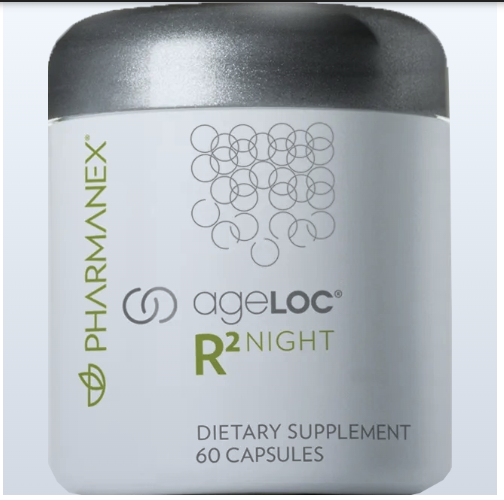
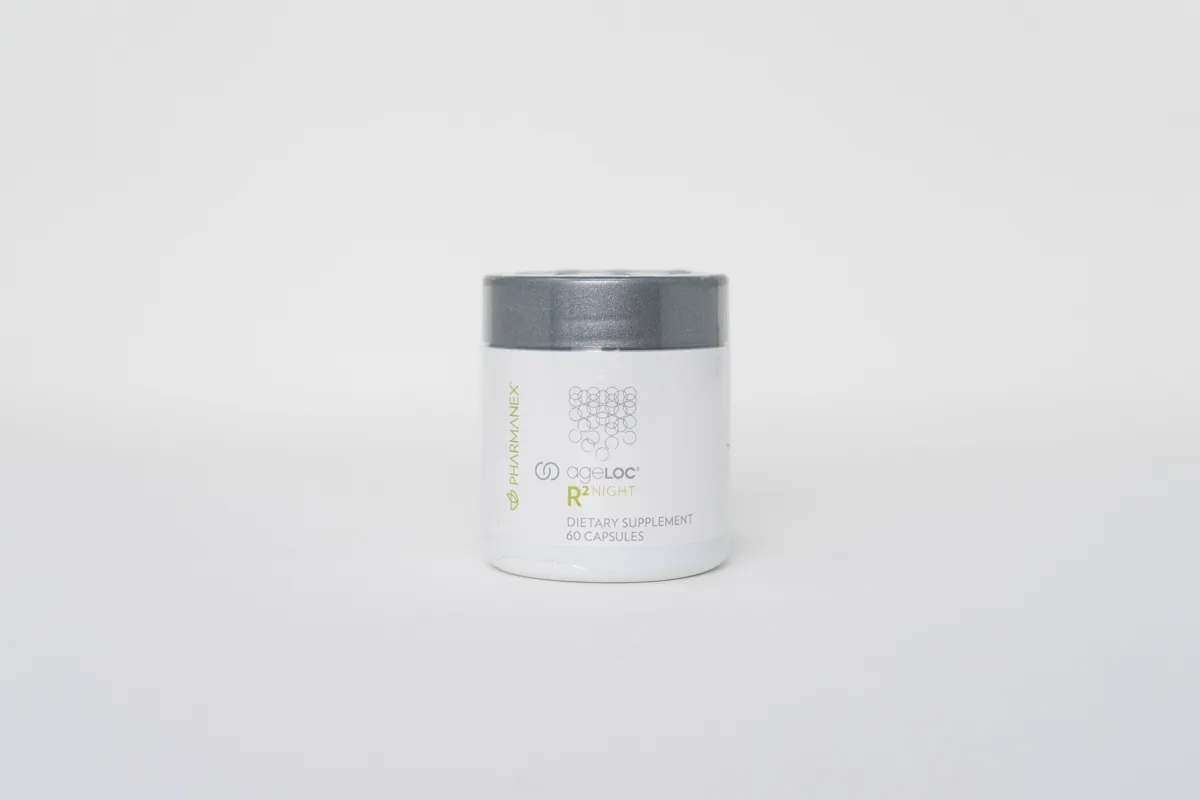
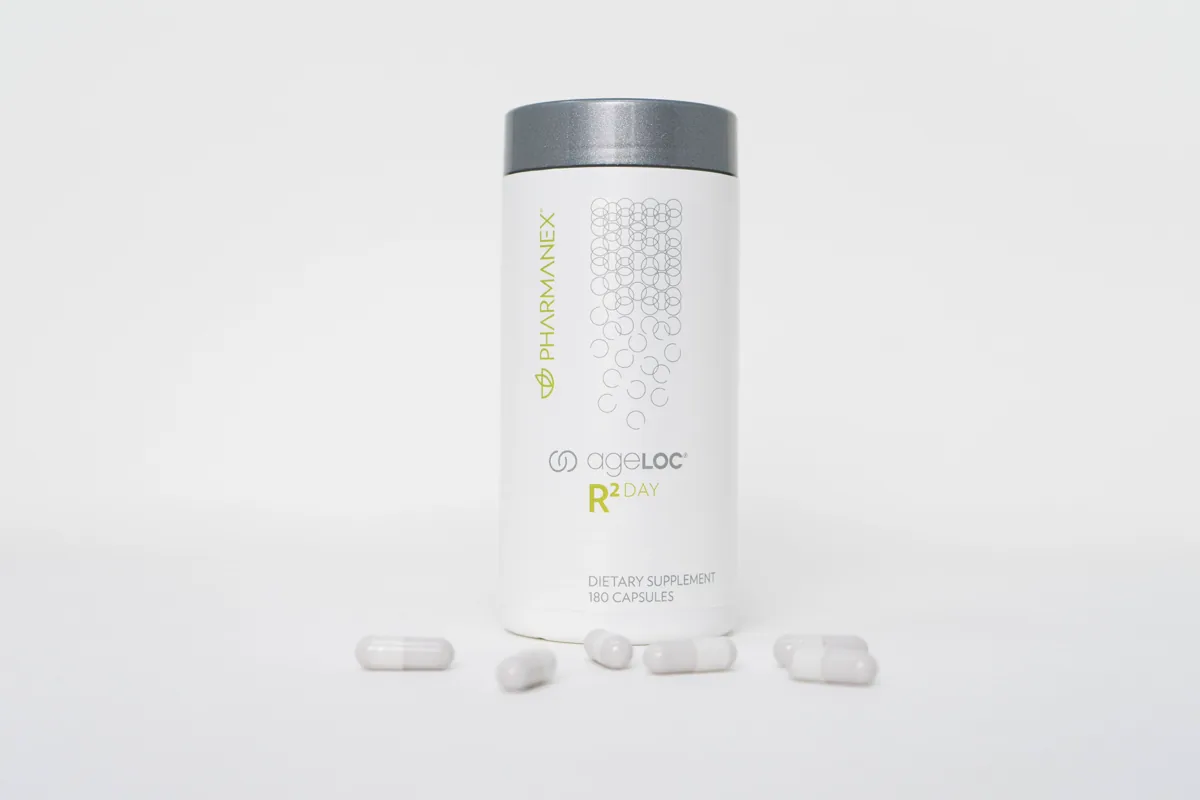
This is genetic detox, done overnight -- two evening capsules of broccoli-seed sulforaphane, grape seed OPCs, and red orange. Instead of a cleanse that just flushes the gut, it works upstream at the gene level: it flips on NRF2, the switch that turns up your cells' own detox and glutathione genes, so your body clears the metabolic waste and byproducts that pile up through a normal day while you sleep -- and you wake up renewed. In Nu Skin's language this is 'cellular purification'; in plainer terms, it is your own detox machinery, turned up. Of the whole ageLOC line, this is the formula whose specific job is detox.
Why the evidence supports it
This is the one ageLOC product where NRF2 is genuinely the headline, and its own science says so: the R2 evening formula is built around cellular purification, and the studies Nu Skin cites for it are glutathione synthesis, autophagy, and the role of detoxification reactions in aging. The mechanism is clean -- broccoli-seed sulforaphane is the most-studied NRF2 activator there is, a compound that switches on NRF2 (a transcription factor, so this is a gene-expression event) to turn up the body's own phase-II detox and glutathione genes; human trials show oral sulforaphane raising those protective enzymes measurably. Grape seed OPCs and red orange add supporting antioxidant-gene activity. Kept honest: it supports your body's own purification machinery overnight -- it is not a cleanse, a chelator, or a treatment for any toxic condition.
What it supports
- Supports the cell's own overnight purification and renewal
- Supports the body's NRF2-driven phase-II detox and glutathione systems
- Helps the body neutralize and clear everyday cellular waste and byproducts
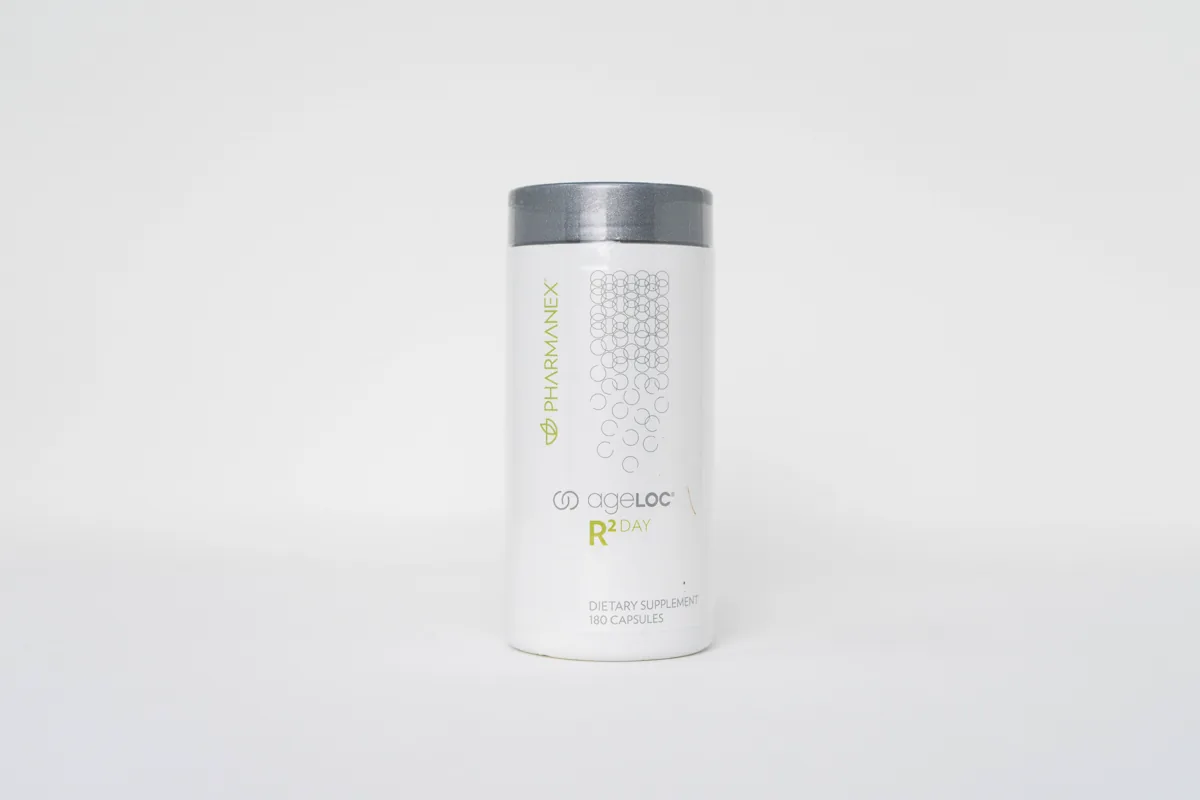
- Complements R2 Day -- purification by night, energy by day
Which function it supports
Ties to the cell's Adapt function -- activating NRF2, the gene switch that turns on the body's own phase-II detox and glutathione genes, so cells run their natural purification during the overnight repair window.
Learn the why behind this pillarHow it relates to your cells and mind
Every product here ties back to a specific job your body does. This one touches the functions below -- follow either link to see the mechanism in full, then dig into the studies.
What it is made of -- and the mechanisms behind it
Each ingredient acts on several of the body's functions. Taken together, this product touches these cell and mind functions -- follow any to see the mechanism in full.
The ingredients
Mechanisms drawn from our ingredient knowledge base (3 profiled ingredients). Structure and function only -- not a treatment claim.
What’s actually in it
Label revision US Supplement Facts image from the US product page, read 2026-09-11Transcribed from the manufacturer’s official Product Information Page, exactly as printed.
| Amount per 2 capsules | Amount | % DV |
|---|---|---|
| ageLOC Renew BlendGrape (Vitis vinifera L.) seed extract, red orange (Citrus sinensis) fruit extract, broccoli (Brassica oleracea italica) seed extract | 450 mg | * |
- Servings per container:
- 30
- Other ingredients:
- Capsule (gelatin), microcrystalline cellulose, stearic acid, silicon dioxide.
US panel, and it MATCHES the Singapore PIP's figures (450 mg Renew Blend, same three extracts) -- checked because the SG PIP was the only one linked from the page.
Source: official Product Information Page . Amounts are the manufacturer’s, not ours. Structure and function only -- nothing here is medical advice, and nothing here may be used to diagnose, treat, cure, or prevent any disease.
The science on the ingredients
These studies are research on the ingredients and mechanisms in this product, not on the finished product itself, and they are shown for education. Nothing here is medical advice, and nothing here may be used to diagnose, treat, cure, or prevent any disease. Talk to your own provider about what is right for you.
- Investigating the clinical efficacy, safety and molecular mechanism of sulforaphane in autism spectrum disorder: an integrated study combining meta-analysis, network pharmacology, and computational biologyPubMed
2025
Sulforaphane supplementation for 4-10 weeks reduced social responsiveness scale scores in autism spectrum disorder compared to placebo without significant adverse effects.
- Dietary sulforaphane in cancer chemoprevention: epigenetic regulation and PRMT5-MEP50 complex inhibition-a systematic reviewPubMed
2026
This systematic review of 118 studies found a phase II trial in which 12 months of sulforaphane supplementation reduced bronchial Ki-67 proliferation by 20% in high-risk former smokers, versus a 65% increase with placebo.
- Protective effects of sulforaphane against toxic substances and contaminants: A systematic reviewPubMed
Phytomedicine : international journal of phytotherapy and phytopharmacology · 2024
A systematic review found sulforaphane from broccoli activates NRF2 across organs, most studied in liver and nerve tissue, easing inflammation and oxidative stress, but concluded that safe human dosing has not yet been established.
- Sulforaphane and Other Nutrigenomic Nrf2 Activators: Can the Clinician's Expectation Be Matched by the Reality?PubMed
Oxidative Medicine and Cellular Longevity · 2016
This review compares sulforaphane to other plant-derived NRF2 activators like curcumin and resveratrol, concluding sulforaphane is among the most potent at inducing the body's cytoprotective Phase II gene program.
- KEAP1 and done? Targeting the NRF2 pathway with sulforaphanePMC
Seminars in Cancer Biology / PMC · 2016
This review explains how sulforaphane releases the NRF2 transcription factor from its KEAP1 anchor, allowing NRF2 to switch on genes for the body's Phase II detox and antioxidant enzymes.
- Randomized Phase II Clinical Trial of Sulforaphane in Former Smokers at High Risk for Lung CancerPubMed
2025
Oral sulforaphane for 12 months significantly reduced Ki-67 proliferation marker in bronchial tissue of former smokers at high lung cancer risk.
Short-Term Effects of Broccoli-Derived Glucoraphanin on Recovery from Eccentric Muscle Damage: A Double-Blind Randomized Crossover StudyEstablishedRandomized controlled trial2026
In a small randomized crossover trial, short-term broccoli glucoraphanin supplementation before eccentric exercise did not significantly affect muscle strength, soreness, creatine kinase, or recovery compared to placebo.
Cesanelli L; Thomas R; Mickevičius M; Sniečkus A; Mickevičienė D; Venckūnas T; Stasiulis A; Kamandulis S -- Nutrients
Dietary sulforaphane in cancer chemoprevention: epigenetic regulation and PRMT5-MEP50 complex inhibition-a systematic reviewEstablishedSystematic review2026
This systematic review of 118 studies found a phase II trial in which 12 months of sulforaphane supplementation reduced bronchial Ki-67 proliferation by 20% in high-risk former smokers, versus a 65% increase with placebo.
Ping Yan; Changfeng Sun; Cunliang Deng
Investigating the clinical efficacy, safety and molecular mechanism of sulforaphane in autism spectrum disorder: an integrated study combining meta-analysis, network pharmacology, and computational biologyEstablishedMeta-analysis2025
Sulforaphane supplementation for 4-10 weeks reduced social responsiveness scale scores in autism spectrum disorder compared to placebo without significant adverse effects.
Junzi Long; Xingxing Liao; Zhiqing Tang; Kaiyue Han; Jiarou Chen; Xianna Wang; Jianjun Liu; Yan Zhang; Hao Zhang
Proof of Principle: Short-Term Sulforaphane Precursor Intake Alters Selected Circulating Oxidative Stress and Muscle Damage Biomarkers Following Maximal Exercise: A Double-Blind Crossover TrialEstablishedClinical trial2026
Sulforaphane precursor supplementation for two weeks reduced exercise-induced muscle damage markers creatine kinase and myoglobin without altering endurance capacity in healthy adults.
Ruheea Taskin Ruhee; Shiori Wakasugi-Onogi; Sihui Ma; Nobuhiro Nakamura; Yasuhiro Seki; Katsuhiko Suzuki
Effect of Glucoraphanin on the Abundance of Nrf2 Regulated Genes Within Circulating Small Extracellular Vesicles: A Pilot Dietary InterventionEstablishedRandomized controlled trial2026
Glucoraphanin-rich broccoli soup increased urinary sulforaphane but did not alter Nrf2-regulated genes within circulating small extracellular vesicles in healthy adults.
Nishantika Mitra; Mark H Vickers; Fiona E Lithander; Anastasiia Artuyants; Cherie Blenkiron; Meika Foster; Hui Hui Phua; Chris Pook; Zeke Wang; Richard F Mithen; Farha Ramzan
Randomized Phase II Clinical Trial of Sulforaphane in Former Smokers at High Risk for Lung CancerEstablishedRandomized controlled trial2025
Oral sulforaphane for 12 months significantly reduced Ki-67 proliferation marker in bronchial tissue of former smokers at high lung cancer risk.
Jian-Min Yuan; Thomas W Kensler; Sanja Dacic; Douglas J Hartman; Renwei Wang; Paula A Balogh; Pamela Sufka; Melissa A Turner; Kimberly Fuhrer; Lindsey Seigh; Yen Thi-Hai Pham; Jennifer Adams-Haduch; Giuseppe Valacchi; Giuseppe Valacchi; Shivendra V Singh; James G Herman; David O Wilson
Mechanism of Action and Therapeutic Potential of Sulforaphane in Skeletal Muscle Diseases: Molecular Pathways and Precision MedicineEmergingExpert review2026
Sulforaphane activates antioxidant, anti-inflammatory, and metabolic pathways in skeletal muscle disease models, but clinical translation remains uncertain due to bioavailability variability.
Minru Zhao; Bo Huang; Juan Chen; Junya Li; Zhongli Zhu; Guoyun Zhu; Jian Hu; Fuxiang Li; Jian Feng
Natural Products in Prostate Cancer: Crosstalk Among the Gut Microbiome, Androgen Receptor Signaling, and Epigenetic RegulationEmergingExpert review2026
Natural products including sulforaphane modulate interconnected pathways in prostate cancer through Nrf2 activation, oxidative stress reduction, and epigenetic regulation.
Mohammad Muzaffar Mir; Javed Iqbal Wani; Rashid Mir; Muffarah Hamid Alharthi; Abdullah Ayed; Partha Nandi; Ayyub Ali Patel; Ayaz Khurram Mallick; Mohannad Mohammad S Alamri; Mohammed O'haj; Tarig Babikir Algak Khalid; Adnan Jehangir; Hany M A Sonpol; Ahmed Mussad Senbel
Organosulfur compounds as dual-action agents: a critical review of antimicrobial and immunomodulatory potentials, and translational barriersEmergingExpert review2026
This critical review found sulforaphane has the strongest human pharmacokinetic data among organosulfur compounds, while unstable allicin is seldom detectable in vivo, and controlled clinical trials of infection outcomes are still lacking.
Victor Uchenna Chigozie; Lilian Nwanneka Ebenyi; Charles Okechukwu Esimone
Sulforaphane in Cutaneous Disorders and Skin Injury: Mechanisms, Evidence, and Clinical PerspectivesEmergingExpert review2026
This review reports sulforaphane, an isothiocyanate from broccoli, acts through the Keap1/NRF2 pathway to reduce oxidative stress and inflammation in skin conditions, but concludes robust human evidence is still lacking for chronic diseases like psoriasis and eczema.
Hua Liu; Claire Y Shi; Jed W Fahey
Sulforaphane in Cancer Prevention and Therapy: A State-of-the-Art Review of Epidemiological Evidence, Molecular Mechanisms, and Translational ChallengesEmergingExpert review2026
A review reports that sulforaphane from broccoli affects cancer-related cell pathways including Nrf2 and cell death, and that human trials have lowered carcinogen biomarker levels, though poor bioavailability still limits its clinical use.
Jang JY; Kim D; Lee NK; Im E; Kim ND -- International journal of molecular sciences
Natural compounds as epigenetic modulators in gynaecological cancers: From chemoresistance to precision oncologyEmergingExpert review2026
Phytochemicals including curcumin and sulforaphane modulate DNA methyltransferases and histone deacetylases in gynecological cancer models, though clinical validation remains insufficient.
Lingasamy P; Kiruba B; Rajakumar S; Surisetti SM; Patel N; Lulu S S; Salumets A; Modhukur V -- Biomedicine & pharmacotherapy = Biomedecine & pharmacotherapie
Sulforaphane Synergies with Phytochemicals and Pharmaceuticals: Implications for HealthspanEmergingExpert review2026
Published research documents sulforaphane synergies with cancer drugs and phytochemicals that enhanced efficacy, reduced dosages, and mitigated cardiac toxicity.
Jed W Fahey; Hua Liu
Targeting Glyoxalase-1 Pathway with Natural Compounds: A Translational Strategy to Reduce Dicarbonyl Stress and Prevent Chronic DiseasesEmergingExpert review2026
In a review, compounds including sulforaphane, resveratrol, alpha-lipoic acid, selenium, vitamin D3 and N-acetylcysteine were linked to increased Glyoxalase-1 activity, which helps clear the reactive byproduct methylglyoxal implicated in glycation-related disease.
Masood Alam Khan; Hina Younus
The Chemopreventive and Anticancer Potential of Glucosinolates and Their Hydrolysis Products from Cruciferous VegetablesEmergingExpert review2026
A review reports that glucosinolates in cruciferous vegetables break down into sulforaphane and related compounds that activate the body's Nrf2 detox pathway in humans, though larger standardized trials are still needed to confirm effective doses.
Labudda M; Rybarczyk-Płońska A; Sobieszek KA; Niedziński T; Wurlitzer WB; Muszyńska E; Prabucka B; Florczak S; Tomczykowa M; Makowski W; Graska J; Frankowski J; Kęszycka P; Gajewska D; Dababat AA; Morkunas I; Trafiałek J; Tomczyk M; Czapla M -- Nutrients
Food-Derived Natural Compounds as Molecular Targets in Cancer PreventionEmergingExpert review2026
This systematic review found food-derived compounds including polyphenols, organosulfur compounds, and sulforaphane inhibit cancer-related PI3K/Akt, NF-κB, and STAT3 signaling, though clinical translation remains limited by low bioavailability.
Megha Udayasankaran; Bhanu Shankar; Cheran Radhakrishnan; Sundar Raj Moorthy; Ramachandran Samivel; Ramachandran Vinayagam; Dhanavathy Gnanasampanthapandian; Kanagaraj Palaniyandi
Sulforaphane and Broccoli-Derived Preparations in Obesity and Obesity-Related Metabolic Dysfunction: Mechanistic Insights, Preclinical Evidence, and Clinical PerspectivesEmergingExpert review2026
This narrative review found strong preclinical evidence that sulforaphane improves obesity-related metabolic dysfunction via Nrf2 and AMPK pathways, though human trials show only limited, inconsistent metabolic benefits without confirmed weight loss.
Efthymios Poulios; Sousana K Papadopoulou; Evmorfia Psara; Dimitrios Tasoulas; Constantinos Giaginis
Pharmacodynamics (PD), Pharmacokinetics (PK) and PK-PD Modeling of NRF2 Activating Dietary Phytochemicals in Cancer Prevention and in HealthEmergingExpert review2025
NRF2-activating phytochemicals such as sulforaphane and curcumin demonstrate complex pharmacokinetics influenced by bioavailability and metabolism, requiring PK-PD modeling to optimize dosing for cancer prevention.
Ahmad Shannar; Pochung Jordan Chou; Rebecca Peter; Parv Dushyant Dave; Komal Patel; Yuxin Pan; Jiawei Xu; Md Shahid Sarwar; Ah-Ng Kong
Protective Effects of Sulforaphane Preventing Inflammation and Oxidative Stress to Enhance Metabolic Health: A Narrative ReviewEmergingExpert review2025
This review examines sulforaphane's protective effects on metabolic health through Nrf2-mediated antioxidant and anti-inflammatory mechanisms, particularly for obesity and type 2 diabetes prevention.
Inês Alves; Edilene Maria Queiroz Araújo; Louise T. Dalgaard; Sharda P. Singh; Elisabet Børsheim; Eugénia Carvalho -- Nutrients
Bioactive sulforaphane from cruciferous vegetables: advances in biosynthesis, metabolism, bioavailability, delivery, health benefits, and applicationsEmergingExpert review2025
A review covers a decade of research on sulforaphane from cruciferous vegetables, describing how gut bacteria release it from glucosinolates and how it is quickly metabolized and excreted through the mercapturic acid pathway.
Zhang Y; Zhang W; Zhao Y; Peng R; Zhang Z; Xu Z; Simal-Gandara J; Yang H; Deng J -- Critical reviews in food science and nutrition
Natural sulfur compounds in mental health and neurological disorders: insights from observational and intervention studiesEmergingExpert review2025
Sulforaphane and other natural sulfur compounds improved depression scores and cognitive function including memory and learning in clinical trials.
Apeksha Rana; Ashutosh Katiyar; Alok Arun; Juan Negron Berrios; Gaurav Kumar
Antioxidant Therapies as Emerging Adjuncts in Rheumatoid Arthritis: Targeting Oxidative Stress to Enhance Treatment OutcomesEmergingExpert review2025
A review reported that curcumin, resveratrol, sulforaphane, N-acetylcysteine and molecular hydrogen act on NF-kB and Nrf2 redox pathways in rheumatoid arthritis, with no standardized dosing or long term safety data.
Bilski R; Nuszkiewicz J -- International journal of molecular sciences
Therapeutic potential of natural compounds in targeting cancer stem cells: a promising approach for cancer treatmentEmergingExpert review2025
Natural compounds including sulforaphane inhibited cancer stem cell proliferation, reversed drug resistance, and enhanced chemotherapy sensitivity in preclinical models.
Ishita Debnath; Moumita Kundu
Bioactive Plant-Derived Compounds as Novel Perspectives in Oral Cancer Alternative TherapyEmergingExpert review2025
Plant-derived phytochemicals including quercetin and sulforaphane enhance conventional chemotherapy efficacy in oral squamous cell carcinoma through apoptosis induction.
Gabriela Mitea; Verginica Schröder; Irina Mihaela Iancu
Balanced by design -- we show supporting and contradicting findings. Search all studies
No product works in isolation
Every cell function above -- Sense, Exchange, Transform, Build, Maintain, Adapt -- needs the same broad base of optimal micronutrient levels running underneath it, all the time. ageLOC R2 Night is not a stand-alone fix; it is one piece that plugs into that larger system. The foundation comes first, and this supports it.
Stacks well with
Pick your goal -- here is what ageLOC R2 Night pairs with for each. Nothing works in isolation; these share the same systems.
For Epigenetics
Ready-made stacks it is part of
Foundational, or targeted?
Not everything in the shop is meant to be taken forever. Some products here are foundational -- a daily nutrient base built for long-term, ongoing use. Others are targeted -- shorter-term support for a specific season, not a lifelong habit. If you are not sure which one this is, that is a fair question to ask us before you buy.
Learn more, on your terms
Do not take our word for it -- go read. Each topic below opens a pre-loaded search so you can explore the nutrient, the mechanism, or the device for yourself.
Search the full studies libraryHow to use it
Take two capsules in the evening, with or without food, alongside R2 Day in the morning. Follow the current label.
Where to get it
Ready when you are. This link takes you to the official, verified source for this product.
Get ageLOC R2 NightThe studies
See the research behind the science we point to.
Explore studiesThe blog
Plain-language reads on how it all fits together.
Read the blogOptimal nutrients are the definition of longevity
Long-term cell function depends on having what it needs, at the level it needs it, for as long as it needs it. That is the whole thesis behind everything we point you to here.
When you buy through our links, we earn a small commission -- and that is what funds all the free education here. It never costs you more. Products are not intended to diagnose, treat, cure, or prevent any disease.
ageLOC R2 Night is the evening half of the R2 pair -- two capsules of broccoli-seed sulforaphane, grape seed OPCs and red orange, taken before bed. Rather than flushing anything, it works upstream at NRF2, the gene switch that turns on your own cleanup and antioxidant machinery. It suits someone who wants overnight support for the body's own detoxification rather than a cleanse.
FAQ
What does ageLOC R2 Night support?
It supports the body's own detoxification and antioxidant pathways through NRF2 signalling, and supports the normal overnight cellular cleanup that happens while you sleep.
How do I take it?
Take the evening serving before bed, per the label. It is designed as the night half of a day-and-night pair, so it is usually taken alongside the daytime formula.
What makes it different?
It works on a gene switch rather than on the gut. Sulforaphane from broccoli seed is one of the best-studied NRF2 activators there is, and pairing it with grape seed OPCs and red orange targets the body's own systems instead of pushing anything through.