$82.00
$101.00 save $19.00 -- applied automatically through this link
When you buy through our links, we earn a small commission -- and that is what funds all the free education here. It never costs you more. Products are not intended to diagnose, treat, cure, or prevent any disease.
What it is
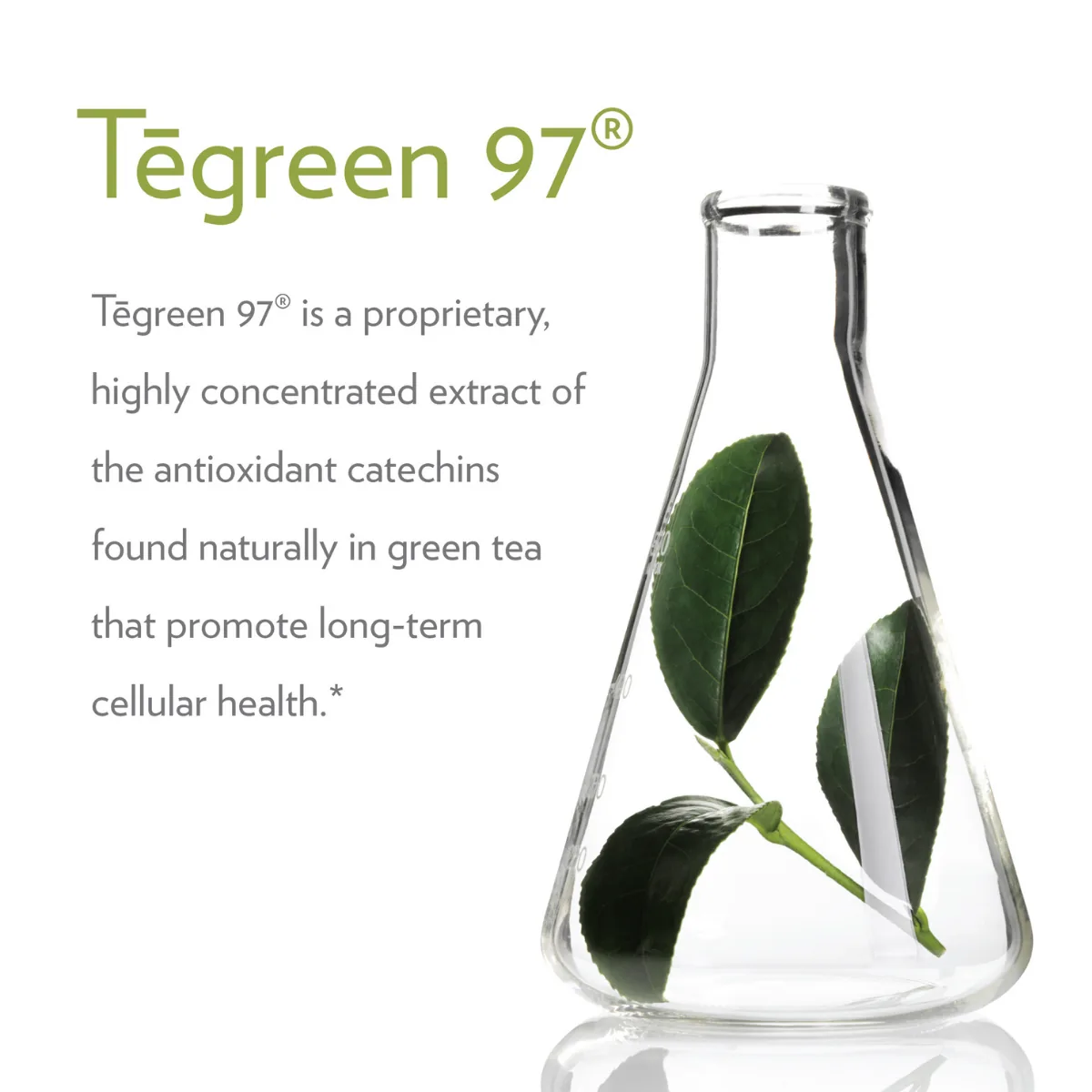
A concentrated green tea extract standardized to 97% polyphenols, about 65% of them catechins, with more than 95 mg of EGCG per capsule -- roughly the antioxidant equivalent of seven cups of green tea in a 99.5% caffeine-free form. Standardization is the point: every capsule delivers a consistent catechin dose instead of the wide swing you get cup to cup.
Why the evidence supports it
Green tea catechins are among the most heavily studied plant antioxidants in nutrition science, and the mechanism is well mapped -- catechins like EGCG neutralize free radicals and help shield cell structures, including DNA, from oxidative wear. A standardized extract also has bioavailability behind it: a comparative study found the concentrated catechins raised plasma antioxidant capacity more effectively than drinking green or black tea. That makes a standardized, low-caffeine extract one of the most evidence-based ways to lean on antioxidant support day to day, feeding straight into the cell's Maintain function -- buffering oxidative stress so cells can hold their steady, healthy state.
What it supports
- Supports the body's normal antioxidant defenses
- Supports a healthy inflammation response already within normal range
- Provides standardized green tea catechins
- Supports healthy cellular aging as part of a balanced routine
Which function it supports
Ties to the cell's Maintain function -- catechins help neutralize oxidative stress so cells can hold their steady, healthy state.
Learn the why behind this pillarHow it relates to your cells and mind
Every product here ties back to a specific job your body does. This one touches the functions below -- follow either link to see the mechanism in full, then dig into the studies.
What it is made of -- and the mechanisms behind it
Each ingredient acts on several of the body's functions. Taken together, this product touches these cell and mind functions -- follow any to see the mechanism in full.
The ingredients
Mechanisms drawn from our ingredient knowledge base (1 profiled ingredients). Structure and function only -- not a treatment claim.
What’s actually in it
Label revision 2015Transcribed from the manufacturer’s official Product Information Page, exactly as printed. Ingredient names that link open our research page for that ingredient, with the studies behind it.
| Amount per 2 capsules | Amount | % DV |
|---|---|---|
| Green tea leaf ExtractCamellia sinensis | 500 mg | * |
- Servings per container:
- 60
- Other ingredients:
- Gelatin, Microcrystalline Cellulose, Stearic Acid, Silicon Dioxide.
Standardized to a minimum 97% pure polyphenols, 65% of which are catechins (>95 mg EGCg per capsule). Decaffeinated for labeling purposes: ~1.5-2 mg caffeine per capsule (a cup of coffee is 100-150 mg). Label caution: do not exceed 1,200 mg green tea combined with other green-tea-containing supplements.
Source: official Product Information Page . Amounts are the manufacturer’s, not ours. Structure and function only -- nothing here is medical advice, and nothing here may be used to diagnose, treat, cure, or prevent any disease.
The science on the ingredients
These studies are research on the ingredients and mechanisms in this product, not on the finished product itself, and they are shown for education. Nothing here is medical advice, and nothing here may be used to diagnose, treat, cure, or prevent any disease. Talk to your own provider about what is right for you.
- Green tea catechins and blood pressure: a systematic review and meta-analysis of randomised controlled trialsPubMed
European journal of nutrition · 2014
A meta-analysis of randomized trials found green tea consumption modestly reduced systolic and diastolic blood pressure and lowered total and LDL cholesterol, with greater blood pressure benefit in those starting above 130 mmHg systolic.
- Effects of green tea catechins with or without caffeine on glycemic control in adults: a meta-analysis of randomized controlled trialsPubMed
The American journal of clinical nutrition · 2013
A meta-analysis of 22 trials found green tea catechins significantly reduced fasting blood glucose but did not significantly affect fasting insulin or HbA1c.
- Salubrious Effects of Green Tea Catechins on Fatty Liver Disease: A Systematic Review.PubMed
Medicines (Basel, Switzerland) · 2022
A systematic review of rodent and human studies found EGCG or green tea extract reduced body weight and fat deposits and improved markers of lipid metabolism and oxidative stress in nonalcoholic fatty liver disease, though optimal dosing is unclear.
- Effect of Acute and Chronic Dietary Supplementation with Green Tea Catechins on Resting Metabolic Rate, Energy Expenditure and Respiratory Quotient: A Systematic Review.PubMed
Nutrients · 2021
A systematic review of 15 studies found that green tea catechin supplementation, especially at low doses of 100 to 300 mg, was associated with improved respiratory quotient, while effects on resting metabolic rate and energy expenditure were inconsistent across studies.
- The Effect of Dietary Supplementation of Green Tea Catechins on Cardiovascular Disease Risk Markers in Humans: A Systematic Review of Clinical TrialsSource
Beverages · 2016
A review of clinical trials found green tea catechin supplementation showed inconsistent effects on cardiovascular risk markers such as blood pressure and lipids, varying by dose, duration, and population studied.
- Acute effect of green tea catechins on uric acid metabolism after alcohol ingestion in Japanese menPubMed
Clinical rheumatology · 2021
In ten healthy Japanese men, green tea catechins with alcohol increased urinary uric acid and xanthine/hypoxanthine excretion compared to alcohol alone; enhanced uric acid clearance by approximately 15 percent.
Tea and liver fibrosis: a bibliometric analysis of mechanisms, translational challenges, and emerging trendsEstablishedSystematic review2026
Tea bioactives, particularly EGCG, inhibit liver fibrosis through multiple pathways, but clinical translation is limited by poor bioavailability and dose-dependent hepatotoxicity.
Fei Yu; Sihan Yin; Jiayu Zhu; Kewei Sun
Effect of Epigallocatechin Gallate Supplementation on Inflammation, Iron Status, and Metabolomic Profiles in Women With Obesity: A Pilot Randomized Controlled TrialEstablishedRandomized controlled trial2026
EGCG supplementation (400 mg/day) for eight weeks produced no significant changes in lipid profile, inflammatory markers, or iron status in women with obesity.
Sixtus Aguree; Kedir N Turi; Alexandra R Handt; Marian Kohut; Manju B Reddy
Green Tea Catechin Plus Inulin Improves Insulin Resistance Without Reducing Visceral Fat and Shows Exploratory Gut Microbiota Signals in Adults with Visceral Obesity: A Double-Blind Randomized Controlled TrialEstablishedRandomized controlled trial2026
In a 12-week randomized trial, green tea catechins plus inulin did not reduce visceral fat area but significantly improved insulin resistance (HOMA-IR) compared with placebo in adults with visceral obesity.
Chikara Iino; Keita Mikami; Keisuke Furusawa; Satoshi Sato; Kenta Yoshida; Tohru Yamaguchi; Hiroto Bushita; Keita Kinoshita; Yuji Matsui; Seiya Imoto; Takuro Iwane; Yoshinori Tamada; Koichi Murashita; Shigeyuki Nakaji; Tatsuya Mikami; Hirotake Sakuraba
A Randomized Controlled Trial to Determine the Effects of Curcumin and Epigallocatechin-3-Gallate Supplementation on Serum Brain-Derived Neurotrophic Factor and Mood Disturbance in AdultsEstablishedRandomized controlled trial2026
In an 8-week randomized trial of 64 adults, combined EGCG and curcumin supplementation did not improve mood disturbance or serum BDNF beyond placebo, since both groups improved similarly.
Aidan M Cavanah; Laura A Robinson; Madison M Aguilar; Elaine F Molaison; Michael W Greene; Michael D Roberts; Andrew D Fruge
Impact of the Combination of Epigallocatechin Gallate and Ellagic Acid Supplemented with Ketone Bodies on Energetic Restoration of Mitochondrial Dysfunction and Metabolic Inefficiencies in Patients with Multiple Sclerosis: A ReviewEmergingExpert review2026
Beta-hydroxybutyrate, EGCG, and ellagic acid synergistically restore mitochondrial function in MS through energy substrate provision, peripheral inflammation reduction, and CNS complex enhancement.
Jose Enrique de la Rubia Ortí; Alba Roig-Soriano; Sandra Carrera-Juliá; Alejandra Castelló-Guillen; Marisa Machado; Rocío García-Villalba; Jorge Alarcón-Jiménez; Nieves de Bernardo; María Benlloch
Epigallocatechin-3-Gallate (EGCG) as a Multifaceted Natural Anticancer Agent in Colorectal Cancer: Preclinical Evidence and Future DirectionsEmergingExpert review2026
Epigallocatechin gallate inhibited colorectal cancer cell proliferation and induced apoptosis through modulation of Wnt/β-catenin, PI3K/Akt, and NF-κB pathways.
Nicolaos Achilleos; Maddox Talbot Harrison; Evangelia Tsiani
Polyphenolic Components and Phytochemicals Deployed as Nutraceuticals and PharmafoodsEmergingExpert review2026
Polyphenols including EGCG, curcumin, and quercetin demonstrated anti-cancer, anti-diabetic, and anti-inflammatory properties as potential therapeutic adjuvants.
Subhash Chandra; Md Sakib Al Hasan; Md A K Azad; Atasi Goswami
EGCG-Building Nanocarriers for Multitasking Drug Delivery: Design Principles, Therapeutic Opportunities, and Translational ChallengesEmergingExpert review2026
EGCG-based nanocarriers integrate intrinsic antioxidant and anticancer activity with drug delivery through hydrophobic and metal-coordination interactions, reducing inert excipient burden.
Nunnarpas Yongvongsoontorn; Motoichi Kurisawa; Joo Eun Chung
Effects of Epigallocatechin Gallate Against Lung Cancer: Mechanisms of Action and Therapeutic PotentialEmergingExpert review2026
This review found EGCG inhibited lung cancer cell proliferation, induced apoptosis, and enhanced chemotherapy efficacy in preclinical models by modulating EGFR, PI3K/Akt, MAPK, and NF-kB signaling pathways.
Dordaneh Mirbabaei Ghafghazi; Newman Siu Kwan Sze; Evangelia Tsiani
Consumer Perceptions Influence Supplement Choice: A Narrative Review of Clinically Studied Weight-Management Supplements in ObesityEmergingExpert review2026
This narrative review found inconsistent evidence for weight-loss efficacy of L-carnitine, green tea extract, glucomannan, and Garcinia cambogia, emphasizing that consumer supplement choices often outpace the available evidence.
Hyeonseok Lee; Jung Hyun Kwak
Natural Bioactive Compounds Targeting Gut Barrier Integrity and Metabolic Endotoxemia in Cardiometabolic Disease: Mechanistic Insights and Translational PerspectivesEmergingExpert review2026
A mechanistic review identifies natural compounds including curcumin, EGCG, resveratrol, and quercetin as gut-targeted interventions that may reinforce intestinal barrier integrity and lower endotoxin-driven cardiometabolic inflammation.
Roko Šantić; Lovre Martinović; Nikola Pavlović; Dinko Martinović; Josip Vrdoljak; Marko Kumrić; Marino Vilović; Joško Božić
Obesity and Natural Products: Mechanisms, Therapeutic Potential, and Future DirectionsEmergingExpert review2026
A narrative review found natural compounds such as EGCG, curcumin, resveratrol, capsaicin, and berberine showed anti-obesity effects in preclinical and clinical studies by modulating lipid metabolism and appetite pathways.
Ohoud M Marie; Abdelghafar Abu-Elsaoud
Polyphenols and ADPKD: A Further Aid from Nature?EmergingExpert review2026
Plant polyphenols including curcumin, quercetin, and EGCG target multiple autosomal dominant polycystic kidney disease pathways in vitro, but clinical translation is limited by poor renal bioavailability.
Caterina Carollo; Alessandra Sorce; Maria Elena Ciuppa; Emanuele Cirafici; Nicola Sinatra; Giulio Geraci; Valentina Paternò; Paola Di Carlo; Rosalia Lo Presti; Giuseppe Mulè; Gregorio Caimi
Traditional medicine and natural product based therapeutics in gingivitis management and microbial interactionsEmergingExpert review2026
Plant-derived polyphenols including green tea catechins demonstrate antimicrobial and anti-inflammatory effects in gingivitis, limited by lack of standardized formulations and dosage.
Pranita Rath; Sudipta Kumar Patra; Manisha Dash; Sandeep Kumar Behera; Shibani Mohapatra; Kabir Suman Dash; Alok Kumar Panda
Bioactive Phytochemicals in Experimental Models of Multiple Sclerosis: Mechanisms, Efficacy, and Translational PotentialEmergingExpert review2026
Experimental models demonstrate EGCG suppresses multiple sclerosis inflammation through immunomodulation and neuroprotection, but human trials remain inconclusive with hepatotoxicity concerns limiting clinical translation.
Weimin Guo; Simin Nikbin Meydani; Dayong Wu
Chronic Aseptic Myometritis: A Mechanistic Framework Linking Sterile Myometrial Inflammation to Uterine Fibroid Initiation and a Roadmap for Primary PreventionEmergingExpert review2026
A narrative review proposed that chronic sterile myometrial inflammation may precede fibroid development, with preliminary evidence that vitamin D and epigallocatechin gallate reverse pro-fibrotic changes in organoid models.
Saba Haq; Fatimah Hussein; Ola Elamin; Mervat M Omran; Jakub Kociuba; Michal Ciebiera; Mahya Mohammadi; Esra Cetin; Everett Tate; Obianuju Sandra Madueke-Laveaux; Mira Mousa; Mostafa Borahay; Mohamed Ali; Ayman Al-Hendy
Dietary polyphenols in colorectal cancer - Mechanisms, clinical evidence, and bioavailability of curcumin, resveratrol, and epigallocatechin-3-gallate: A reviewEmergingExpert review2026
Preclinical studies show curcumin, resveratrol, and EGCG inhibit NF-κB and promote apoptosis in colorectal cancer; human trials show biomarker changes but inconsistent effects on tumor outcomes.
Alqahtani HA -- Biomolecules & biomedicine
Dietary Compounds Drive Epigenetic Regulation and Modifications in Blood Cancer: A Critical ReviewEmergingExpert review2026
Dietary phytochemicals including curcumin, resveratrol, and EGCG modulate DNA methyltransferases and histone deacetylases to reactivate silenced tumor suppressor genes in blood cancer models.
Ikhtiar F; Jamal A; Kiran S; Hossain MB -- Molecular nutrition & food research
Bioactive Compounds from Medicinal and Edible Plants for Anti-Aging: A Systematic Review of Molecular Mechanisms, Delivery Systems, and Clinical EvidenceEmergingExpert review2026
Bioactive compounds including resveratrol and EGCG demonstrated mitochondrial regulation and antioxidant effects in preclinical models, though human evidence is limited to four small trials with low-to-moderate certainty.
Zhenyu Ma; Bixue Huang; Kunzhui Chen; Runtian Yuan; Linning Li; Yinbin Shen
Neurogenesis and neuroplasticity activities of natural products: therapeutic potential in Alzheimer's diseaseEmergingExpert review2026
Phytochemicals including curcumin, resveratrol, and EGCG promote neural stem cell proliferation and enhance synaptic function through BDNF/TrkB and ERK/CREB signaling in preclinical models.
Abeer M Shaheen; Mai H A Mousa; Merhan O Hindam; Ahmed M El-Dessouki; Sally A Fahim; Dina M Hal; Sadek Ahmed; Riham A El-Shiekh; Hazim O Khalifa
Unravelling the Mechanisms of Tea Against NAFLD: An Integration of Bibliometrics, Network Pharmacology, and the Gut-Liver AxisEmergingExpert review2026
Tea polyphenols, particularly EGCG, alleviated hepatic steatosis and inflammation in NAFLD models by modulating gut microbiota and the NF-κB signaling pathway.
Ren J; Jiang T; Wei X; Bian T; Xu M; Zhao Y; Zheng Y; Li X -- Diabetes/metabolism research and reviews
A Review of the Impact of Green Tea (Camellia sinensis L.) on Oral HealthEmergingExpert review2026
EGCG inhibited oral bacteria growth, reduced plaque development, and induced apoptosis in oral squamous cell carcinoma through oxidative stress.
Alagarsamy K; Chaiyasut C; Kesika P; Sivamaruthi BS -- Current pharmaceutical design
Epigallocatechin gallate in dentistry: Therapeutic applications, biomaterial integration, and translational challengesEmergingExpert review2026
EGCG promoted osteogenic and odontogenic differentiation and inhibited oral pathogens through NF-κB and Nrf2 pathway modulation in dental tissue models.
Chloe Jui-Yun Chang; Fang-Yu Fan; Yung-Li Wang; Thi Thuy Tien Vo; Yang-Che Wu; Yu-Chia Chang; I-Ta Lee
Metabolic adaptations of yeast cells to epigenetic modifiers: a comparative analysis of free amino acid profiles and key metabolites.EstablishedPrimary research (design unspecified)2026
In yeast cultures, epigenetic modifiers including curcumin and green tea extract increased essential amino acids like leucine, tryptophan, and phenylalanine, with azacytidine producing up to a two-fold rise versus controls.
Ebadi H, Setoodeh P, Niazi A -- World journal of microbiology & biotechnology
Balanced by design -- we show supporting and contradicting findings. Search all studies
If you have had labs done
These are lab markers where this product's ingredients have measured evidence in our citation library. This is not a claim that the product will change your results -- the research attaches to the ingredient, and what a marker means depends on the whole picture. Each one links to its full entry, including what typically moves it and how to read it.
- Polyphenols (Gut Barrier)emerging evidence
via Green tea catechins/EGCG · 81 studies, 19 in people
- Prostate-Specific Antigen (PSA) Total, Free & Percent Freeemerging evidence
via Green tea catechins/EGCG · 6 studies, 3 in people
What people often notice when this marker sits outside the usual range
Higher: Frequently NOTHING -- which is the entire reason PSA is measured rather than waited for.
Lower: No symptoms. ⚠️ Note that finasteride and dutasteride roughly HALVE PSA -- a result on either must be doubled to be interpreted, and forgetting this hides real findings.
- Prostate-Specific Antigen (PSA)emerging evidence
via Green tea catechins/EGCG · 6 studies, 3 in people
What people often notice when this marker sits outside the usual range
Higher: Frequently NOTHING -- which is the entire reason PSA is measured rather than waited for.
Lower: ⚠️ Finasteride and dutasteride roughly HALVE PSA.
Lab results are interpreted by a qualified clinician who knows your history. Nothing here diagnoses anything or replaces that conversation.
No product works in isolation
Every cell function above -- Sense, Exchange, Transform, Build, Maintain, Adapt -- needs the same broad base of optimal micronutrient levels running underneath it, all the time. TeGreen 97 is not a stand-alone fix; it is one piece that plugs into that larger system. The foundation comes first, and this supports it.
Stacks well with
Pick your goal -- here is what TeGreen 97 pairs with for each. Nothing works in isolation; these share the same systems.
For Epigenetics
For Immune
Foundational, or targeted?
Not everything in the shop is meant to be taken forever. Some products here are foundational -- a daily nutrient base built for long-term, ongoing use. Others are targeted -- shorter-term support for a specific season, not a lifelong habit. If you are not sure which one this is, that is a fair question to ask us before you buy.
Learn more, on your terms
Do not take our word for it -- go read. Each topic below opens a pre-loaded search so you can explore the nutrient, the mechanism, or the device for yourself.
Search the full studies libraryHow to use it
Take with food and water, ideally not on an empty stomach and not late in the day. One capsule with a meal is a common routine. Follow the label.
Where to get it
Ready when you are. This link takes you to the official, verified source for this product.
Get TeGreen 97The studies
See the research behind the science we point to.
Explore studiesThe blog
Plain-language reads on how it all fits together.
Read the blogOptimal nutrients are the definition of longevity
Long-term cell function depends on having what it needs, at the level it needs it, for as long as it needs it. That is the whole thesis behind everything we point you to here.
When you buy through our links, we earn a small commission -- and that is what funds all the free education here. It never costs you more. Products are not intended to diagnose, treat, cure, or prevent any disease.
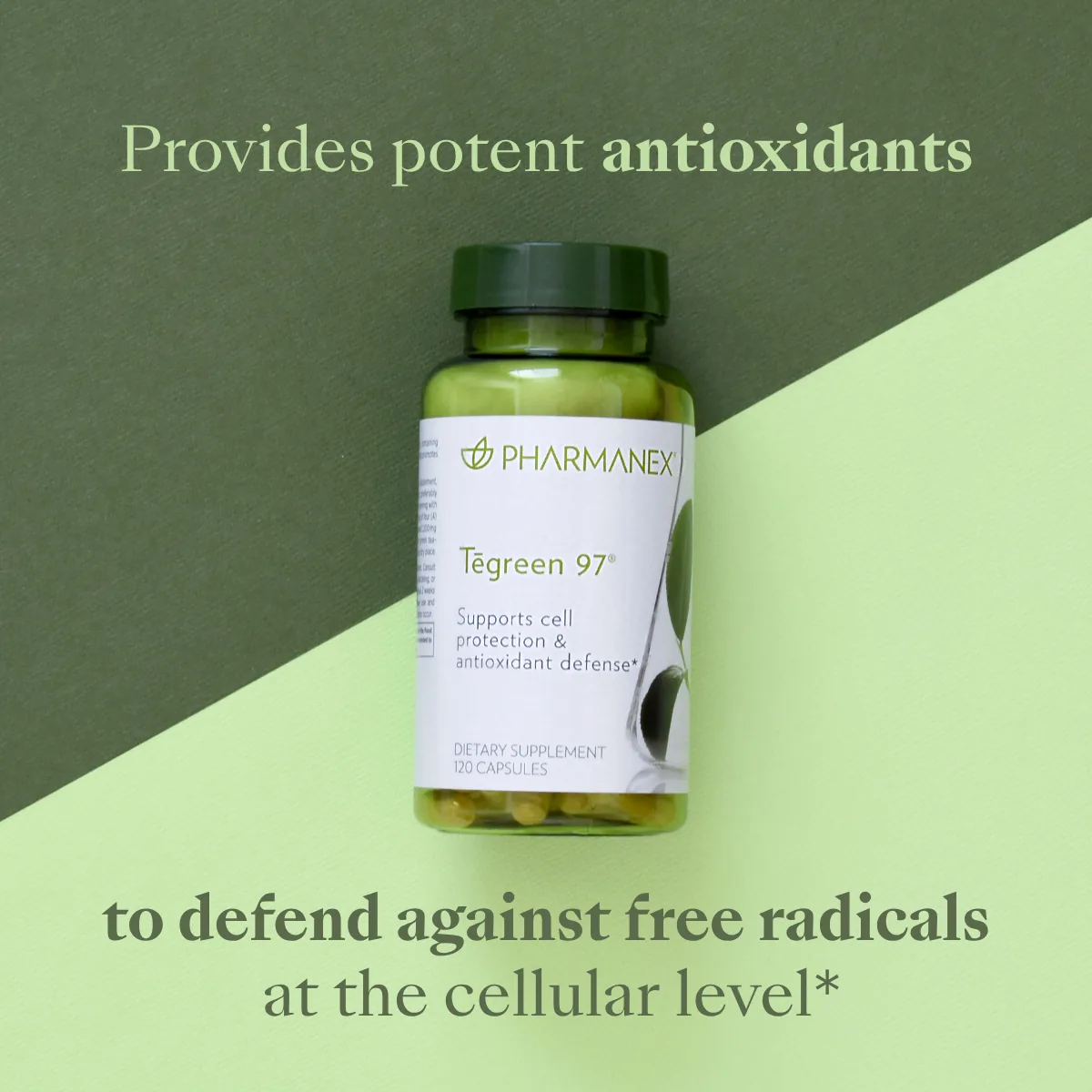
TeGreen 97 is a concentrated green tea extract standardized for catechins (including EGCG) in a low-caffeine form. It packs the useful part of many cups of green tea into a single capsule. It fits anyone who wants consistent antioxidant support without drinking cup after cup.
FAQ
What does TeGreen 97 support?
It supports the body's normal antioxidant defenses, a healthy inflammation response already within normal range, and healthy cellular aging as part of a balanced routine, while providing standardized green tea catechins.
How do I take it?
Take with food and water, ideally not on an empty stomach and not late in the day. One capsule with a meal is a common routine. Follow the label.
What makes it different?
Green tea is one of the most-studied everyday plants there is, and a reputable, low-caffeine standardized extract gives you a consistent catechin dose in one capsule.