When you buy through our links, we earn a small commission — and that is what funds all the free education here. It never costs you more. Products are not intended to diagnose, treat, cure, or prevent any disease.
What it is
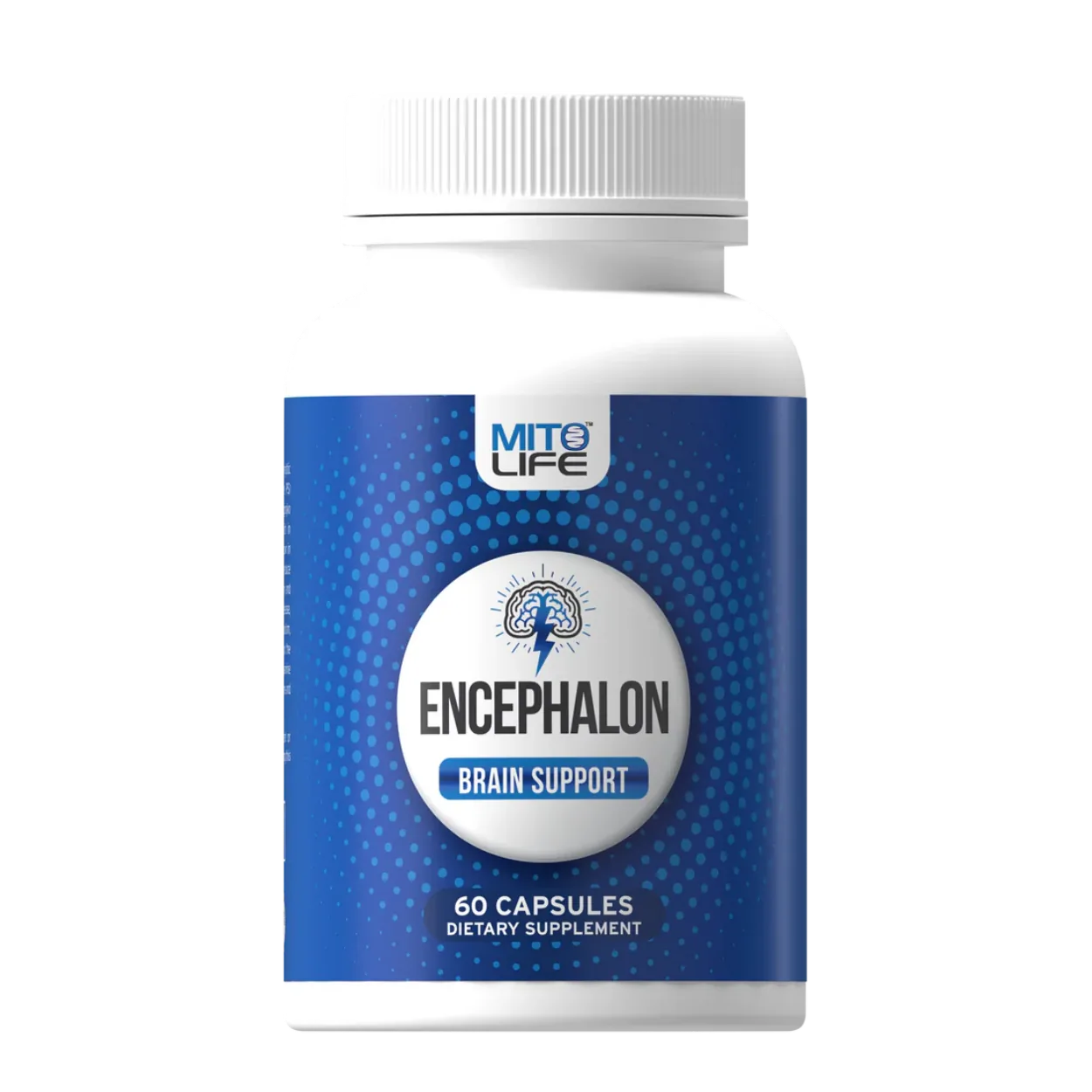
A brain-support blend of phosphatidylserine, Ginkgo biloba, and a French microalgae extract rich in the carotenoid fucoxanthin. Phosphatidylserine is a phospholipid built into every neuron's cell membrane; Ginkgo supports blood flow and acts as an antioxidant; the microalgae adds carotenoid antioxidant capacity.
Why the evidence supports it
Phosphatidylserine is the anchor and it carries the strongest evidence of the three — meta-analyzed human trials link it to improved memory in older adults, and it is a structural component of the neuronal membrane itself. Ginkgo adds its own research thread for blood flow and antioxidant support, while the microalgae piece is honestly earlier-stage, mostly pre-clinical work. Together they serve the Mind world's Process function and the theme of neuroplasticity — supporting the membrane integrity and antioxidant balance neurons rely on to signal. Framed as everyday focus and memory support, not a cognitive cure.
What it supports
- Supports memory and everyday recall
- Supports focus and mental clarity
- Supports antioxidant defense in the brain
- Combines phosphatidylserine, Ginkgo, and microalgae
Which function it supports
Ties to the Mind world's Process function and the theme of BDNF and neuroplasticity — supporting the brain's everyday signaling and antioxidant balance.
Learn the why behind this pillarHow it relates to your cells and mind
Every product here ties back to a specific job your body does. This one touches the functions below — follow either link to see the mechanism in full, then dig into the studies.
What it is made of — and the mechanisms behind it
Each ingredient acts on several of the body's functions. Taken together, this product touches these cell and mind functions — follow any to see the mechanism in full.
The ingredients
Mechanisms drawn from our ingredient knowledge base (3 profiled ingredients). Structure and function only — not a treatment claim.
The science on the ingredients
YY-1224, a terpene trilactone-strengthened Ginkgo biloba, attenuates neurodegenerative changes induced by β-amyloid (1-42) or double transgenic overexpression of APP and PS1 via inhibition of cyclooxygenase-2.2017
In genetically engineered Alzheimer's model mice, a concentrated Ginkgo biloba extract called YY-1224 reduced amyloid-induced memory impairment and brain inflammation markers, but this effect required a working COX-2 gene to occur.
Li ZY; Chung YH; Shin EJ; Dang DK; Jeong JH; Ko SK — Journal of neuroinflammation
Can phosphatidylserine enhance atheroprotective activities of high-density lipoprotein?2016
A review of phosphatidylserine, a lipid component of HDL particles, describes correlations between its amount in HDL and lab measures of HDL function, without presenting new patient outcome data.
Darabi M; Kontush A — Biochimie
Fucoxanthin: A Promising Medicinal and Nutritional Ingredient.2015
A review of fucoxanthin, a pigment from edible brown seaweed, summarizes laboratory findings on obesity, tumor, diabetes and antioxidant related activity, but reports no original clinical trial results in humans.
Zhang H; Tang Y; Zhang Y; Zhang S; Qu J; Wang X — Evidence-based complementary and alternative medicine : eCAM
Ginkgolide B attenuates ethanol-induced neurotoxicity through regulating NADPH oxidases.2011
In cultured PC12 nerve cells exposed to ethanol, the compound ginkgolide B reduced cell death, oxidative damage and NADPH oxidase activity, but did not change ethanol-metabolizing enzyme activity in the cells.
Zhang C; Tian X; Luo Y; Meng X — Toxicology
Role of hippocampal oxidative stress in memory deficits induced by sleep deprivation in mice.2004
In mice deprived of sleep for 72 hours, hippocampal markers of oxidative damage rose alongside memory loss, and both effects were blocked by prior treatment with the antioxidants melatonin, PBN or vitamin E.
Silva RH; Abílio VC; Takatsu AL; Kameda SR; Grassl C; Chehin AB — Neuropharmacology
Characterization of fucoxanthin-deficient strains in the haptophyte Tisochrysis lutea induced by heavy-ion beam irradiation.2026
Using heavy-ion beam irradiation, researchers created fucoxanthin-deficient microalgae strains that instead accumulated biosynthetic intermediates haptoxanthin and phaneroxanthin, helping clarify the fucoxanthin production pathway.
Kubo S; Sano T; Kawachi M; Hase Y; Satoh K; Oono Y; Iwata Y; Endo H; Araie H; Yoneda K; Maeda Y; Suzuki I — Plant & cell physiology
Circular RNAs in microalgae: Uncovering their biological significance.2026
A review describes how circular RNAs, non-coding RNA loops formed by back-splicing, regulate transcription, translation, and stress responses in microalgae and other eukaryotic cells.
Dehghani J; Panahi B; Nolsøe JMJ; Lerouge P; Bardor M; Omidi Y — Biotechnology advances
Alginate-derived oligosaccharides obtained from enzymatic hydrolysis of Laminaria improve temperature adaptability and increase bioactive compound yield in Phaeodactylum tricornutum.2026
Alginate-derived oligosaccharides expanded the temperature tolerance range of Phaeodactylum tricornutum by 3.4 degrees C, increased biomass by 50 percent at 24 degrees C, and boosted fucoxanthin yield by 46 percent and EPA levels by 72 percent.
Che X; Fan D; Ding R; Zhang L; Zhu B; Li Y — Bioresource technology
Diclofenac stress responses and biotransformation pathways in the marine diatom Phaeodactylum tricornutum.2026
Exposure to the pharmaceutical contaminant diclofenac caused mild physiological effects but altered gene expression and increased nutrient and energy demands in the marine diatom Phaeodactylum tricornutum.
Alezra L; Le Floc'h E; Félix C; Rosain D; Gomez E; Courant F; Fouilland E; Cheloni G — Environmental pollution (Barking, Essex : 1987)
Pathways and functional enzyme-mediated mechanisms of tetracycline biodegradation by the marine microalgae Phaeodactylum tricornutum.2026
The marine microalga Phaeodactylum tricornutum biodegraded 88.4 percent of tetracycline in solution through cytochrome P450 demethylation and deamination, metallo-beta-lactamase bond cleavage, and FAD-dependent monooxygenase oxygenation pathways.
Wu X; Chen J; Du H; Ye Z; Zhang S; Bao R; Xu Y; Meador JP; Zhang Q; Wang S; Wang Z; Liu X — Bioresource technology
A low-voltage alternating electric field strategy against Phaeodactylum tricornutum: Anti-biofouling mechanism under electrical stimulation.2026
Low-voltage alternating electric fields repelled marine biofouling microalgae with 97.2% efficiency, working by raising intracellular reactive oxygen species and lipid peroxidation in the algal cells.
Zhou Z; Huang X; Sun D; Yu H; Jiang X — Bioelectrochemistry (Amsterdam, Netherlands)
Phaeodactylum tricornutum as a Chassis: Insights into Its Potential, Challenges, and Perspectives.2026
Phaeodactylum tricornutum is being developed as a photosynthetic microbial chassis for sustainable bioproduction of high-value compounds including fucoxanthin and EPA, supported by genetic and non-genetic engineering toolkits.
Wang S; Hao Y; Qiao T; Zhang R; Yu D; Wang H; Liu Y; Sun Y; Xu D; Song X; Pan K — Marine drugs
Transcriptomic and physiological insights into Diethylstilbestrol toxicity in Phaeodactylum tricornutum.2026
In the marine diatom Phaeodactylum tricornutum, exposure to the pollutant diethylstilbestrol reduced chlorophyll content and photosynthetic efficiency while triggering increased antioxidant enzyme activity such as superoxide dismutase and catalase.
Zhao DS; Liu XL; Chen YT; Yang H; Farooq MA; Yan X; Zou HX — Aquatic toxicology (Amsterdam, Netherlands)
Intermittent light enhances pigment production in the diatom Phaeodactylum tricornutum: a combined physiological and transcriptomic approach.2026
Intermittent light-dark cycles increased growth, photosynthetic efficiency, and pigment production in the diatom Phaeodactylum tricornutum, upregulating chlorophyll and carotenoid biosynthesis genes under short light intervals.
Zheng J; Yuan J; Wang X; Zhang D; Lin L; Shi N; Feng Y — Microbiology spectrum
The marine diatom Phaeodactylum tricornutum as a versatile bioproduction chassis: Current progress, challenges, and perspectives.2025
The marine diatom Phaeodactylum tricornutum is being engineered as a production platform for fucoxanthin and other bioactive compounds using CRISPR and other genetic tools, advancing sustainable ingredient sourcing.
Wang S; Hu Z — Plant communications
Enantioselective toxicity of propranolol on marine diatoms: Assessing growth, energy metabolism and oxidative damage in Phaeodactylum tricornutum.2025
Study of the marine diatom Phaeodactylum tricornutum found propranolol's R-enantiomer caused oxidative damage and energy metabolism disruption while the S-enantiomer did not, highlighting the importance of testing individual drug enantiomers in ecotoxicology assessments.
Arenas M; Feijão E; Duarte IA; Fonseca VF; Aparicio I; Alonso E; Duarte B — Marine pollution bulletin
Utilizing Extracellular Vesicles from Phaeodactylum tricornutum as a Novel Approach for Protecting the Skin from Oxidative Damage.2025
In UV-exposed mouse skin and H2O2-stimulated skin cells, extracellular vesicles derived from the microalga Phaeodactylum tricornutum were nontoxic and taken up by cells, showing potential for protecting skin from oxidative damage.
Xu R; Lu Y; Cai L; Zhang L — ACS biomaterials science & engineering
Research on the Influence of Orthogonal Design Optimized Elicitor Combinations on Fucoxanthin Accumulation in Phaeodactylum tricornutum and Its Expression Regulation.2025
Using an orthogonal design, researchers found that glycine supplementation combined with specific light intensity significantly increased fucoxanthin accumulation in the microalga Phaeodactylum tricornutum, with underlying gene regulation mechanisms explored.
Yang H; Gong Y; Liu B; Chen Y; Qin H; Wang H; Liu H — Marine drugs
UVR regulation of photoprotection in Phaeodactylum tricornutum (Bacillariophyceae): roles of light energy doses.2025
In the diatom Phaeodactylum tricornutum, increasing UV radiation dose reduced growth and photosynthetic pigment levels including fucoxanthin, while triggering xanthophyll-cycle gene expression changes as part of a cellular photoprotection response.
Cella H; Bonomi-Barufi J; Velasquez Bastolla CL; Nader C; Oliveira CY; Lopes RG; Mattos JJ; Horta Junior PA; Venâncio HC; de Oliveira Rodrigues ER; Maraschin M; Rörig LR; Dias Bainy AC; Marques MRF; Derner RB — Photosynthesis research
Metabolomic Analysis and Computational Biology Reveal the Potential Metabolic Pathways for Improvement of Fucoxanthin and Eicosapentaenoic Acid (EPA) Biosynthesis in Phaeodactylum tricornutum.2025
Metabolomic and computational analysis of the microalga Phaeodactylum tricornutum identified metabolic pathways, including glyoxylate and dicarboxylate metabolism, that could be optimized to boost fucoxanthin and EPA biosynthesis.
Schmitz C; Sforca ML; Maraschin M — Applied biochemistry and biotechnology
The influence of 2,6-Di-tert-butyl-p-cresol stress on the microalga Phaeodactylum tricornutum and phycosphere bacteria community.2025
In microalgae exposed to the antioxidant contaminant BHT, growth and pigment production were inhibited while antioxidant enzyme activity rose, and the microalgae's secretion of IAA promoted growth of a BHT-tolerant bacterium in its surrounding microbiome.
Lu X; Liu J; Xiao X; Xue J; Cheng D; Zhang L — World journal of microbiology & biotechnology
Metabolic engineering of Saccharomyces cerevisiae for neoxanthin production.2025
Researchers achieved the first heterologous production of the carotenoid neoxanthin in Saccharomyces cerevisiae yeast by engineering the beta-carotene and violaxanthin biosynthesis pathways along with a gene from a marine microalga.
Arenas N; Cataldo VF; Agosin E — Microbial cell factories
Fucoxanthin Ameliorates Carbon Tetrachloride-Induced Liver Fibrosis in Mice via Nrf2/HO-1/GPX4-Mediated Ferroptosis Pathway.2025
In a mouse model of carbon tetrachloride-induced liver fibrosis, fucoxanthin, a marine carotenoid from brown algae, improved liver function and reduced fibrosis and inflammation markers via the Nrf2/HO-1/GPX4 ferroptosis pathway.
Liu Z; Ye J; Xi J; Li Q; Tang Y; Tian Y; Wang D; Yang Z; Ding Y — Food science & nutrition
RNA Editing Analysis Reveals Methyl Jasmonic Acid Regulation of Fucoxanthin and Fatty Acid Metabolism in Phaeodactylum tricornutum.2025
In the marine diatom Phaeodactylum tricornutum, methyl jasmonic acid treatment triggered RNA editing that regulated fucoxanthin and fatty acid metabolism, offering a strategy to boost production of these commercially valuable bioactive compounds.
Huang S; Liu H; Xu R; Li W; Yang H; Bao X; Hang Y; Gong Y; Zhao Y — Marine drugs
Balanced by design — we show supporting and contradicting findings. Search all studies
No product works in isolation
Every cell function above — Sense, Exchange, Transform, Build, Maintain, Adapt — needs the same broad base of optimal micronutrient levels running underneath it, all the time. Encephalon is not a stand-alone fix; it is one piece that plugs into that larger system. The foundation comes first, and this supports it.
Stacks well with
Pick your goal — here is what Encephalon pairs with for each. Nothing works in isolation; these share the same systems.
For Brain & Sleep
For Epigenetics
Foundational, or targeted?
Not everything in the shop is meant to be taken forever. Some products here are foundational — a daily nutrient base built for long-term, ongoing use. Others are targeted -- shorter-term support for a specific season, not a lifelong habit. If you are not sure which one this is, that is a fair question to ask us before you buy.
Learn more, on your terms
Do not take our word for it — go read. Each topic below opens a pre-loaded search so you can explore the nutrient, the mechanism, or the device for yourself.
Search the full studies libraryHow to use it
Take with water and a meal, typically earlier in the day. Give it a few weeks of consistent use to gauge the effect. Follow the label.
Use code HOLISTICLOVE at checkout.
Where to get it
We are lining up the best way to get this one to you. In the meantime, reach out and we will point you the right way — or browse the full shop to see every product.
See the full shopThe studies
See the research behind the science we point to.
Explore studiesThe blog
Plain-language reads on how it all fits together.
Read the blogOptimal nutrients are the definition of longevity
Long-term cell function depends on having what it needs, at the level it needs it, for as long as it needs it. That is the whole thesis behind everything we point you to here.
When you buy through our links, we earn a small commission — and that is what funds all the free education here. It never costs you more. Products are not intended to diagnose, treat, cure, or prevent any disease.
Encephalon is a brain-support blend combining a French microalgae extract (rich in the carotenoid fucoxanthin), phosphatidylserine, and Ginkgo biloba. Together they are aimed at memory, focus, and antioxidant protection for the brain. It fits people wanting everyday focus and memory support.
Common questions
What does Encephalon support?+
It supports memory and everyday recall, focus and mental clarity, and antioxidant defense in the brain, and it combines phosphatidylserine, Ginkgo, and microalgae.
How do I take it?+
Take with water and a meal, typically earlier in the day. Give it a few weeks of consistent use to gauge the effect. Follow the label.
What makes it different?+
Phosphatidylserine and Ginkgo each have their own real research threads for cognition, which is nicer than one lone hero ingredient. The microalgae piece is early-stage, so it is framed as everyday support, not a cognitive cure.