
EVIDENCE-BACKED

MYND360 Mind Full

Astaxanthin and grape antioxidants for the brain under load.

Brain & Sleep

PharmanexMind
MYND360 Mind Full -- photo 1 of 4MYND360 Mind Full -- photo 2 of 4MYND360 Mind Full -- photo 3 of 4MYND360 Mind Full -- photo 4 of 4

$72.00

$90.00 save $18.00 -- applied automatically through this link

When you buy through our links, we earn a small commission -- and that is what funds all the free education here. It never costs you more. Products are not intended to diagnose, treat, cure, or prevent any disease.

What it is

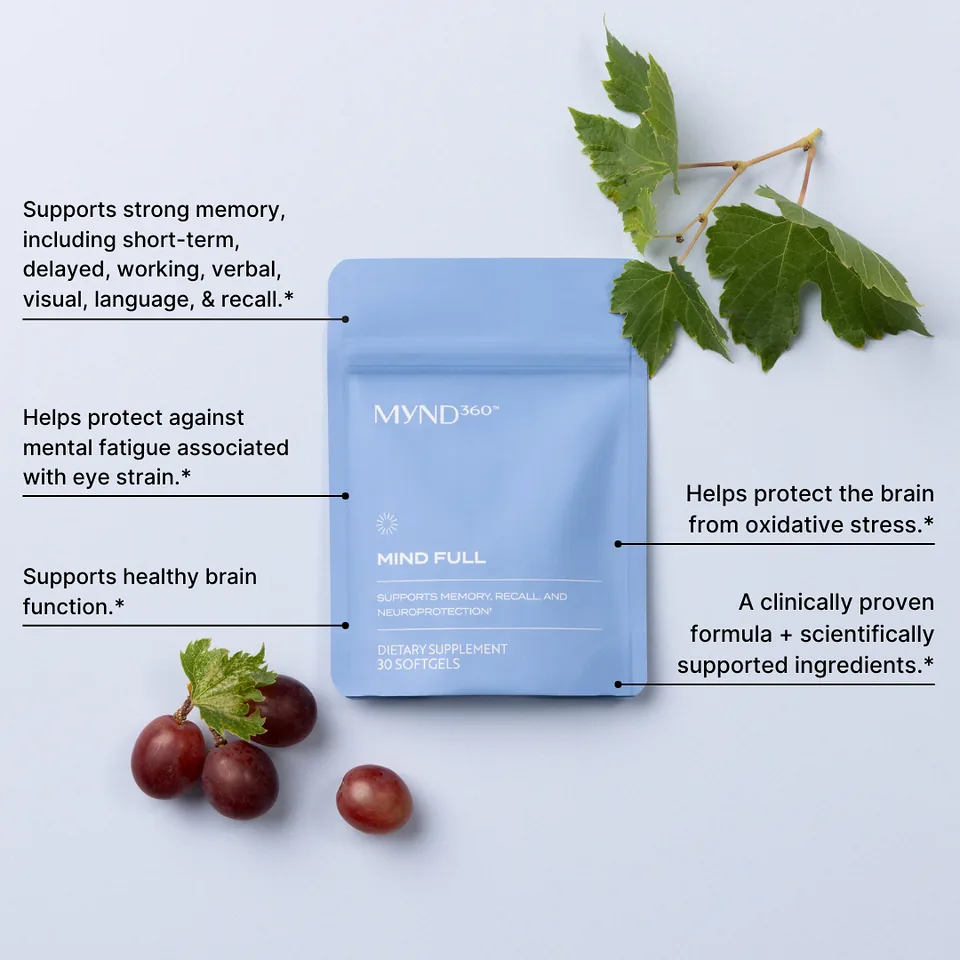
An antioxidant softgel for the brain built around astaxanthin, grape (Vitis vinifera) polyphenols, and vitamin E -- fat-soluble antioxidants chosen for their affinity for the delicate, fat-rich tissue of the brain. It is a maintenance-minded formula meant for steady daily use, not a same-day stimulant or focus shot.

Why the evidence supports it

The rationale is sound: the brain is metabolically busy and built largely from easily-oxidized fats, so antioxidant support is a mechanism that fits the tissue. The human evidence for these specific actives on cognition is genuinely emerging and mixed -- some randomized trials of astaxanthin and of standardized grape extracts report better cognitive-test performance in adults, while others show no clear edge over placebo -- so this is honestly a long-game, antioxidant-maintenance play, not a proven cognitive enhancer. On that footing it supports the Mind's Perceive function by helping protect the antioxidant defenses of the signal-rich tissue the brain uses to take in and process the world. (Availability has varied, so check the current site.)

What it supports

  • Supports the brain's normal antioxidant defenses
  • Supports healthy cellular aging in brain tissue over time
  • Provides astaxanthin and grape polyphenols
  • Complements omega-3 intake and a colorful diet

Which function it supports

MindPerceive
antioxidant defenseBDNF & neuroplasticity

Ties to the Mind world's Perceive function -- supporting the antioxidant defenses that protect the delicate, signal-rich tissue the brain uses to take in and process the world.

Learn the why behind this pillar

How it relates to your cells and mind

Every product here ties back to a specific job your body does. This one touches the functions below -- follow either link to see the mechanism in full, then dig into the studies.

What it is made of -- and the mechanisms behind it

Each ingredient acts on several of the body's functions. Taken together, this product touches these cell and mind functions -- follow any to see the mechanism in full.

The ingredients

Mechanisms drawn from our ingredient knowledge base (3 profiled ingredients). Structure and function only -- not a treatment claim.

The science on the ingredients

These studies are research on the ingredients and mechanisms in this product, not on the finished product itself, and they are shown for education. Nothing here is medical advice, and nothing here may be used to diagnose, treat, cure, or prevent any disease. Talk to your own provider about what is right for you.

Powered by CellWell.life
  • A network meta-analysis of interventions for anxiety and depression in PCOSEstablishedMeta-analysis2026

    Across 25 randomized trials in 1,453 women with polycystic ovary syndrome, emotion-focused therapy, peer support, omega-3 plus vitamin E, and mindfulness stress management were linked to reduced anxiety and depression scores.

    Zuolin Tan; Yunqing Li; Jingyuan Liu; Xinyin Hu; Xuhan Su; Yuhua Huang

  • Vitamins and Cancer Risk: A Comprehensive Review of Epidemiologic and Clinical EvidenceEmergingSystematic review2026

    In a scoping review that mapped evidence without pooling it, routine vitamin supplementation was judged unsupported in cancer care; beta carotene was linked to higher lung cancer risk in smokers and vitamin E to higher prostate cancer risk.

    El Halabi L; AlBayeh A; Khoury A; Katrib M; Nasr J; Al-Obaidi A -- Kansas journal of medicine

  • Cold pressed oils: a systematic review on physicochemical properties, nutritional composition and pharmacological activitiesEstablishedSystematic review2026

    Cold-pressed oils retain significantly higher levels of PUFAs, antioxidants (vitamin E), and bioactive compounds than refined oils; stability is challenged by oxidation of unsaturated fats and can be enhanced by natural antioxidants and controlled storage.

    Biswabhusan Dash; Ashirbad Sarangi; Ananya Nayak; Bhabani Shankar Das; Sudipta Jena; Asit Ray; Pratap Chandra Panda; Sanghamitra Nayak; Ambika Sahoo

  • Vitamins D, A and E, and Beta-Carotene in Adherent and Non-Adherent Individuals with Phenylketonuria: Cross-Sectional Study, Systematic Review and Meta-AnalysisEstablishedMeta-analysis2025

    In a cross-sectional study and meta-analysis of people with phenylketonuria aged 6 to 41, dietary adherence was linked to higher vitamin D, but vitamin E and beta-carotene levels showed no difference by adherence status.

    Kamila Bokayeva; Małgorzata Jamka; Łukasz Kałużny; Monika Duś-Żuchowska; Natalia Wichłacz-Trojanowska; Renata Mozrzymas; Agnieszka Chrobot; Dariusz Walkowiak; Olga Ļubina; Ilya Rabkevich; Szymon Kurek; Anna Miśkiewicz-Chotnicka; Gulnara Sultanova; Karl-Heinz Herzig; Madara Auzenbaha; Jarosław Walkowiak

  • Efficacy of pharmacotherapies on pediatric patients with metabolic dysfunction-associated steatotic liver disease: a systematic review and network meta-analysisEstablishedMeta-analysis2025

    A network meta-analysis of 26 trials in 1503 pediatric MASLD patients found vitamin D most consistently improved lipid profile and liver enzymes, with vitamin E linked to greater NASH resolution.

    Yaser S; Yaser H; Mohammed HE; Nasser M; Darwish MK; Haseeb ME; Heiba AH; Ghonaim MM; Aboeldahab H; Bady Z -- BMC gastroenterology

  • Almond Consumption Improves Inflammatory Profiles Independent of Weight Change: A 6-Week Randomized Controlled Trial in Adults with ObesityEstablishedRandomized controlled trial2026

    In a 6-week RCT of 69 adults with obesity, daily almonds raised dietary alpha-tocopherol intake and reduced inflammatory cytokines IL-6, TNF-alpha, and IFN-gamma, but serum alpha-tocopherol levels themselves did not change, with no weight loss.

    Ayodeji Adepoju; Elaheh Rabbani; Philip Brickey; Victoria Vieira-Potter; Jaapna Dhillon

  • Beneficial changes in total cholesterol, LDL-C, biomarkers of intestinal inflammation, and vitamin E status in adults with metabolic syndrome consuming almonds as snack foods: a randomized controlled clinical trial.EmergingRandomized controlled trial2025

    A randomized controlled trial on Vitamin E found that total body weight, caloric intake, and markers of carbohydrate metabolism (glucose, insulin), systemic inflammation (plasma interleukin-6, C-reactive protein, lipopolysaccharide-binding protein, CD14), and oxidative damage (malondialdehyde) were not altered by almond consumption.

    Beaver LM; Leonard SW; Uesugi SL; Wong CP; Lytle LM; Vasudevan A; Papenhausen EM; Jupudi Y; Bella D; Bobe G; Traber MG; Ho E -- Nutrition research (New York, N.Y.)

  • Impact of Genetic Variants on Vitamin E Levels in an Italian Cohort of Bariatric Surgery Patients: A Focus on SNPs Involved with Transport and Bioavailability.EmergingClinical trial2025

    In an observational study of 140 Italian bariatric surgery patients, not a clinical trial testing a treatment, certain gene variants (CD36, SCARB1, ABCA1) were linked to changes in vitamin E levels after surgery.

    Ricci C; Bufano A; Iraci Sareri G; Simon Batzibal M; Marzocchi C; Simoncelli G; Righi D; Salvemini A; Ciuoli C; Di Stefano L; Benenati N; Regoli T; Miedviedieva K; Tirone A; Voglino C; Pirisinu S; Cantara S -- International journal of molecular sciences

  • Ameliorative Effects of Vitamin E and Lutein on Hydrogen Peroxide-Triggered Oxidative Cytotoxicity via Combined Transcriptome and Metabolome Analysis.EmergingClinical trial2025

    In cultured human liver cells, not a clinical trial, vitamin E reduced hydrogen peroxide-induced cell damage and shifted metabolic pathways including thiamine metabolism and vitamin absorption, more effectively than lutein did.

    Lv H; He Y; Guo S -- Cells

  • Vitamin E ameliorates blood cholesterol level and alters gut microbiota composition: A randomized controlled trial.EmergingRandomized controlled trial2025

    A randomized controlled trial on Vitamin E found that VE could promote health by lowering LDL-C, partly and indirectly by affecting gut bacteria with the ability to produce SCFAs or metabolize bile acids.

    Chen B; Li Y; Li Z; Hu X; Zhen H; Chen H; Nie C; Hou Y; Zhu S; Xiao L; Li T -- Nutrition, metabolism, and cardiovascular diseases : NMCD

  • Potential Antidote Against Lead Toxicity-A ReviewEmergingExpert review2026

    This review of animal studies on lead poisoning describes spirulina, curcumin, garlic, vitamin C and vitamin E as antioxidants that may lessen some of lead's toxic effects, while noting that safe dosing still needs to be established.

    Romanowska Z; Ścibior A; Radko L; Męcik-Kronenberg T -- International journal of molecular sciences

  • The triad of collagen, vitamin C, and vitamin E in aging: emerging roles in mood and psychological health, neurotrophic support, cognitive function, endurance, and sarcopeniaEmergingExpert review2026

    A review of collagen, vitamin C, and vitamin E research suggests this nutrient combination, alongside exercise, may support muscle, cognitive, and mood-related outcomes in aging, though most evidence looks at each nutrient separately.

    Chunzi Xiong

  • Exploring Vitamin E's Role in Colorectal Cancer Growth Using Rodent Models: A Scoping ReviewEmergingExpert review2026

    This scoping review of rodent studies reports gamma- and delta-tocopherols and delta-tocotrienol reduced colorectal tumor volume and formation; it notes colorectal cancer patients tend to have lower serum vitamin E, though dosing and bioavailability barriers remain.

    Nuraqila Mohd Murshid; Jo Aan Goon; Khaizurin Tajul Arifin

  • Targeting the Sleep-Glymphatic-Vascular Continuum in Cerebral Small Vessel Disease: A Nutritional Perspective on Neuroprotective Potential of Tocotrienols (T3)EmergingExpert review2026

    A review explores how sleep fragmentation disrupts glymphatic clearance and proposes tocotrienols may preserve blood-brain barrier function in cerebral small vessel disease.

    Dena Farysah Mazli; Zaw Myo Hein; Che Mohd Nasril Che Mohd Nassir; Ain Hafizah Alias; Sint Sint Win; Mohammad Farris Iman Leong Abdullah; Muhammad Zulfadli Mehat; Hafizah Abdul Hamid; Gehan El-Akabawy

  • The Role of Dietary Supplements in the Treatment of Endometriosis: A Critical ReviewEmergingExpert review2026

    A critical review of endometriosis supplement trials found no RCTs testing vitamin E alone, but all four RCTs combining vitamin C and vitamin E confirmed benefits, unlike single-nutrient trials of other antioxidants.

    Mariusz Wójtowicz; Paweł Małek; Magdalena Olszanecka-Glinianowicz

  • Efficacy of Vitamin E Supplementation During Pregnancy on the Vitamin E Nutritional Status of the Mother-Child Dyad: A Systematic Review and Meta-Analysis of Randomized Controlled TrialEmergingExpert review2026

    A meta-analysis of six trials (3,823 pregnant women) found vitamin E supplementation raised maternal serum alpha-tocopherol levels but did not improve gestational age or birth weight, so the higher serum readings brought no clear neonatal benefit.

    Byanca Rodrigues Carneiro; Anny Cristine de Araújo; Yvi Melo Sisinano; Amanda Freitas de Oliveira; Adriana Augusto de Rezende; Karla Danielly da Silva Ribeiro

  • Efficacy and Safety of Vitamin E in Adults With Metabolic Dysfunction-Associated Steatohepatitis: A Systematic Review and Meta-Analysis of Randomized Controlled TrialsEmergingExpert review2025

    A meta-analysis of three randomized trials in adults with metabolic dysfunction-associated steatohepatitis found vitamin E (300 to 800 mg/day) lowered liver enzymes and improved fibrosis, though overall disease resolution was not significantly different from placebo.

    Helai Hussaini; Manpreet Kaur Dhanjal; Rahman Hameed Mohammed Abdul; Olaniyi Fadeyi; Najeeha A Bhatti; Mohammed Qasim Rauf; Calvin R Wei; Adil Amin

  • Exploring the Efficacy and Safety of Nutritional Supplements in Alzheimer's DiseaseEmergingExpert review2025

    In a review of 54 reviews on Alzheimer's disease, supplements including curcumin, omega-3 fatty acids, resveratrol, phosphatidylserine, vitamin E, and melatonin showed some benefit for cognitive decline and inflammation, but dosage and long-term safety data remained limited.

    Paola Gualtieri; Giulia Frank; Rossella Cianci; Lucilla Ciancarella; Leonardo Romano; Moreno Ortoman; Giulia Bigioni; Francesco Nicoletti; Mario Isidoro Falco; Giada La Placa; Laura Di Renzo

  • Plant Oils in Sport Nutrition: A Narrative Literature ReviewEmergingExpert review2025

    In a systematic review of 58 patents and 35 articles (2015-2024), olive, walnut, and perilla oils benefited athlete morphological, physiological, and biochemical indicators; Mediterranean diet patterns with high omega-3/vitamin E oils were emphasized.

    Kinga Kostrakiewicz-Gierałt

  • Recent Advances in Vitamin E TPGS-Based Organic Nanocarriers for Enhancing the Oral Bioavailability of Active Compounds: A Systematic Review.EmergingExpert review2025

    An expert review on Vitamin E found that this review concludes that TPGS-based organic nanocarriers are able to enhance the bioavailability of various active compounds, including several phytochemicals, leveraging TPGS's amphiphilic nature, inhibition of efflux transporters, protection against degradation.

    Wong CN; Lee SK; Lim YM; Yang SB; Chew YL; Chua AL; Liew KB -- Pharmaceutics

  • Insects as Source of Nutraceuticals with Antioxidant, Antihypertensive, and Antidiabetic Properties: Focus on the Species Approved in Europe up to 2024EmergingExpert review2025

    A review of EU-approved edible insects notes their lipids and tocopherols may reduce inflammation and lipid peroxidation by inhibiting LOX and COX-2 enzymes and scavenging reactive oxygen species, among other bioactive insect compounds.

    Annalaura Brai; Claudia Pasqualini; Federica Poggialini; Chiara Vagaggini; Elena Dreassi

  • Ferroptosis: The Initiation Process of Lipid Peroxidation in Muscle FoodEmergingExpert review2025

    A review on meat spoilage explains that vitamin E, together with selenium, protects muscle cells from ferroptosis-driven lipid peroxidation, and that myoglobin paired with vitamin E acts as a hydroperoxidase after slaughter.

    Joseph Kanner; Adi Shpaizer; Oren Tirosh

  • Vitamin E in Plants: Biosynthesis Pathways, Biofortification Strategies, and Regulatory DynamicsEmergingExpert review2025

    This review of plant vitamin E biosynthesis describes gene-editing strategies, such as boosting HPT, HGGT, and gamma-TMT enzyme activity, aimed at raising alpha-tocopherol content in staple crops to improve human and animal dietary intake.

    Yanjiao Li; Di Yang; Yuqing Ren; Yanzhong Luo; Hongyan Zheng; Yuan Liu; Lei Wang; Lan Zhang

  • Modulation of NF-κB signaling pathway by tocotrienol in neurodegenerative diseasesEmergingExpert review2025

    This review proposes tocotrienol eases neuroinflammation in neurodegenerative disease by dampening the NF-kB signaling pathway, citing early clinical studies in cardiovascular and bone conditions, though the mechanism in humans is not yet established.

    Shin Yii Ang; Saatheeyavaane Bhuvanendran; Vanessa Lin Lin Lee; Jing Yi Tan; Ammu K Radhakrishnan; Thaarvena Retinasamy

Balanced by design -- we show supporting and contradicting findings. Search all studies

If you have had labs done

These are lab markers where this product's ingredients have measured evidence in our citation library. This is not a claim that the product will change your results -- the research attaches to the ingredient, and what a marker means depends on the whole picture. Each one links to its full entry, including what typically moves it and how to read it.

  • Seleniumsolid evidence

    via Vitamin E · 66 studies, 13 in people

    What people often notice when this marker sits outside the usual range

    Higher: A garlic smell on the breath with no garlic eaten -- the classic early sign.

    Lower: Frequent infections and slow recovery from them -- selenium is required by the immune system's antioxidant defences.

  • via Vitamin E · 6 studies, 3 in people

    What people often notice when this marker sits outside the usual range

    Higher: Very high intakes: easier bruising, longer bleeding from small cuts, and a fishy aftertaste or reflux.

    Lower: Dry, rough or bumpy skin on the backs of the arms; dry eyes; dry, brittle hair.

  • via Vitamin E · 5 studies, 5 in people

    Improved biomarkers of intestinal inflammation alongside lipid changes -- again the gut-barrier route rather than a direct antioxidant effect on the marker.

    What people often notice when this marker sits outside the usual range

    Higher: Deep, unrefreshing fatigue -- searched as 'tired all the time blood tests normal' and 'why am i tired even after 8 hours sleep'.

    Lower: No symptoms. Low is the desirable direction.

  • via Vitamin E · 5 studies, 5 in people

    What people often notice when this marker sits outside the usual range

    Higher: A high hs-CRP reflects low-grade inflammation SOMEWHERE -- you tend to feel the underlying cause (a cold, a flare, a sore joint, poor sleep, extra weight) rather than the CRP itself.

    Lower: A low hs-CRP is favourable and simply reflects little systemic inflammation at the moment of the draw.

  • via Vitamin E · 5 studies, 5 in people

    What people often notice when this marker sits outside the usual range

    Higher: hs-CRP is non-specific -- read it as a trend and in context, never as a stand-alone verdict.

    Lower: A low hs-CRP is favourable and simply reflects little systemic inflammation at the moment of the draw.

  • HDL Cholesterolemerging evidence

    via Astaxanthin · 2 studies, 2 in people

    Supplementation measured on glycaemic control and lipid profile together in human trials.

    What people often notice when this marker sits outside the usual range

    Higher: Silent, and NOT automatically good news.

    Lower: Silent. HDL produces no sensation at any level.

Lab results are interpreted by a qualified clinician who knows your history. Nothing here diagnoses anything or replaces that conversation.

No product works in isolation

Every cell function above -- Sense, Exchange, Transform, Build, Maintain, Adapt -- needs the same broad base of optimal micronutrient levels running underneath it, all the time. MYND360 Mind Full is not a stand-alone fix; it is one piece that plugs into that larger system. The foundation comes first, and this supports it.

Stacks well with

Pick your goal -- here is what MYND360 Mind Full pairs with for each. Nothing works in isolation; these share the same systems.

Foundational, or targeted?

Not everything in the shop is meant to be taken forever. Some products here are foundational -- a daily nutrient base built for long-term, ongoing use. Others are targeted -- shorter-term support for a specific season, not a lifelong habit. If you are not sure which one this is, that is a fair question to ask us before you buy.

Learn more, on your terms

Do not take our word for it -- go read. Each topic below opens a pre-loaded search so you can explore the nutrient, the mechanism, or the device for yourself.

Search the full studies library

How to use it

Take two softgels daily with a meal that has some fat, since the antioxidants are fat-soluble. This is a consistency-over-time formula.

Where to get it

Ready when you are. This link takes you to the official, verified source for this product.

Get MYND360 Mind Full

Optimal nutrients are the definition of longevity

Long-term cell function depends on having what it needs, at the level it needs it, for as long as it needs it. That is the whole thesis behind everything we point you to here.

When you buy through our links, we earn a small commission -- and that is what funds all the free education here. It never costs you more. Products are not intended to diagnose, treat, cure, or prevent any disease.

MYND360 Mind Full is an antioxidant softgel with astaxanthin, grape seed extract, and vitamin E, chosen for their support of the brain's normal antioxidant defenses over the long term. It is a maintenance-minded formula rather than a stimulant. It fits people playing the long game with brain health.

FAQ

What does MYND360 Mind Full support?

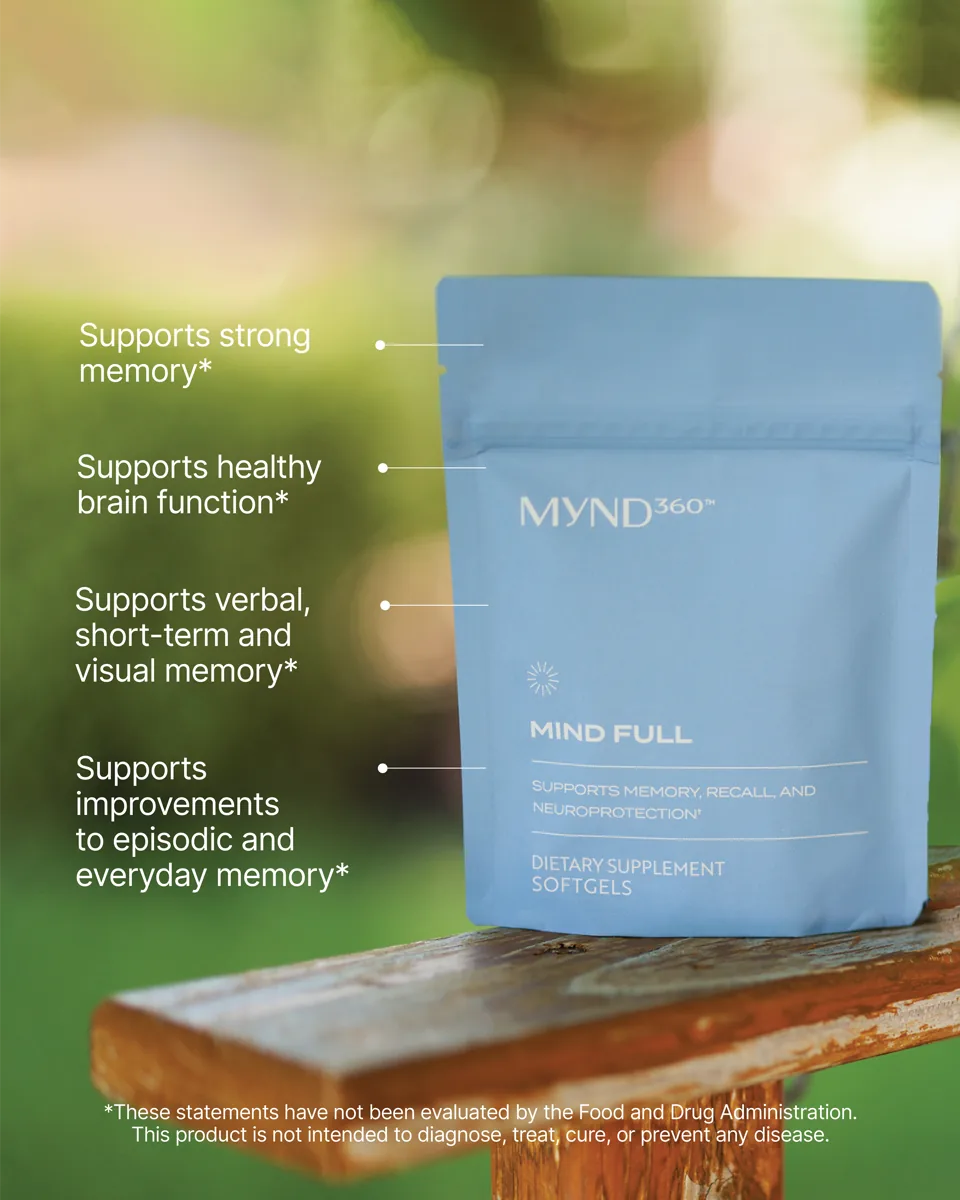
It supports the brain's normal antioxidant defenses and healthy cellular aging in brain tissue over time, provides astaxanthin and grape polyphenols, and complements omega-3 intake and a colorful diet.

How do I take it?

Take two softgels daily with a meal that has some fat, since the antioxidants are fat-soluble. This is a consistency-over-time formula. Availability has varied, so check the current site.

What makes it different?

The brain is metabolically busy and rich in delicate fats, so antioxidant support makes real sense there. It is long-game maintenance support, not a same-day focus boost.