
When you buy through our links, we earn a small commission -- and that is what funds all the free education here. It never costs you more. Products are not intended to diagnose, treat, cure, or prevent any disease.
What it is
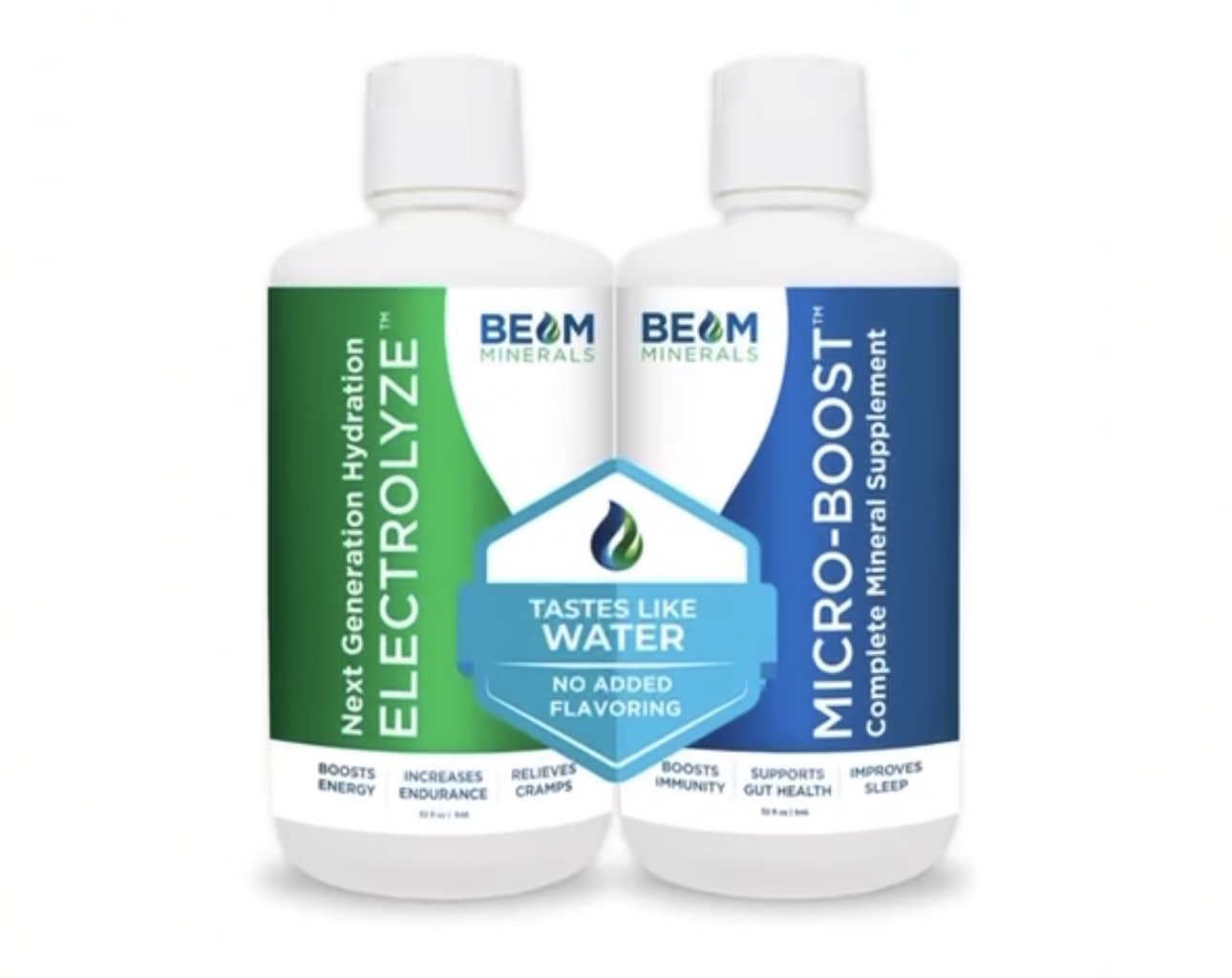
A full-spectrum liquid mineral complex delivered in a fulvic and humic acid base, which acts as a natural carrier that helps shuttle trace minerals into the body. It aims to put back the wide range of trace and major minerals that depleted soils and heavily filtered water tend to strip out of a modern diet. The minerals arrive in an ionic, ready-to-absorb form rather than as hard-to-break-down tablets.
Why the evidence supports it
Minerals are the charged particles behind a huge share of the body's enzyme reactions, and it is well established that people running on modern, soil-depleted food tend to come up short across several at once. Fulvic and humic substances are characterized as natural binders that hold trace minerals and help carry them across biological barriers, and a fulvic-and-humic preparation like this has cleared a 90-day toxicology screen without target-organ concerns. That makes a full-spectrum, absorbable liquid one of the more sensible, lower-risk ways to cover the mineral base -- which is the cell's Exchange work exactly, moving minerals in and out to carry signals, nutrients, and fluid balance. The core mineral science is well established; the fulvic-delivery piece is promising and still growing.
What it supports
- Supports healthy mineral balance across a broad spectrum
- Provides trace minerals often missing from modern diets
- Supports normal fluid and electrolyte balance
- Supports the many enzyme reactions that depend on minerals
Which function it supports
Ties to the cell's Exchange function -- minerals are the charged particles that move across cell boundaries to carry signals, nutrients, and fluid balance.
Learn the why behind this pillarHow it relates to your cells and mind
Every product here ties back to a specific job your body does. This one touches the functions below -- follow either link to see the mechanism in full, then dig into the studies.
What it is made of -- and the mechanisms behind it
Each ingredient acts on several of the body's functions. Taken together, this product touches these cell and mind functions -- follow any to see the mechanism in full.
The ingredients
Mechanisms drawn from our ingredient knowledge base (5 profiled ingredients). Structure and function only -- not a treatment claim.
The science on the ingredients
These studies are research on the ingredients and mechanisms in this product, not on the finished product itself, and they are shown for education. For this ingredient most of the published work is laboratory or animal research rather than human trials, so read it as biology worth knowing rather than proof of an effect in people. Nothing here is medical advice, and nothing here may be used to diagnose, treat, cure, or prevent any disease. Talk to your own provider about what is right for you.
- Effects of Feed Supplementation With Fulvic Acid on the Systemic and Mucosal Protective Mechanisms of Juvenile Rainbow Trout (Oncorhynchus mykiss).
Journal of animal physiology and animal nutrition · 2025
A randomized controlled trial on humic and fulvic acids found that adding 0.5%-1% of fulvic acid to the feed of juvenile rainbow trout can help to improve their immune and antioxidative defenses and thereby support the wellbeing of fish.
- The influence of fulvic acid on molybdenum bioavailability assessed by Caenorhabditis elegans.
Journal of environmental management · 2026
In a C. elegans model, researchers found that fulvic acid influenced the bioavailability and combined toxicity of molybdenum, with high-concentration molybdenum exposure alone causing significant survival and movement abnormalities.
- Enhancing the mycoremediation potential: The multifaceted role of fulvic acid in polystyrene microplastics degradation by Phanerochaete chrysosporium.
Journal of hazardous materials · 2026
Adding fulvic acid nearly doubled the fungal degradation rate of polystyrene microplastics by Phanerochaete chrysosporium, working partly through non-biochemical surface etching that improved the plastic's bioaccessibility.
- Humic and Fulvic Acid Fractions Differentially Regulate Methane-Dependent Arsenate Reduction in Paddy Soils.
Environmental science & technology · 2026
In paddy soils, an aromatic quinone-rich humic acid fraction enhanced electron transfer coupling methane oxidation to arsenate reduction, increasing arsenite release, while a carboxyl-rich fulvic fraction blocked this coupling via acetate accumulation.
- Genotoxicity of Carbohydrate Derived Fulvic Acid.
Toxicology reports · 2026
Toxicology testing of a standardized carbohydrate-derived fulvic acid (CHD-FA) found only a weak genotoxic effect in human lymphocytes, likely attributable to test solution pH rather than the compound itself, indicating it is not genotoxic in the models used.
- Impact of fulvic acid on copper exposure in Ulva prolifera: Integrative insights from growth, physiology, transcriptomics, and physico-chemical characteristics.
Journal of hazardous materials · 2026
In a marine algae species, fulvic acid bound copper and reduced its uptake into cells, easing high-copper toxicity by restoring photosynthesis and energy-metabolism gene expression that copper exposure had suppressed.
Rhythms of life: melatonin, nutrition, sleep, and antioxidant strategies for healthy agingExpert review2026
This review summarizes how melatonin production, amplitude, and receptor sensitivity change with age and how those shifts connect to sleep, metabolism, and cognitive health.
Cristina Manuela Drăgoi; Ion-Bogdan Dumitrescu; Alina Crenguţa Nicolae -- Frontiers in Neuroscience
Magnesium as a Bioenergetic Checkpoint Linking Mitochondrial Function, Metabolic Disease, and AgingExpert review2026
This review positions magnesium as a bioenergetic checkpoint, describing how magnesium availability governs the functional ATP pool, supports oxidative phosphorylation enzymes, and stabilizes mitochondrial performance.
Huang CW, Wen CY, Tsai AP, Wang B, Tsui KH, Hsu YJ, Li CJ -- Aging Cell
Evaluation of the mutagenic and genotoxic potential of Wujin: a traditional mineral medicine.EmergingAnimal study2026
Oral administration of the mineral medicine Wujin at doses up to 1500 mg per kg did not significantly increase micronucleated erythrocyte counts, indicating low genotoxic potential.
Li Q; Li J; Zhang Y; Jiang A; Tang S; Xu Z; Cai Q; Ji L -- Journal of ethnopharmacology
Antimony isotope fractionation during complexation with humic acid.EmergingPreclinical study2026
Antimony's environmental fate is strongly influenced by interactions with dissolved organic matter such as humic acid, affecting isotope fractionation behavior during adsorption.
Zeng S; Zhou W; Zhou Z; Zhou J; Sun G; Liu P -- Journal of hazardous materials
Analgesic Efficacy of Native Himalayan Shilajit as Add-On Therapy in Myofascial Pain Syndrome: An Exploratory Pilot Clinical TrialEmergingClinical trial2026
In 76 Indian adults with myofascial pain at AIIMS Rishikesh, adding 250 mg/day Himalayan shilajit for 49 days was followed by 45% lower pain scores, but the trial was open-label with no placebo arm.
Darshan Basavaraja; Ravi Kant; Venkatesh S Pai; Rajkumar Yadav; Gaurav Chikara; Shailly Tomar; Debabrata Sircar; Katkar Rahul Sambhaji; Prasan Kumar Panda
Organic precursors and formation mechanisms of iodinated phenolic disinfection byproducts in drinking water during chloraminationEmerging2026
Hydrophobic acid fractions and organic matter above 10 kDa drove iodinated phenolic by-product formation during chloramination, with fulvic acid the strongest model precursor among those tested.
Gong T; Wang J; Wu H -- Water research
Microbial necromass analogues reshape composting humification pathways.2026
A composting study found that chitin addition increased early microbial biomass and diversity but inhibited humic acid formation while promoting fulvic acid accumulation, compared to N-acetyl-glucosamine addition.
Chen W; Yang Y; Chang S; Zhang K; Xu T; Li J; Liang X; Xu Y; Nghiem LD; Johir MAH; Wei Y -- Bioresource technology
Safety and Efficacy of TruBlk™ Shilajit Resin Supplementation on Physical Performance and Blood Biomarkers in Healthy Adults: A 28-Day Open-Label Pilot StudyEmergingPrimary research (design unspecified)2026
In 25 healthy Indian men taking 500 mg Shilajit resin daily for 28 days with no control group, leg press strength rose 13 percent, fatigue scores fell 32 percent and C-reactive protein fell 25 percent.
Yadav D; Mishra S; Shah KM; Reddy ST; Gupta R; Pandey P -- Cureus
The influence of fulvic acid on molybdenum bioavailability assessed by Caenorhabditis elegans.2026
In a C. elegans model, researchers found that fulvic acid influenced the bioavailability and combined toxicity of molybdenum, with high-concentration molybdenum exposure alone causing significant survival and movement abnormalities.
Huang Q; Cui L; Song Z; Li M; Zhang C; Tang W; Huang J -- Journal of environmental management
Genotoxicity of Carbohydrate Derived Fulvic Acid.2026
Toxicology testing of a standardized carbohydrate-derived fulvic acid (CHD-FA) found only a weak genotoxic effect in human lymphocytes, likely attributable to test solution pH rather than the compound itself, indicating it is not genotoxic in the models used.
Clark SJ; Graz M -- Toxicology reports
Impact of fulvic acid on copper exposure in Ulva prolifera: Integrative insights from growth, physiology, transcriptomics, and physico-chemical characteristics.2026
In a marine algae species, fulvic acid bound copper and reduced its uptake into cells, easing high-copper toxicity by restoring photosynthesis and energy-metabolism gene expression that copper exposure had suppressed.
Jia T; Zhang G; Li Y; Yang X; Xu N; Xiang R -- Journal of hazardous materials
Upgrading agricultural waste-derived biochemical fulvic acid: fungal co-culture-mediated structural remodeling and enhanced plant biostimulant potential.2026
Co-culturing two fungi to bioactivate agricultural waste-derived fulvic acid increased its oxygen- and nitrogen-containing functional groups, and the modified fulvic acid boosted wheat plant height, chlorophyll content, and antioxidant enzyme activity compared to untreated fulvic acid.
Xi Z; Li H; Zhong H; Huo J; Mu X; Li X -- Bioresource technology
Environmental exposure to rare earth elements and respiratory health: an emerging public health concernEmergingExpert review2026
This review reports inhaled rare earth element particles from mining and industry can lodge deep in the lungs, triggering oxidative stress and immune disruption in experimental models, though human exposure thresholds remain poorly defined.
Jie Zhou; Pengcheng Liang; Weijian Zhu; Runan Zhang; Bin Zhong
An Allergy-Based Approach to Orofacial Granulomatosis: A Narrative ReviewEmergingExpert review2026
In a review of 46 studies covering 158 patch-tested patients with orofacial granulomatosis, common allergens included fragrance, nickel, benzoic acid and cinnamon, and avoiding the trigger allergen improved symptoms in 71 percent of those who tried it.
Vikram N Sahni; Rebecca Yim; Aamir Amanullah; Dev Sahni; Douglas Powell; Rosemary deShazo; Jamie L W Rhoads; Jennie T Clarke; Christopher B Hansen; John J Zone; Christopher M Hull; Zachary H Hopkins
A comprehensive examination of the impact of environmental pollution on lung cancer: A reviewEmergingExpert review2026
A review outlines how airborne pollutants like fine particulate matter and nitrogen oxides, plus contaminants such as microplastics, pesticides, asbestos, cadmium and nickel, may raise lung cancer risk through oxidative stress and DNA damage.
Hongyan Zhang; Hongyi Wei; Sijia Han; Lufeng Zheng; Xiaodong Chen; Ziwei Li; Lanbo Wang
Rare Earth Elements and Technology-Related Trace Metals in Paediatric Scalp Hair: A 2001 Urban Baseline from SpainEmerging2026
Rare earth elements and technology-related trace metals in Spanish children's scalp hair showed low nanogram-per-gram levels with multi-pathway environmental sources suggested.
Antonio Peña-Fernández; Manuel Higueras; Roberto Valiente Borox; M Carmen Lobo-Bedmar
Blood trace element concentrations and adult hypertension: A systematic review and meta-analysis of observational studies.2026
A meta-analysis of observational studies found blood cadmium and copper, not magnesium, selenium, or zinc, were higher in hypertensive adults, though heterogeneity was extremely high and results are hypothesis-generating.
Musung JM; Muyumba EK; Mukuku O; Kakoma PK; Banze J; Kilembi MC; Bito V -- Environmental science and pollution research international
Contact Sensitisation Trends in Slovenian Children and Adolescents: A Retrospective Single-Centre StudyEmerging2026
Reviewing 1,052 Slovenian children and adolescents patch tested across three decades, nickel allergy fell sharply from 12.6 to 4.0 percent, while textile dye and the preservative methylisothiazolinone emerged as newly important allergens.
Zorko MS; Lunder T; Peric T -- Contact dermatitis
Palmitoylethanolamide for Nickel Allergy: Plausible, Untested, and Worth ConsideringEmergingPrimary research (design unspecified)2026
In cells, palmitoylethanolamide was associated with reduced pain intensity across various pain-related conditions, through modulation of inflammatory pathways.
Irene Palenca; Silvia Basili Franzin; Giovanni Sarnelli; Giuseppe Esposito
Surface La Vacancy-Induced Activating Surface Lattice Oxygen of LaFeO<sub>3</sub> for Boosting Formaldehyde Sensing PerformanceEmerging2026
Researchers engineered a lanthanum-deficient metal oxide material that detected formaldehyde gas at very low concentrations in lab air testing, a step toward better indoor formaldehyde sensors.
Hongda Zhang; Liang Zhao; Yunpeng Xing; Chengchao Yu; Sihao Zhi; Teng Fei; Sen Liu; Haiyan Zhang; Tong Zhang
Allergic Contact Dermatitis of the Hands: A Retrospective Cohort Study From Turkey Between 1996 and 2021Emerging2026
Nickel, methylchloroisothiazolinone/methylisothiazolinone, and fragrances were leading causes of hand allergic contact dermatitis with occupational predominance.
Özkaya E; Erdem Y; Aydoğdu İH; Güreler Sirkeci E -- Contact dermatitis
Eyelid Dermatitis: A 5-Year Retrospective Review from a Metropolitan Contact Dermatitis ClinicEmerging2026
Among 245 patients with eyelid dermatitis over five years, the surfactant cocamidopropyl betaine, preservatives, fragrance chemicals, and nickel were the leading allergens, most often traced to shampoo and makeup.
Divya R Alley; Hani Abi; Sara Hylwa; Anne Neeley; Solveig Ophaug; Katherine Lee
Pediatric Allergic Contact Dermatitis: Sensitization Patterns for a Practical PanelEmerging2026
In 86 children with skin allergies aged 1 to 17, nickel was the most common trigger, and a shortened 14 allergen patch test panel captured the relevant reactions in every age group.
Merve Şendal; Nilay Çalışkan; Deniz Ozceker
The Sr-HA-loaded PLGA cage structure combines cells to construct a bone tissue repair unitEmerging2026
Injectable PLGA microspheres coated with strontium-doped hydroxyapatite and loaded with pre-osteoblasts and endothelial cells promoted osteogenic differentiation and angiogenesis while inhibiting osteoclast differentiation in vitro.
Huixing Yi; Guowen Duan; Siyu Li; Dongbiao Chang; Lulu Han; Yinhao Lai; Jun Sheng; Suiyan Li; Jie Weng
Balanced by design -- we show supporting and contradicting findings. Search all studies
No product works in isolation
Every cell function above -- Sense, Exchange, Transform, Build, Maintain, Adapt -- needs the same broad base of optimal micronutrient levels running underneath it, all the time. Beam Minerals is not a stand-alone fix; it is one piece that plugs into that larger system. The foundation comes first, and this supports it.
Stacks well with
Pick your goal -- here is what Beam Minerals pairs with for each. Nothing works in isolation; these share the same systems.
For Minerals
For Detox
For Women's Health
For Energy & Mitochondria
Foundational, or targeted?
Not everything in the shop is meant to be taken forever. Some products here are foundational -- a daily nutrient base built for long-term, ongoing use. Others are targeted -- shorter-term support for a specific season, not a lifelong habit. If you are not sure which one this is, that is a fair question to ask us before you buy.
Learn more, on your terms
Do not take our word for it -- go read. Each topic below opens a pre-loaded search so you can explore the nutrient, the mechanism, or the device for yourself.
Search the full studies libraryHow to use it
Add the daily amount to water or juice and drink, usually once a day. Many people take it in the morning. Follow the amount on the label.
Where to get it
We are lining up the best way to get this one to you. In the meantime, reach out and we will point you the right way -- or browse the full shop to see every product.
See the full shopThe studies
See the research behind the science we point to.
Explore studiesThe blog
Plain-language reads on how it all fits together.
Read the blogOptimal nutrients are the definition of longevity
Long-term cell function depends on having what it needs, at the level it needs it, for as long as it needs it. That is the whole thesis behind everything we point you to here.
When you buy through our links, we earn a small commission -- and that is what funds all the free education here. It never costs you more. Products are not intended to diagnose, treat, cure, or prevent any disease.
Beam Minerals is a full-spectrum liquid mineral supplement designed to be highly absorbable. It aims to put back the wide range of trace and major minerals that depleted soils and heavily filtered water tend to leave out of a modern diet. It fits people who eat reasonably well but still run low on minerals.
FAQ
What does Beam Minerals support?
It supports healthy mineral balance across a broad spectrum, provides trace minerals often missing from modern diets, supports normal fluid and electrolyte balance, and supports the many enzyme reactions that depend on minerals.
How do I take it?
Add the daily amount to water or juice and drink, usually once a day. Many people take it in the morning. Follow the amount on the label.
What makes it different?
It is a liquid, full-spectrum form the body can actually take up, so it covers a broad mineral base without megadosing any single mineral.