EVIDENCE-BACKED

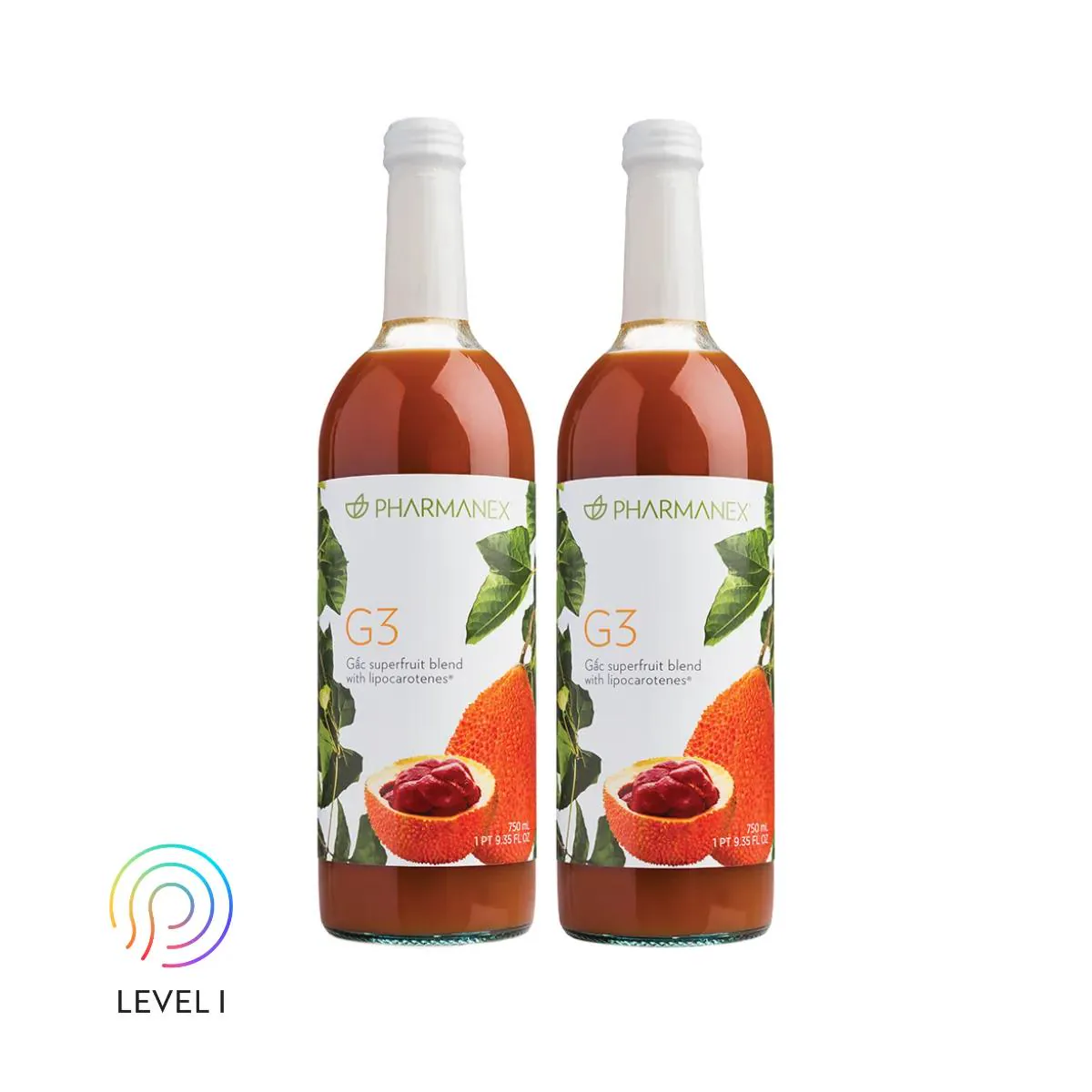
g3 Juice

Four of the most pigment-dense superfruits on earth, in one glass.

Epigenetics

PharmanexCell
g3 Juice — photo 1 of 3g3 Juice — photo 2 of 3g3 Juice — photo 3 of 3

When you buy through our links, we earn a small commission — and that is what funds all the free education here. It never costs you more. Products are not intended to diagnose, treat, cure, or prevent any disease.

What it is

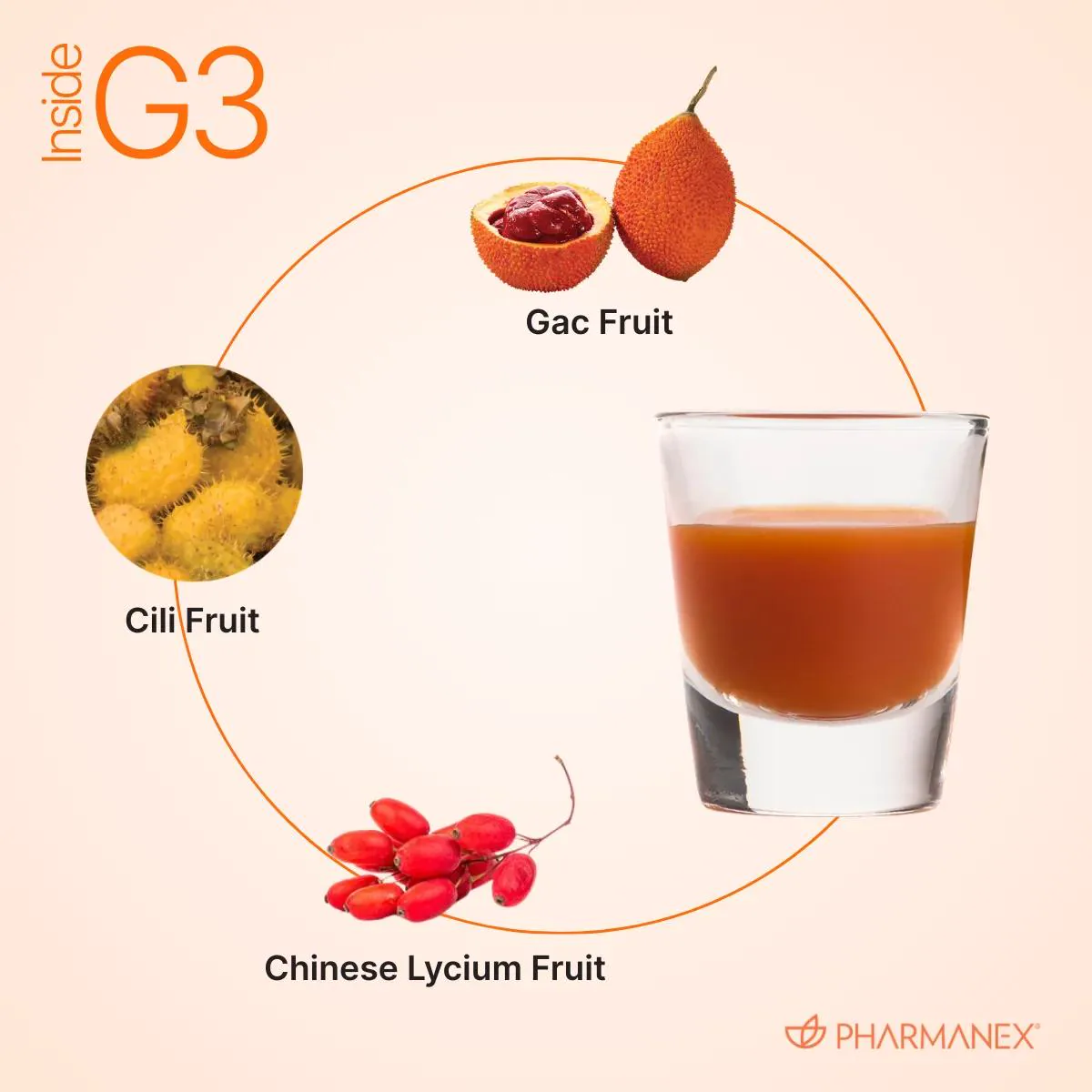
A juice blend built around four deeply pigmented, carotenoid- and polyphenol-rich fruits — gac, cili (Rosa roxburghii), sea buckthorn, and Chinese lycium (wolfberry) — rounded out with pear, grape, and apple. Taken as about 60 mL daily, it draws on Pharmanex's plant-medicine heritage as a whole-fruit way to take in dietary antioxidants.

Why the evidence supports it

The four signature fruits are genuinely among the more carotenoid- and polyphenol-dense foods studied, and the broader research on dietary carotenoids consistently ties them to the body's antioxidant defenses and healthy cellular aging — and, more specifically, to skin that handles light better from the inside, since carotenoids concentrate in the skin, and, more modestly, to normal immune function, where they also collect. Because carotenoids are fat-soluble, taking it with a little dietary fat is what actually gets them absorbed. The honest limits: it is made from fruit concentrates, so it is not a stand-in for whole fruit and fiber, and the exact carotenoid content per serving is not fully disclosed. Framed that way, it is a pleasant, evidence-based way to feed the cell's Maintain function — dietary antioxidants that help cells buffer oxidative stress and hold their healthy baseline, with skin and immune tissue among the first to draw on them.

What it supports

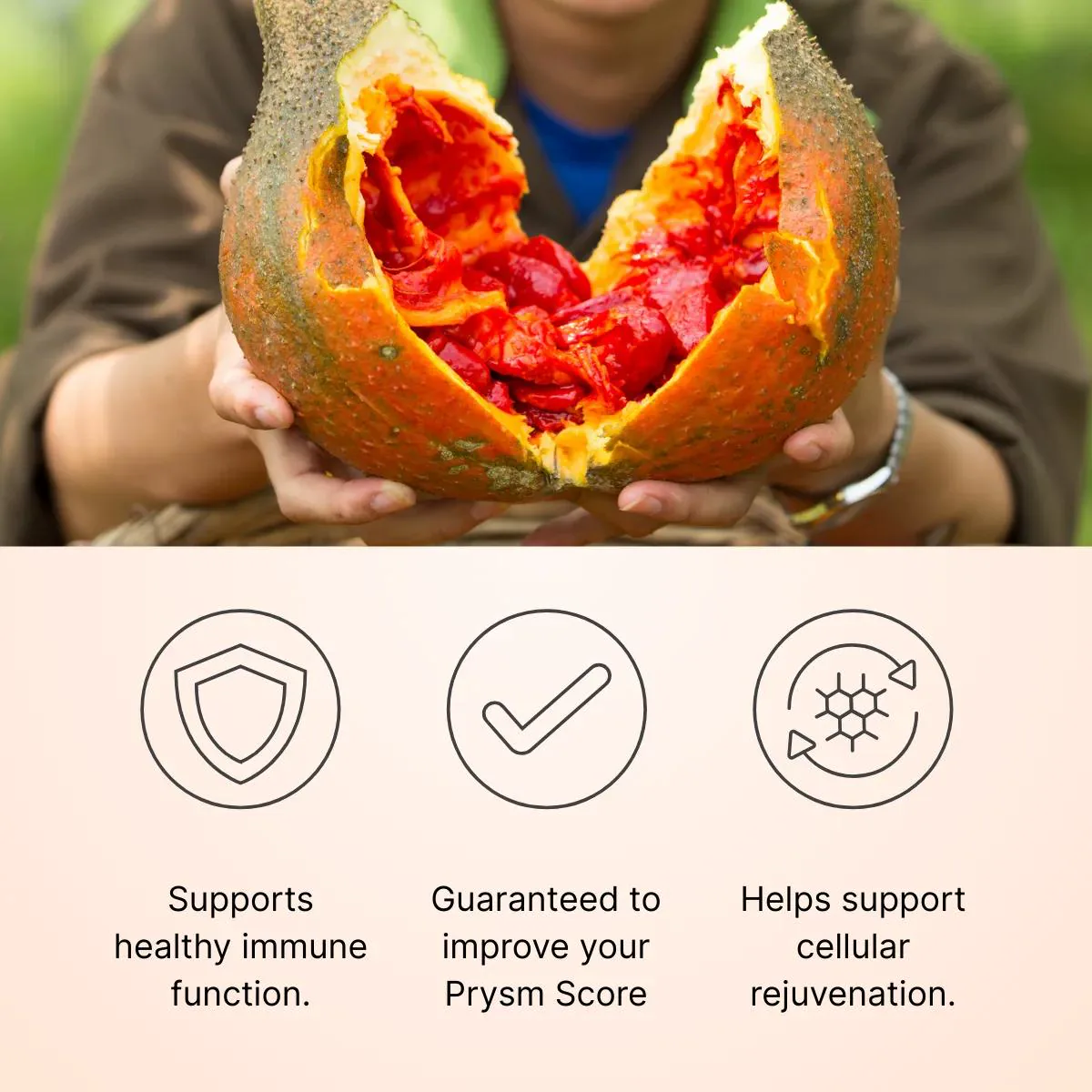
  • Supports the body's normal antioxidant defenses
  • Provides carotenoids and polyphenols from deeply pigmented fruits
  • Supports healthy cellular aging as part of a balanced diet
  • Complements a diet rich in whole fruits and vegetables

Which function it supports

CellMaintain
antioxidant defense

Ties to the cell's Maintain function — dietary carotenoids and polyphenols help buffer oxidative stress so cells can hold their healthy baseline.

Learn the why behind this pillar

How it relates to your cells and mind

Every product here ties back to a specific job your body does. This one touches the functions below — follow either link to see the mechanism in full, then dig into the studies.

What it is made of — and the mechanisms behind it

Each ingredient acts on several of the body's functions. Taken together, this product touches these cell and mind functions — follow any to see the mechanism in full.

The ingredients

Mechanisms drawn from our ingredient knowledge base (3 profiled ingredients). Structure and function only — not a treatment claim.

The science on the ingredients

Powered by CellWell.life
  • Hydrolysis of zeaxanthin esters by carboxyl ester lipase during digestion facilitates micellarization and uptake of the xanthophyll by Caco-2 human intestinal cells.2006

    In lab digestion tests and cultured human intestinal cells, an enzyme in the gut broke down zeaxanthin esters from foods like wolfberry and peppers, and this breakdown increased the cells' uptake of zeaxanthin more than twelvefold.

    Chitchumroonchokchai C; Failla ML — The Journal of nutrition

  • Hypoglycemic and hypolipidemic effects and antioxidant activity of fruit extracts from Lycium barbarum.2004

    In rabbits made diabetic or given high-fat diets, wolfberry fruit extracts lowered blood glucose and serum cholesterol and triglycerides while raising HDL cholesterol after ten days, with antioxidant activity also measured in the extracts.

    Luo Q; Cai Y; Yan J; Sun M; Corke H — Life sciences

  • Fatty acid and carotenoid composition of gac (Momordica cochinchinensis Spreng) fruit.2004

    Chemical analysis of gac fruit found its oily aril was rich in lycopene and beta-carotene along with oleic, palmitic and linoleic fatty acids, while the seeds were mostly stearic acid, describing composition rather than a health effect.

    Ishida BK; Turner C; Chapman MH; McKeon TA — Journal of agricultural and food chemistry

  • DNA damage and aging.2004

    A theoretical review proposed that oxidative damage to the DNA of cells, repaired imperfectly by one specific repair pathway, may be a major driver of aging across mammals, based on existing genetic and biochemical research.

    Karanjawala ZE; Lieber MR — Mechanisms of ageing and development

  • Short-term supplementation with lutein affects biomarkers of lutein status similarly in young and elderly subjects.2003

    In 12 young and 17 older healthy adults given 9 mg lutein daily for 5 weeks, blood and cheek-cell lutein rose in both groups, but eye macular pigment density and fat-tissue lutein did not change.

    Cardinault N; Gorrand JM; Tyssandier V; Grolier P; Rock E; Borel P — Experimental gerontology

  • Evaluation of antioxidant activity of leaf extract of Seabuckthorn (Hippophae rhamnoides L.) on chromium(VI) induced oxidative stress in albino rats.2003

    In male rats given a toxic dose of chromium for 30 days, sea buckthorn leaf extract at 100 to 250 mg per kg body weight reduced the chromium-induced drop in glutathione and rise in oxidative stress markers.

    Geetha S; Sai Ram M; Mongia SS; Singh V; Ilavazhagan G; Sawhney RC — Journal of ethnopharmacology

  • Smidt C.R. and Shieh D. Non-invasive biophotonic assessment of skin careotenoids as a biomarker of human antioxidant status. FASEB J 2003; submitted.2003
  • The role of stem cells and gap junctional intercellular communication in carcinogenesis.2003

    A theoretical review proposed that both adult stem cells and the loss of gap junction communication between cells play central roles in cancer development, integrating existing laboratory findings rather than reporting new data.

    Trosko JE — Journal of biochemistry and molecular biology

  • Hydrogen peroxide scavenging, antioxidant and anti-radical activity of some phenolic acids.2003

    In test tube assays, gallic acid and pyrogallol showed the strongest antioxidant and hydrogen peroxide scavenging activity among tested phenolic acids, with potency rising alongside the number of hydroxyl groups on each molecule.

    Sroka Z; Cisowski W — Food and chemical toxicology : an international journal published for the British Industrial Biological Research Association

  • Antioxidative activities of volatile extracts from green tea, oolong tea, and black tea.2003

    In laboratory oxidation assays, volatile extracts from green tea showed the strongest antioxidant activity, nearly stopping fat oxidation over 40 days, while roasted green tea extract showed the weakest effect and some pro-oxidant behavior.

    Yanagimoto K; Ochi H; Lee KG; Shibamoto T — Journal of agricultural and food chemistry

  • Identification and quantification of zeaxanthin esters in plants using liquid chromatography-mass spectrometry.2003

    Using mass spectrometry, researchers identified and measured zeaxanthin esters in wolfberry, Chinese lantern, orange pepper and sea buckthorn, finding these plants to be valuable sources for producing stable zeaxanthin extracts.

    Weller P; Breithaupt DE — Journal of agricultural and food chemistry

  • Protective effect of colored rice over white rice on Fenton reaction-based renal lipid peroxidation in rats.2002

    In rats given a kidney-damaging iron compound, diets including red or black rice prevented the rise in kidney lipid peroxidation seen with white rice, an effect that scaled with how much colored rice was fed.

    Toyokuni S; Itani T; Morimitsu Y; Okada K; Ozeki M; Kondo S — Free radical research

  • Antioxidant activity of prune (Prunus domestica L.) constituents and a new synergist.2002

    Laboratory analysis of prune extract identified antioxidant compounds including a new synergist chemical, and found the fruit's overall antioxidant activity in a test tube assay depended mainly on its caffeoylquinic acid content.

    Kayano S; Kikuzaki H; Fukutsuka N; Mitani T; Nakatani N — Journal of agricultural and food chemistry

  • 1,1-Diphenyl-2-picrylhydrazyl radical-scavenging active compounds from greater cardamom (Amomum subulatum Roxb.).2001

    Chemical fractionation of greater cardamom fruit isolated four antioxidant compounds, two of which scavenged free radicals in a test tube assay more strongly than vitamin E or vitamin C at the same concentration.

    Kikuzaki H; Kawai Y; Nakatani N — Journal of nutritional science and vitaminology

  • Serum concentrations of carotenoids and vitamins A, E, and C in control subjects from five European countries.2001

    In blood samples from 349 healthy nonsmoking adults across five European countries, carotenoid and vitamin C and E levels varied by region, establishing reference ranges rather than testing any intervention or health outcome.

    Olmedilla B; Granado F; Southon S; Wright AJ; Blanco I; Gil-Martinez E — The British journal of nutrition

  • Macular pigment in donor eyes with and without AMD: a case-control study.2001

    In donated retinas from 56 people with age-related macular degeneration and 56 without, lutein and zeaxanthin levels were lower in the AMD retinas, most reliably in the outer region, linked to an 82% lower risk in the top quartile.

    Bone RA; Landrum JT; Mayne ST; Gomez CM; Tibor SE; Twaroska EE — Investigative ophthalmology & visual science

  • Phase II randomized clinical trial of lycopene supplementation before radical prostatectomy.2001

    In 26 men with localized prostate cancer given lycopene or no supplement for 3 weeks before surgery, the lycopene group had fewer positive surgical margins and less high-grade pre-cancerous tissue, though the trial was too small for firm conclusions.

    Kucuk O; Sarkar FH; Sakr W; Djuric Z; Pollak MN; Khachik F — Cancer epidemiology, biomarkers & prevention : a publication of the American Association for Cancer Research, cosponsored by the American Society of Preventive Oncology

  • Effect of natural phenolic acids on DNA oxidation in vitro.2001

    In vitro tests using fish sperm DNA, several natural phenolic acids from food protected against iron- and peroxide-induced DNA oxidation, while two related compounds showed no protection and one actually increased oxidative DNA damage.

    Lodovici M; Guglielmi F; Meoni M; Dolara P — Food and chemical toxicology : an international journal published for the British Industrial Biological Research Association

  • Structural characterization of the glycan part of glycoconjugate LbGp2 from Lycium barbarum L.2001

    Laboratory structural analysis identified the carbohydrate backbone and composition of an immune-active glycoconjugate called LbGp2 purified from wolfberry fruit, describing its chemistry rather than testing any effect in animals or people.

    Peng X; Tian G — Carbohydrate research

  • Cytotoxic triterpenes from stem bark of Physocarpus intermedius.2000

    Seven plant compounds isolated from Physocarpus intermedius stem bark killed five different cultured human tumor cell lines in vitro, including lung, ovarian, melanoma, nervous system and colon cancer cells.

    Kim YK; Yoon SK; Ryu SY — Planta medica

  • Lutein and zeaxanthin in the eyes, serum and diet of human subjects.2000

    In 19 living subjects and 23 eye tissue donors, dietary lutein and zeaxanthin intake showed a weak positive link to blood levels, and blood levels showed a weak link to eye macular pigment density.

    Bone RA; Landrum JT; Dixon Z; Chen Y; Llerena CM — Experimental eye research

  • Effects of dietary supplementation with sea buckthorn (Hippophaë rhamnoides) seed and pulp oils on atopic dermatitis.1999

    In 49 people with atopic dermatitis given sea buckthorn oil or paraffin oil daily for 4 months, dermatitis improved significantly with pulp oil and paraffin oil, but not significantly with seed oil.

    Yang B; Kalimo KO; Mattila LM; Kallio SE; Katajisto JK; Peltola OJ — The Journal of nutritional biochemistry

  • Fruits and vegetables that are sources for lutein and zeaxanthin: the macular pigment in human eyes.1998

    Chemical analysis of 33 fruits and vegetables plus egg yolk found corn and egg yolk had the highest proportion of lutein and zeaxanthin, while orange pepper, kiwi, grapes and spinach also contained meaningful amounts.

    Sommerburg O; Keunen JE; Bird AC; van Kuijk FJ — The British journal of ophthalmology

  • [Scavenging effect of total flavonoids of lycium barbarum L on active oxygen radicals and inhibitory effects on heat output from L1210 cells].1998

    In lab tests, flavonoid extract from wolfberry leaves scavenged free radicals in a dose-dependent way and suppressed heat output from immune cells and cultured mouse leukemia cells, indicating antioxidant and cell-suppressing activity in vitro.

    Huang Y; Tan A; Shen Y; Lu J — Wei sheng yan jiu = Journal of hygiene research

Balanced by design — we show supporting and contradicting findings. Search all studies

No product works in isolation

Every cell function above — Sense, Exchange, Transform, Build, Maintain, Adapt — needs the same broad base of optimal micronutrient levels running underneath it, all the time. g3 Juice is not a stand-alone fix; it is one piece that plugs into that larger system. The foundation comes first, and this supports it.

Stacks well with

Pick your goal — here is what g3 Juice pairs with for each. Nothing works in isolation; these share the same systems.

Foundational, or targeted?

Not everything in the shop is meant to be taken forever. Some products here are foundational — a daily nutrient base built for long-term, ongoing use. Others are targeted -- shorter-term support for a specific season, not a lifelong habit. If you are not sure which one this is, that is a fair question to ask us before you buy.

Learn more, on your terms

Do not take our word for it — go read. Each topic below opens a pre-loaded search so you can explore the nutrient, the mechanism, or the device for yourself.

Search the full studies library

How to use it

Drink one serving of about 60 mL daily, on its own or with a meal. Because it contains fruit concentrates, treat it as a supplement to whole fruit, not a replacement.

Where to get it

We are lining up the best way to get this one to you. In the meantime, reach out and we will point you the right way — or browse the full shop to see every product.

See the full shop

Optimal nutrients are the definition of longevity

Long-term cell function depends on having what it needs, at the level it needs it, for as long as it needs it. That is the whole thesis behind everything we point you to here.

When you buy through our links, we earn a small commission — and that is what funds all the free education here. It never costs you more. Products are not intended to diagnose, treat, cure, or prevent any disease.

g3 Juice is a juice blend built around four carotenoid- and polyphenol-rich fruits — gac, cili, sea buckthorn, and Chinese lycium — rounded out with pear, grape, and apple. It draws on a plant-medicine heritage as a whole-fruit way to take in antioxidants. It fits people who like their antioxidants the way nature packages them.

Common questions

What does g3 Juice support?+

It supports the body's normal antioxidant defenses and healthy cellular aging as part of a balanced diet, provides carotenoids and polyphenols from deeply pigmented fruits, and complements a diet rich in whole fruits and vegetables.

How do I take it?+

Drink one small serving daily, on its own or with a meal. Because it contains fruit concentrates, treat it as a supplement to whole fruit, not a replacement.

What makes it different?+

These four fruits are genuinely pigment-rich. It contains fruit concentrates rather than whole fruit and fiber, so it is framed as tasty antioxidant support that complements real fruit.