EVIDENCE-BACKED

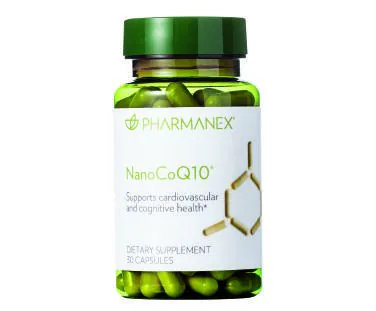
Nano CoQ10

CoQ10, the mitochondrial spark plug -- in a form you actually absorb.

Energy & Mitochondria

PharmanexCell
Nano CoQ10

$62.00

$78.00 save $16.00 -- applied automatically through this link

When you buy through our links, we earn a small commission -- and that is what funds all the free education here. It never costs you more. Products are not intended to diagnose, treat, cure, or prevent any disease.

What it is

A CoQ10 (ubiquinone) supplement in which each molecule is wrapped in a cyclodextrin carrier meant to improve how well the normally oil-like nutrient disperses and absorbs, with added vitamin E. CoQ10 is a compound your mitochondria use to turn fuel into usable cellular energy, and the body's own levels tend to ease down with age. It provides about 30 mg of CoQ10 per capsule, taken once daily with food.

Why the evidence supports it

CoQ10 is one of the better-characterized mitochondrial nutrients, sitting directly in the energy chain where fuel becomes ATP, and it doubles as an antioxidant that helps recycle vitamin E. The delivery angle here is the cyclodextrin carrier, meant to solve CoQ10's real absorption problem -- though the specific up-to-tenfold bioavailability claim is the part that still needs the hard data behind it. This is a lower dose than the amounts used in most CoQ10 research, so it reads as sensible, evidence-based support for the cell's Transform function -- everyday mitochondrial energy production -- rather than a high-dose therapeutic.

What it supports

  • Supports healthy mitochondrial energy production
  • Supports the body's normal antioxidant defenses
  • Provides CoQ10, a nutrient the body makes less of with age
  • Complements a foundation of good sleep and nutrition

Which function it supports

CellTransform
mitochondria & ATPantioxidant defense

Ties to the cell's Transform function -- CoQ10 sits inside the mitochondria's energy chain, where fuel is converted into the ATP your body runs on.

Learn the why behind this pillar

How it relates to your cells and mind

Every product here ties back to a specific job your body does. This one touches the functions below -- follow either link to see the mechanism in full, then dig into the studies.

What it is made of -- and the mechanisms behind it

Each ingredient acts on several of the body's functions. Taken together, this product touches these cell and mind functions -- follow any to see the mechanism in full.

The ingredients

Mechanisms drawn from our ingredient knowledge base (2 profiled ingredients). Structure and function only -- not a treatment claim.

What’s actually in it

Transcribed from the manufacturer’s official Product Information Page, exactly as printed. Ingredient names that link open our research page for that ingredient, with the studies behind it.

Supplement Facts panel for Nano CoQ10
Amount per 1 capsuleAmount% DV
Vitamin Efrom Mixed Tocopherols15 IU50%
Coenzyme Q10Ubiquinone30 mg**
Other ingredients:
Microcrystalline Cellulose, Cyclodextrin, Stearic Acid, Silicon Dioxide.

CoQ10 is delivered in a cyclodextrin carrier. Panel read from Nu Skin's own static product-label page, which prints the Supplement Facts as text.

Source: official Product Information Page . Amounts are the manufacturer’s, not ours. Structure and function only -- nothing here is medical advice, and nothing here may be used to diagnose, treat, cure, or prevent any disease.

The science on the ingredients

These studies are research on the ingredients and mechanisms in this product, not on the finished product itself, and they are shown for education. For this ingredient most of the published work is laboratory or animal research rather than human trials, so read it as biology worth knowing rather than proof of an effect in people. Nothing here is medical advice, and nothing here may be used to diagnose, treat, cure, or prevent any disease. Talk to your own provider about what is right for you.

Powered by CellWell.life
  • Interplay of Mitochondrial Dynamics, Nutrition, and Vitamins: Evidence From Experimental and Human Studies With Implications for Women's Health.EstablishedSystematic review2026

    A systematic review of 46 studies found vitamins C, D, E, and mitochondrial cofactors like CoQ10 and NAD+ precursors supported mitochondrial function in women, who show heightened mitochondrial vulnerability during the menopausal transition.

    Pai KK, Shetye S, Patil R, et al -- Oxidative medicine and cellular longevity

  • Fibromyalgia, Eating Disorders and Rehabilitation: The Nrf2 LinkEmergingExpert review2026

    A narrative review proposes Nrf2 pathway dysfunction and oxidative stress as a shared mechanism in fibromyalgia and eating disorders, citing 30 to 50% lower coenzyme Q10 in fibromyalgia; no study measured both conditions together, so the link is indirect.

    Roberto Casale; Paolo Capodaglio; Kestutis Petrikonis; Antonella Paladini; Piercarlo Sarzi-Puttini; Jurga Bernatoniene

  • Review of Therapeutic Potential of Coenzyme Q10 in Ophthalmology: Focus on Age-Related Macular Degeneration, Glaucoma, and Retinitis PigmentosaEmergingExpert review2026

    This review summarized research on coenzyme Q10 as an antioxidant and mitochondrial-support compound being explored for age-related macular degeneration, glaucoma, and retinitis pigmentosa, three conditions linked to oxidative stress and mitochondrial dysfunction.

    Michał Wiciński; Anna Fajkiel-Madajczyk; Zuzanna Kurant; Łukasz Rzepiński; Maciej Słupski

  • Next-Gen Neuroprotection in Glaucoma: Synergistic Molecules for Targeted TherapyEmergingExpert review2025

    This review summarized how combining neuroprotective compounds like citicoline, coenzyme Q10, and nicotinamide in glaucoma trials produced additive improvements in retinal electrical function, visual contrast sensitivity, and quality of life without lowering eye pressure itself.

    Alessio Martucci; Massimo Cesareo; Maria Dolores Pinazo-Durán; Francesco Aiello; Giulio Pocobelli; Raffaele Mancino; Carlo Nucci

  • Gulf War Illness, Fibromyalgia, Myalgic Encephalomyelitis/Chronic Fatigue Syndrome and Long COVID Overlap in Common Symptoms and Underlying Biological Mechanisms: Implications for Future Therapeutic StrategiesEmergingExpert review2025

    A review identified shared mitochondrial dysfunction, oxidative stress and neuroendocrine dysregulation across Gulf War Illness, fibromyalgia, ME/CFS and long COVID, and reviewed reported benefits of supplementary CoQ10.

    David Mantle; Joan Carles Domingo; Beatrice Alexandra Golomb; Jesús Castro-Marrero

  • Nutrition and Physical Activity in an Interdisciplinary Approach to Migraine: A Narrative ReviewEmergingExpert review2025

    A narrative review of ten years of migraine literature links ketogenic, low-glycaemic and anti-inflammatory eating patterns, regular mixed physical activity, and supplements such as CoQ10 and omega-3s to attack frequency; no standardized protocol exists yet.

    Roberto Pippi; Deborah Prete; Marco Alabiso; Paola Sarchielli

  • Mitochondrial respiration supports cancer growth independent of OXPHOS.EstablishedNarrative review2026

    This review proposes that cancer cells exploit mitochondrial respiratory chain currencies, such as oxidized coenzyme Q and NADPH, independent of ATP synthesis, suggesting the coenzyme Q junction as a novel anticancer drug target.

    Chinopoulos C -- Biochimica et biophysica acta. Reviews on cancer

  • Drug repurposing for disease-modifying effects in multiple system atrophyEmerging2026

    Review of repurposed drugs for multiple system atrophy reports most failed in clinical trials, with ubiquinol the exception after a Phase 2 randomised trial showed reduced motor progression versus placebo.

    Seong Ho Jeong; Jin Young Shin; Phil Hyu Lee

  • Antioxidant and neuroprotective effects of ubiquinol diacetate: Insights from SH-SY5Y cell line and Caenorhabditis elegans models of Parkinson's disease.2026

    In neuronal cell and C. elegans models of Parkinson's disease, ubiquinol diacetate, an esterified form of CoQ10, showed improved antioxidant and neuroprotective effects compared to standard CoQ10.

    Micucci M; Battistelli M; Burattini S; Osman R; Onesimo F; Mari M; Retini M; Versari I; Pagliarani B; Tarozzi A; Zappia G; Gianfanti F; Pruccoli L -- Experimental and molecular pathology

  • Staurosporine Targets Mitochondrial Regulator VdAtuA3 to Disrupt Mitochondrial Homeostasis to Control Verticillium Wilt.EstablishedPrimary research (design unspecified)2026

    In the cotton pathogen Verticillium dahliae, staurosporine disrupted a fungus-specific mitochondrial regulatory protein to control Verticillium wilt, showing high fungicidal efficacy with minimal toxicity to zebrafish and human cells at effective doses.

    Sheng RC, Li H, Wang J, et al -- Plant biotechnology journal

  • Post-workout supplementation with CoQ10 and sports drink on exercise performance and muscle recovery after exercise in normal and overweight malesEmergingPrimary research (design unspecified)2026

    In young men performing resistance and fatiguing exercise, post-workout coenzyme Q10 supplementation reduced urinary muscle-damage biomarkers and delayed-onset muscle soreness in both normal-weight and overweight participants, more than placebo.

    Phyo Pyae Thar; Teerarat Likitwattanasade; Ratchakrit Srikuea

  • A Randomized, Double-Blind, Two-Treatment, Two-Period, Crossover Study Investigating the Systemic Bioavailability of a Novel Cocrystal Ubiquinol Formulation Compared with a Ubiquinone Formulation in Healthy Adults.2026

    A randomized crossover trial in healthy adults found that a novel cocrystal ubiquinol formulation of CoQ10 had substantially higher systemic bioavailability compared with a standard ubiquinone formulation.

    Mei X; Zhu B; Soni K; Kasaraneni K; Panchal N -- Clinical pharmacology in drug development

  • Exercise based Intervention For Metabolic Inflexibility Linked With Lipid Storage Myopathy Using Innovative CRISPR Etf-QO Mutant Knock-in Models.EstablishedPreprint2026

    Research indicates that CoQ10 (Ubiquinone) was linked to fatty acid oxidation and lipid Transform pathways, supporting metabolic energy homeostasis and mitochondrial fuel utilization.

    Budhathoki S, Guo Y, Doamekpor M, et al -- bioRxiv : the preprint server for biology

  • Spatial mapping of CoQ10 repletion by BPM31510 in a genetic mouse model (Coq4<sup>F147C</sup>) of coenzyme Q deficiencyEmerging2026

    In Coq4 F147C knock-in mice given 200 mg/kg lipid nanoparticle CoQ10 every two days for 13 days, oxidized CoQ10 increased across brain, heart, kidney and muscle, with imaging showing cerebellar and renal cortex restoration.

    Eliana Barriocanal-Casado; Sylwia A Stopka; Alba Pesini; Juan J Aristizabal-Henao; Srada Karmacharya; Devon Van Cura; Ryan Zhang; Kelsey R Nickerson; Kashni Grover; Oksana Zavidij; Sarah R Wessel; Niven R Narain; Vijay Modur; Stephane Gesta; Michael A Kiebish; Catarina M Quinzii

  • Dietary Supplementation With CoQ10 and Sel-Plex Mitigates the Effects of Elevated Water Temperature on Performance, Digestive Physiology, Immune Competence, and Antioxidant Balance in Rainbow Trout.2026

    In rainbow trout raised at elevated water temperature, dietary supplementation with CoQ10 and organic selenium supported growth, digestive enzyme activity, immune function, and antioxidant capacity compared to unsupplemented fish.

    Dadfar MH; Imani A; Vazirzadeh A; Moghanlou KS; Jamali F -- Aquaculture nutrition

  • CRISPR/Cas9-mediated disruption of the gamma carbonic anhydrase 2 gene leads to reduced mitochondrial complex I and growth alterations in tomato.EstablishedPrimary research (design unspecified)2026

    In CRISPR-edited tomato plants, knocking out the gamma carbonic anhydrase 2 gene reduced mitochondrial complex I activity and oxygen consumption, delaying seed germination and slowing growth compared to normal plants.

    Valiñas MA, Cerrudo I, Marchetti F, et al -- Planta

  • Targeting Oxidative Stress and Mitochondrial Dysfunction in Diabetic Neuropathy: Mechanisms and Therapeutic OpportunitiesEmerging2026

    This narrative review finds alpha-lipoic acid, acetyl-L-carnitine, coenzyme Q10 and N-acetylcysteine reproducibly improve neuropathic symptoms and oxidative markers, but evidence for structural or disease-modifying effects remains limited.

    Ferenc Sztanek; László Imre Tóth; Marcell Hernyák; Attila Pető; Hajnalka Lőrincz; Adrienn Menyhárt; Dóra Marietta Balogh; Attila Csaba Nagy; Peter Kempler; György Paragh; Mariann Harangi

  • Innovative formulations for the ocular delivery of coenzyme Q10.2025

    Polymeric micelle formulations improved coenzyme Q10's solubility and ocular tissue penetration, a delivery strategy aimed at increasing its bioavailability for neuroprotective use in retinal degenerative conditions.

    Signorini S; Pescina S; Ricci C; Del Favero E; Vivero-Lopez M; Alvarez-Lorenzo C; Santi P; Padula C; Nicoli S -- Drug delivery and translational research

  • Evaluating a Coenzyme Q10-Based Food for Special Medical Purpose, for Mitochondrial Diseases Management: An Open-Label, Pilot TrialEstablished2026

    In an open-label pilot with 10 mitochondrial disease patients on 250 or 500 mg/day coenzyme Q10 for 30 days, antioxidant power rose but fatigue scores and sit-to-stand times showed no significant change.

    Lucia Chico; Piervito Lopriore; Giulia Cecchi; Adriana Meli; Clara Bernardini; Linda Balestrini; Maico Polzella; Vincenzo Montano; Michelangelo Mancuso

  • Integrated Redox Profiling: Simultaneous Determination of Ubiquinol-10, Ubiquinone-10, and Alpha-Lipoic Acid in Serum by LC-MS/MSEmerging2026

    An LC-MS/MS method quantified ubiquinol-10, ubiquinone-10 and alpha-lipoic acid together in human serum, with limits of quantitation of 4.2, 1.7 and 0.7 ng/mL, applied to 10 healthy volunteer samples.

    Domniki Gallou; Olga Begou; Georgios Theodoridis; Helen Gika

  • Lecithin coenzyme Q10 restores mitochondrial dynamics and alleviates hepatic dysfunction in high-fat Diet-Fed db/db mice.2025

    In diabetic db/db mice fed a high-fat diet, lecithin coenzyme Q10 improved hyperglycemia, elevated liver enzymes, and dyslipidemia more effectively than conventional CoQ10 by repairing mitochondrial damage and restoring mitochondrial dynamics.

    Kuo CL; Wu CC; Cheng YS; Huang CS; Liu CS; Su SL -- Lipids in health and disease

  • Modulation of Redox Balance by Phytochemicals: Implications for Cardiovascular HealthEmerging2026

    A review of phytochemicals in cardiovascular health reports quercetin, resveratrol, curcuminoids, coenzyme Q10 and vitamins C and E improving endothelial function and oxidative stress markers, with bioavailability depending on gut microbiota.

    Morana Jaganjac; Nelson N Orie

  • Effects of Coenzyme Q10 Supplementation on Depressive Symptoms and Fatigue: A Systematic Review and Meta-Analysis of Randomized Controlled Trials.2025

    A meta-analysis of five randomized trials found that CoQ10 supplementation, thought to counteract oxidative stress and mitochondrial dysfunction, significantly reduced depressive symptoms compared with control conditions.

    Magalhães PLM; da Silva AMP; Maximiano MLB; Fernandes JVA; Amaral DC; Fortes AAT; Filho HNF; Silva LO; Teixeira BDDS; Franco ES; Maia MBS -- Journal of clinical psychopharmacology

  • Catalytic relevance of a quinol anion in biological energy conversion by respiratory complex IEmerging2026

    Simulations of a 2.4 angstrom complex I structure indicated the semiquinone is anionic and the ubiquinol anion is pushed 15-20 angstroms toward the chamber exit to drive proton pumping.

    Zdorevskyi O; Laukkanen J; Sharma V -- Chemical science

Balanced by design -- we show supporting and contradicting findings. Search all studies

If you have had labs done

These are lab markers where this product's ingredients have measured evidence in our citation library. This is not a claim that the product will change your results -- the research attaches to the ingredient, and what a marker means depends on the whole picture. Each one links to its full entry, including what typically moves it and how to read it.

  • Seleniumsolid evidence

    via Vitamin E · 66 studies, 13 in people

    What people often notice when this marker sits outside the usual range

    Higher: A garlic smell on the breath with no garlic eaten -- the classic early sign.

    Lower: Frequent infections and slow recovery from them -- selenium is required by the immune system's antioxidant defences.

  • via Vitamin E · 6 studies, 3 in people

    What people often notice when this marker sits outside the usual range

    Higher: Very high intakes: easier bruising, longer bleeding from small cuts, and a fishy aftertaste or reflux.

    Lower: Dry, rough or bumpy skin on the backs of the arms; dry eyes; dry, brittle hair.

  • via Vitamin E · 5 studies, 5 in people

    Improved biomarkers of intestinal inflammation alongside lipid changes -- again the gut-barrier route rather than a direct antioxidant effect on the marker.

    What people often notice when this marker sits outside the usual range

    Higher: Deep, unrefreshing fatigue -- searched as 'tired all the time blood tests normal' and 'why am i tired even after 8 hours sleep'.

    Lower: No symptoms. Low is the desirable direction.

  • via Vitamin E · 5 studies, 5 in people

    What people often notice when this marker sits outside the usual range

    Higher: A high hs-CRP reflects low-grade inflammation SOMEWHERE -- you tend to feel the underlying cause (a cold, a flare, a sore joint, poor sleep, extra weight) rather than the CRP itself.

    Lower: A low hs-CRP is favourable and simply reflects little systemic inflammation at the moment of the draw.

  • via Vitamin E · 5 studies, 5 in people

    What people often notice when this marker sits outside the usual range

    Higher: hs-CRP is non-specific -- read it as a trend and in context, never as a stand-alone verdict.

    Lower: A low hs-CRP is favourable and simply reflects little systemic inflammation at the moment of the draw.

  • via CoQ10 · 3 studies, 2 in people

    Systematic review and meta-analysis of 6 RCTs in 1,529 patients with diminished ovarian reserve.

    What people often notice when this marker sits outside the usual range

    Lower: No symptoms at all in most cases -- AMH is a count of remaining follicles, not a hormone with felt effects, and cycles are usually still perfectly regular when it is low.

Lab results are interpreted by a qualified clinician who knows your history. Nothing here diagnoses anything or replaces that conversation.

No product works in isolation

Every cell function above -- Sense, Exchange, Transform, Build, Maintain, Adapt -- needs the same broad base of optimal micronutrient levels running underneath it, all the time. Nano CoQ10 is not a stand-alone fix; it is one piece that plugs into that larger system. The foundation comes first, and this supports it.

Stacks well with

Pick your goal -- here is what Nano CoQ10 pairs with for each. Nothing works in isolation; these share the same systems.

Foundational, or targeted?

Not everything in the shop is meant to be taken forever. Some products here are foundational -- a daily nutrient base built for long-term, ongoing use. Others are targeted -- shorter-term support for a specific season, not a lifelong habit. If you are not sure which one this is, that is a fair question to ask us before you buy.

Learn more, on your terms

Do not take our word for it -- go read. Each topic below opens a pre-loaded search so you can explore the nutrient, the mechanism, or the device for yourself.

Search the full studies library

How to use it

Take one capsule daily with a meal that has some fat to help absorption. The label provides about 30 mg of CoQ10 per capsule.

Where to get it

Ready when you are. This link takes you to the official, verified source for this product.

Get Nano CoQ10

Optimal nutrients are the definition of longevity

Long-term cell function depends on having what it needs, at the level it needs it, for as long as it needs it. That is the whole thesis behind everything we point you to here.

When you buy through our links, we earn a small commission -- and that is what funds all the free education here. It never costs you more. Products are not intended to diagnose, treat, cure, or prevent any disease.

Nano CoQ10 is a CoQ10 (ubiquinone) supplement carried in a cyclodextrin complex, with added vitamin E. CoQ10 is a compound your mitochondria use as they turn fuel into usable cellular energy, and its levels tend to ease down with age. It fits people who want sensible mitochondrial support.

FAQ

What does Nano CoQ10 support?

It supports healthy mitochondrial energy production and the body's normal antioxidant defenses, provides CoQ10 (a nutrient the body makes less of with age), and complements a foundation of good sleep and nutrition.

How do I take it?

Take one capsule daily with a meal that has some fat to help absorption. Follow the current label.

What makes it different?

This version pairs CoQ10 with vitamin E for stability. It is a lower dose than the amounts used in most CoQ10 research, so it is framed as sensible everyday mitochondrial support.